The Resurrection & Reinvention Of Telltale Games

Introduction
When titles like The Secret of Monkey Island became rarer, so too did Jamie Ottilie’s time with the adventure genre, and, like many, he moved on to other increasingly popular types of games. But then, Telltale Games was formed – roughly a decade after the golden age of adventure games – built from the ashes of LucasArts by a number of former employees, piquing Ottilie’s interest immediately.
Ottilie enjoyed the studio’s first handful of games, but his interest reached new heights following the first season of Telltale’s The Walking Dead, the game that most agree put the studio on the map. And from there, the Telltale of old was born – a studio seemingly destined to create excellent stories in pre-existing universes such as The Walking Dead, and later Game of Thrones and Batman.
For some time, Telltale’s signature formula worked well. Until it didn’t. The studio was overburdened by work, which led to widespread panic in a market saturated with Telltale names. Investors from AMC and Lionsgate with Dr. Smilegate took funding. In September 2018, the company was forced to close its doors. Most everyone was shocked by the brutality of it. The industry was already tired of the crunch and the absence of safety nets. It also suffered a huge shock.
By the time Telltale shut down, Ottilie’s interest had grown into a full appreciation – he was truly a fan of the studio’s work. Following the studio’s closure, he began to look into what went wrong and how the studio could return. He would become the new CEO at Telltale one year later after acquiring the company or its assets in 2019.
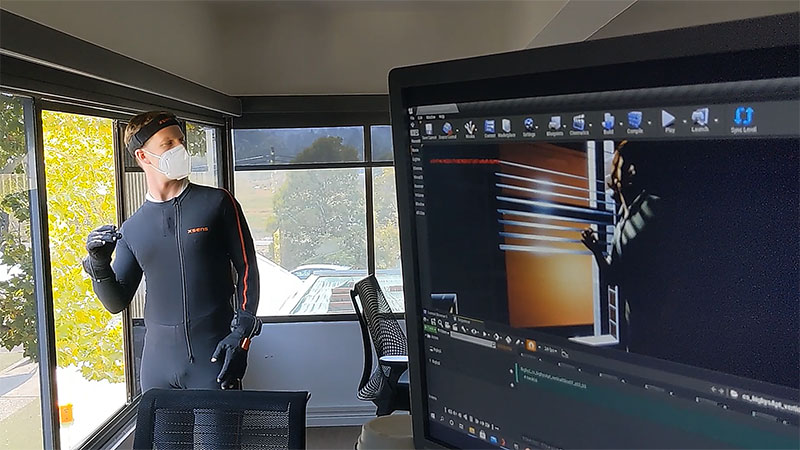
Telltale’s COVID-19 pandemic forced them to explore motion capture.
Purchase
Purchase
Ottilie watched Telltale’s shutdown as a game developer and studio consultant, having worked in the industry since the 1990s, leading multiple studios, such as Galaxy Pest Control, Abandon Interactive Entertainment, and more.
“I started asking around and a colleague mentioned that he knew some of the former team at Telltale and we knew about the public assignment [company collapse and asset auction],” Ottilie says. “So we went through and we did the evaluation. The evaluation was interesting, so we decided to save it. It wasn’t a good fit for the company that I was consulting for, which was disappointing.”
“I couldn’t get it out of my head,” he continues. “After mulling it over for a bit, I decided to try to take it on myself and set about trying to raise some of the funds from my network of industry friends. It seemed like a great opportunity – good brands and a great game genre and legacy that should continue.” He created a holding company, LCG Entertainment, to formally make the purchase. Ottilie was passionate about Telltale, and he had experience leading studios so he felt confident that he would be able to bring it back.
Step 1
Step 1
Priority one was stabilizing Telltale’s catalogue. The new Telltale brought back many of its old titles that were taken from the storefronts. Next was the creation of a new game. This would chart the path for Telltale’s new future, one where Ottilie and the leadership team would try to prevent the problems that once plagued the studio’s original iteration, problems that ultimately led to its demise.
Telltale’s first big reveal happened at The Game Awards 2019: a trailer for The Wolf Among Us 2, which was technically in development at old Telltale before the shutdown, as reported by VG247It was a sequel to the original, and it returned again. While it was fascinating, choosing to return to The Wolf Among Us with a small sequel is a strange choice when the catalogue contains franchises such as Game of Thrones. Ottilie was able to make the decision easily.
“Wolf is a smaller IP, yes, but it’s also one of the more successful titles of former Telltale … and this sequel is something fans have been wanting for years,” Ottilie says. “It’s also a good connection point to what Telltale was, right? We should communicate with the audience that’s out there and let them know, ‘Hey, we hear you, and we can’t do everything you’re asking us for, but this thing that you’re asking for, we can do this,’ and so we did.”
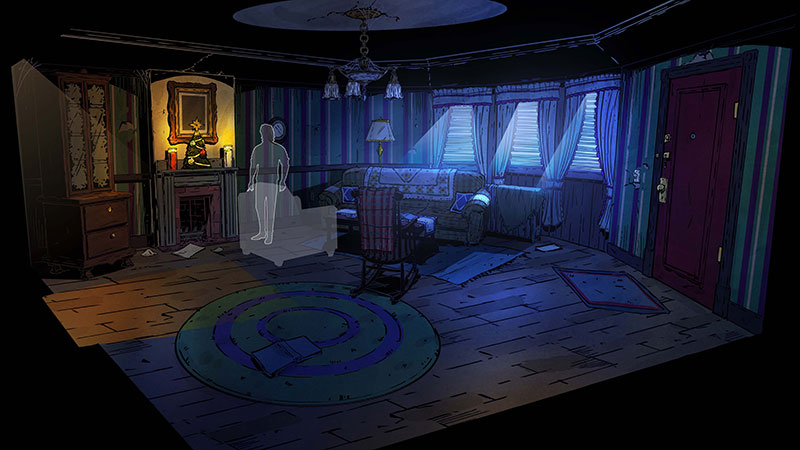
Concept art for a Fabletown apartment, The Wolf Among Us 2
The Wolf Among Us is based on Vertigo Comics’ series Fables. The game is similar to the comics and centers around Bigby Wolf who serves as the sheriff in Fabletown, New York City. Fabletown, as the title suggests is where fairy tale and fable characters reside. Bigby must be guided by players through five episodes as he investigates grisly murders in a relatively peaceful community.
Ottilie was determined to honor the legacy of the first Wolf and to repay the love he received from its players, so he reached out AdHoc in 2019. AdHoc is a group made up former Telltale cinematic directors, creative directors, writers and cinematic directors. AdHoc was made to be the collaborators on the sequel. The new Telltale, which today is made up of nearly 50-percent former Telltale employees, is developing Wolf 2 – handling game design, programming, mocap, and more – but Ottilie wanted AdHoc on board as the creative team.
“When we joined the project, one of the first things we agreed on is that we didn’t want to reboot things,” AdHoc COO and co-founder Nick Herman says. “There’s plenty that will change, but it’s always in service to the original vision for the project. Season One is a great season. But we also remember the many pieces that were abandoned or not completed due to technical or creative limitations. With new studio leadership and an upgraded engine, we’re able to revisit a lot of those conversations and take bigger swings.”
However, there were many more questions. How do you define art? Ottilie advises to keep the style similar to that of the previous. Story? Six months later, the team decided to take Wolf 1’s remains and put it into winter. Characters? From the very first game, Bigby Wolf and Snow White are both characters. How did the engine work? It was about time to change.
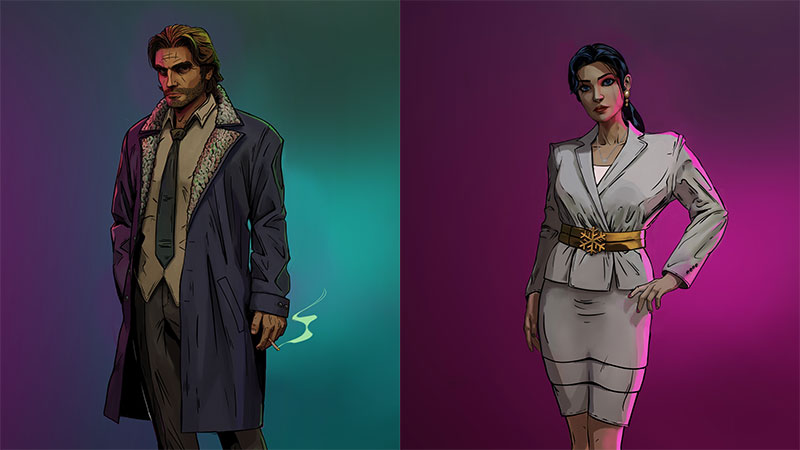
The Wolf Among Us 2 is refreshed with a refined look and art style. The Wolf Among Us 2 will continue to feature Snow White, Bigby Wolf, and all the other characters you love.
The Problems of Telltale’s Past
Avoiding the Problems of Telltale’s Past
Zac Litton is a Telltale veteran with nearly eight years’ experience in Telltale Development. He started as a technical director at the former iteration of the studio before becoming Telltale’s first vice president of engineering. After Telltale was purchased, Ottilie reached out to Litton to chat, and it wasn’t long before Litton was back, this time as CTO.
Litton was quick to get to work, helping Telltale rediscover the pipeline. He believes this is essential to its success.
“It was like, ‘Hey, what’s our pipeline going to be?’ And it’s not just the engine, but the pipeline is everything,” Litton says. “It’s how the writers are going to write; it’s how the engine is going to perform; it’s how you handle editing and updates … it’s everything, really.”
Telltale had developed its games with its own engine in the past. And while that worked well in some respects, at the new Telltale, the decision was made to also utilize Epic’s Unreal Engine. Using Unreal as a foundation and adding in layers of Telltale’s custom engine on top of it has changed everything, Litton says. Not only is Unreal an engine used industry-wide, which means finding people that can develop Telltale games is significantly easier than it’s ever been, but it’s open, too, meaning Telltale can use it alongside its own engine to great success.
This leads ultimately to a cleaner pipeline that Ottilie and Litton consider to be one of the key components to eliminating crunch.
“A lot of things didn’t get out as clean as we would have liked them to at [old] Telltale because of time.” Litton says. “You can have a wonderful engine with lots of capabilities to provide really smooth content, but if you don’t have the time to utilize those tools to the maximum extent, you’re not going to get the product you want out.”
Add in Telltale’s old episodic nature to those difficulties, where the studio immediately shifted to working on the next episode after pushing the one before it live, and the work begins to pile up. That’s when crunch can occur, but Litton and Ottilie say they are working hard to ensure the studio has the right tools in place to avoid that.
Ottilie is quite open about Telltale’s former barriers and challenges – he, of course, wants to be, but he also must be. Creating a staff that’s almost 50 percent former Telltale employees doesn’t happen by telling people who were messily laid off that said studio is back. This happens when Telltale explains why it was necessary to return and the ways in which the new company will avoid repeating its past fate.
Telltale’s distributed development model is a way to make things easier and, hopefully, avoid the crunch. The new Telltale uses the talents of other developers, rather than 400 people in a San Francisco studio.
“The world’s changed,” Ottilie says. “[Distributed development]All about convenience. It is easy to outsource simple tasks. Art. Art outsourcing is common. We’re doing 80 percent of our work externally across a couple of different teams, and we’re getting great quality out of it. I’m stunned at some of the projects that the teams and individuals from outsourced companies we work with create … and so why wouldn’t we work with them? Distributed development is really about creative freedom in that way … and it’s about keeping our costs manageable.”
Ottilie says Telltale’s stance on crunch extends to outsourced work as well, stating that the studio employs “the same planning and iteration workflow on all of our projects and endeavor to partner with companies who share our view that a healthy work-life balance is important.”
With new studio leadership and an upgraded engine, we’re able to revisit a lot of those conversations and take bigger swings.
If one thing is clear, Ottilie isn’t concerned with saturating the market with Telltale games. He just wants people to be excited about a game with the Telltale name behind it, even if those games don’t come out as often as they used to. This starts with the script. Finding the right people to create it is key. It’s why AdHoc is helping develop Wolf 2.
“We can do a lot of [script] iteration when we’re not paying 400 people to kind of contain that,” Ottilie says. “It’s so helpful in terms of the process … because we don’t want to move forward until we’re heading in the right direction with our story.”
The way Telltale’s games will be published is perhaps the greatest change. Telltale had previously released an episode, then spent as long as necessary to complete the next. However, it was often fraught with problems. It led to decreased interest in the show over time.
Ottilie stated that Telltale Games will be complete by the time the first episode of Season 1 is available. This means players won’t need to wait months to see what happens next in the story. Telltale will make its schedule known in advance, so fans won’t have to wait for episodes more than a few weeks. Ottilie predicts that Telltale will capture the current zeitgeist better than prestige TV.
AdHoc CTO and co-founder Dennis Lenart says having an entire season written – in this case, Wolf 2 – before production begins is very new, and it’s something the AdHoc team greatly appreciates.
“This completely changed how high-level decisions were made and allowed us to better plan on the design side – especially for aspects like choice cadence and pacing of gameplay, of which there is more this time around,” he says. “It’s especially hard when you’re accounting for player choice, but now that we have more than eight weeks to create an episode, we can prioritize things that previously would have been a luxury.”
Ottilie believes that Telltale will be kept from crunch by using the new release schedule. Put bluntly, Ottilie says “no crunch” is a core belief for the new studio. He wants to avoid micromanagement, choosing instead to empower employees to work during work hours and go home and enjoy their lives when their shift is up – “you’re a better person that way,” he says.
Telltale and Bigby Wolf: The Return of Telltale
Telltale and Bigby Wolf: The Return of Telltale
The Wolf 2 trailer, which aired at The Game Awards 2019, was the culmination of months of preparation. Ottilie called this a landmark moment in the history of the studio.
“That night was pretty special,” Ottilie says. “It’s the night where we all felt like we are in the right place and the right time, and we are going to make this happen.’ It went so well – we got a standing ovation. This was an act of validation. It was a moment where this journey had really paid off.”
Wolf 2 now has its full production, almost two years after it was released. Mocap has begun and the script is complete. Ottilie said that Wolf 2 will answer some questions but some of them are best left unanswered. AdHoc provided more information on what gamers can expect.
“Wolf 2 takes place after Snow White steps in as Deputy Mayor of Fabletown, which gets us closer to where the comic starts, but Bigby is still struggling to make the transition from the typical fairytale villain to Sheriff and protector,” Herman says. “This season explores more of the nuances and difficulties of hiding in plain sight, dealing with mostly new Fables and taking place all over New York. The city at large definitely plays a bigger role this time around.”
“Creatively, it’s had the most time in the oven out of any Telltale game ever, so we hope that comes through in the final product,” Herman adds. “Personally, I’m excited for fans to have a chance to explore its new themes. Without revealing things, it’s even more about the human experience of being a Fable, which, like the comic, strips away the fantasy and leaves the player with a lot of uncomfortable and messy decisions to make.”
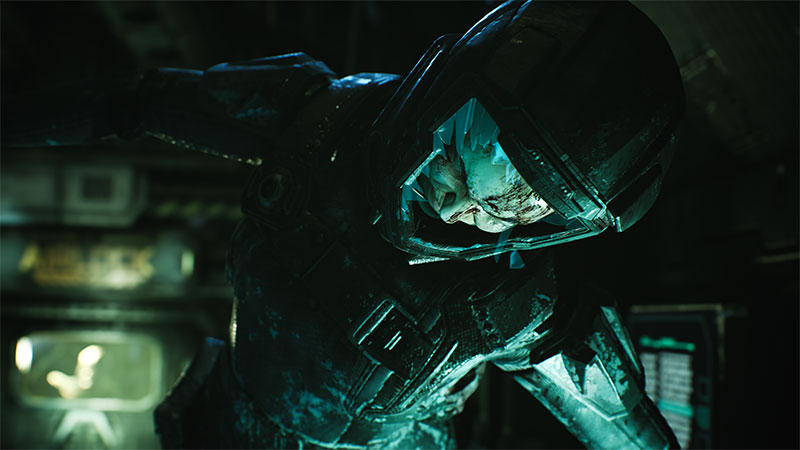
Deck Nine is aiming for “stylized realism” in The Expanse: A Telltale Series
In The Expanse
In The Expanse
Telltale has also developed a game that is based on The Expanse, the popular book-series-turned-Amazon-TV-show set in a solar system colonized by humans as they spread out into space. Similar to how it opted to work with AdHoc on Wolf 2, Telltale is working with Deck Nine, the studio behind 2021’s Life Is Strange: True Colors, on its Expanse project. Telltale views it as a co-development deal, with Deck Nine doing a lot of the heavy lifting using Telltale’s engine and tools. It’s a Telltale story told using Deck Nine’s voice.
“We visited Deck Nine early into the reboot of Wolf 2 to discuss possible co-development, but we quickly realized that we wanted to give this talented team more room to run on a project that didn’t have limitations and expectations predetermined by being a sequel,” Ottilie says.
Deck Nine game director Stephan Frost says it’s been a “solid partnership” and especially unique in that it gives the two teams a chance to learn from one another. As for where it belongs in the timeline, it’ll be a prequel in the same universe as Amazon’s series.
“We were pretty nervous about pitching [a prequel] to the creators, and then we specifically picked a character they hadn’t done a backstory for because we wanted to do something canon or something that could become canon for the character,” Ottilie says. “And so we really liked [Camina] Drummer.”
Drummer is unique in that she’s not from Earth, nor is she from Mars – she’s a Belter (someone born in the Asteroid Belt, or outer moons or planets) and with that comes a lot of characteristics that Deck Nine and Telltale say they are excited to play with. Frost claims Drummer is on a scavenging ship named ArtemisYou can play the game.
… it’s important to this new iteration of the studio to place the tracks before the train, and it seems that’s exactly what Telltale is doing.
“There’s a mixed crew of high personality Inners and Belters,” he says. “Players will work with that crew, explore various locations beyond the belt, and, of course, need to make life or death decisions that will affect the crew.”
“She’s also unique as a Belter,” Ottilie says. “She’s a little bit more moral, but very black and white, really angry, but not in an unjustifiable or irrational way, right? She’s very controlled and focused and introspective in terms of how she makes decisions as a character, and we wanted to explore how she became that person … and that story didn’t exist yet. The novellas do not tell the story and we have no plans to. [in the TV series]. Drummer doesn’t really exist in the books. She’s an amalgamation of different characters … and we like that because it means there’s a lot of room to have an interesting story develop around her. The show is a microcosm. We put you in the universe you expect to be in.”
Drummer actress Cara Gee will be voicing the character in the Telltale game and providing motion capture for Drummer’s unique movement as well. Frost says there are “other actors from the show written into the story,” but that the teams can’t yet talk about them.
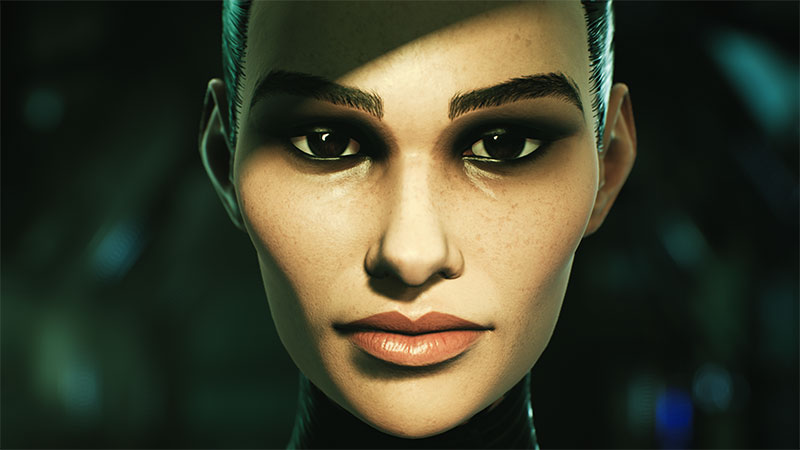
Camina drummer actor Cara Gee will be voicing the character, and motion capture is also provided.
“Who she follows or respects changes based on their actions,” he says, expanding on what else players can expect in the game. “Consider that she used to work with Anderson Dawes, and the extremist faction of the Belt, but then turned away from him and ended up trying to build something new with Fred Johnson, a moderate. That was the catalyst for her change. What is she able to do to combine her loyalty to the Belt and her well-earned cynicism about powerful men who claim they have the answer? These are questions we think players will love exploring with us.”
For now, The Expanse joins Wolf 2 in the “we’ll share more when we’re ready” chamber, which, in a way, speaks to this new Telltale. Litton says it’s important to this new iteration of the studio to place the tracks before the train, and it seems that’s exactly what Telltale is doing.
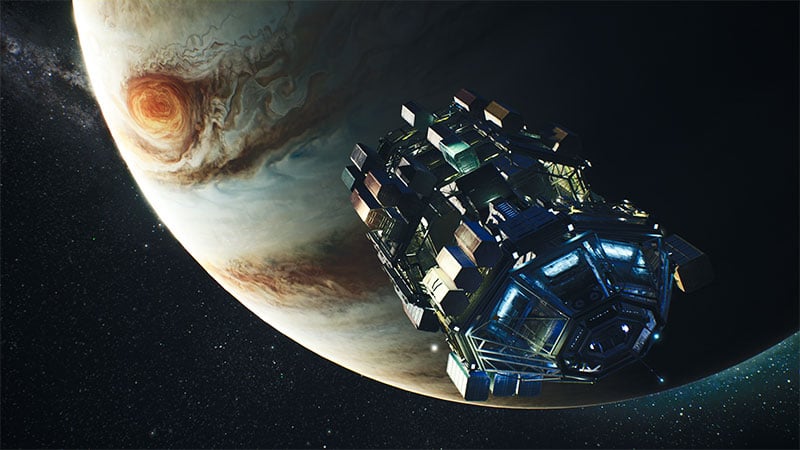
Artemis, an artifact that scavenges just outside Jupiter
If one thing is clear, the people we spoke to at Telltale are excited about what’s to come, which Ottilie says will feature new territory for Telltale while respecting the name’s legacy.
“That legacy is why we’re doing this,” Ottilie says. “The journey will continue. We won’t fall for the temptation to replicate what is already there. Wolf 2 will come closest to the things people know. [with] Telltale, and that’s the reason we’re doing The Expanse with Deck Nine. It’s a totally different voice, completely different aesthetic and pacing. We’re going to continue to work with internal and external teams, and we’re going to match creative leadership to the IPs we pick and give people the opportunity to tell interesting and compelling stories.”
“That’s really the best part of what we’re doing, right? It’s exciting to share these stories, take chances and try new things. We also get to surprise others. It’s all kind of fan service. Telltale is a storyteller in the universes we all love. [That fan service] is part of our brand.”
#TheResurrection #Reinvention #Telltale #Games