Moncage Review – Think Outside The Box
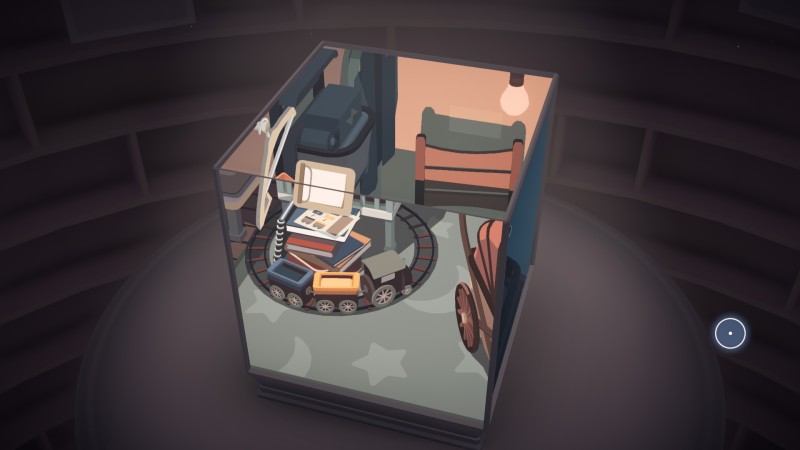
A cube is found in a dark, small room on a table. The cube is tossed into action by Moncage, who gives a quick overview of how to use this multi-faceted item. It tasks you with connecting similar objects found on the box’s different planes by spinning the cube and looking at things from unique perspectives. It seems easy at first. However, as the game progresses, puzzles grow more sophisticated, and the seemingly unconnected scenes reflected on the cube’s sides begin to weave into a narrative. It was lacking substance.
Each side of Moncage’s six-sided cube displays a distinct vignette – like a window into various environments. If the cube is rotated to the correct perspective, objects in one scene will align with those from the other. Moncage has me open the suitcase that is displayed on one side. This is my first goal. Inside is a teddy bear, toy truck, and various child’s playthings. This minimalistic design shows only the object’s shape, not its finer details. It creates a surreal atmosphere that complements the dreamlike gameplay. The simplistic appearance is also crucial in allowing the optical illusions players need to piece things together and progress through the experience.
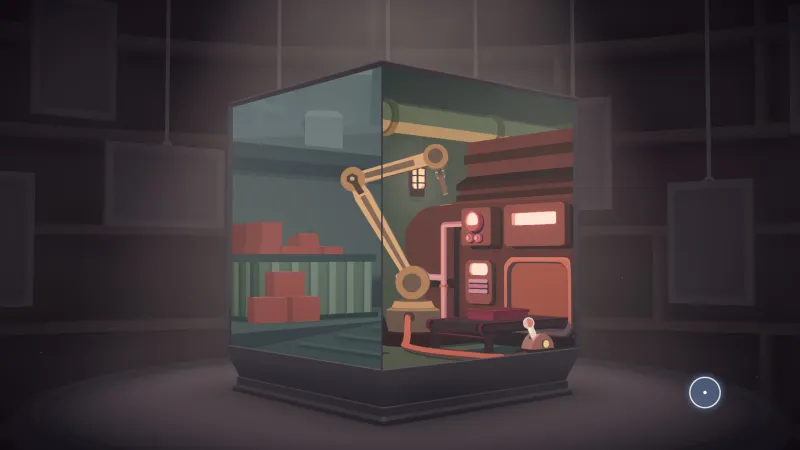
The first panel is complete. I turn the box around to find a damaged dump truck, parked in front of a factory. Since the trucks in both panels have the same coloring and lines, I twist the cube so that the front half of the child’s toy in the first scene lines up with the vehicle’s back half on the other side of the cube. That does the trick, and the newly fixed truck moves down the road.
Even though this initial solution isn’t difficult, it leaves me feeling accomplished. Moncage recreates that feeling in new, creative ways making it an enjoyable puzzle game. For instance, in my favorite section, I have to move from one side of the cube to the next, quickly matching up Bits of benches, water containers and tanks. into a Rube Goldberg machine to allow a tiny object to roll through every vignette without stopping. This was similar to defeating a boss in an action video game. It was rewarding to string it all together.
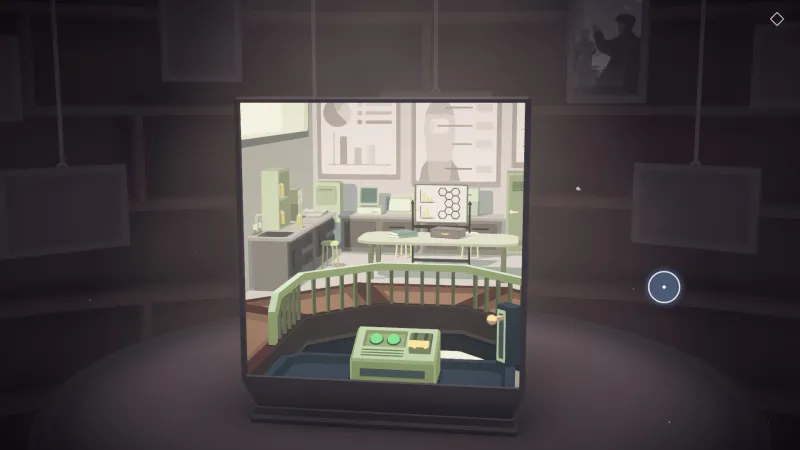
Some answers may not be obvious. It is common to ignore some small things in puzzle games.l detail Sometimes, I found myself banging my head against the wall. For example, in one level, I could tell a radio antenna fit perfectly with an electrical post, but I didn’t realize for some time that I had to light up one scene for the objects to be the same color before they could match up. Thankfully, there’s a creative, effective, and robust hint system. You can press a button at any time to turn on important objects. This guidance feels subtle, more like a hint to help you find the correct path than an exact way. If that isn’t enough, the next hints offer written clues, and once you burn through those, the game offers a short video clip showing the puzzle’s solution. It was extremely helpful when I didn’t have the exact solution but had the idea. I find this hint system really appealing. It effectively combats the frustrations of typical puzzle games but doesn’t make asking for help feel like defeat.
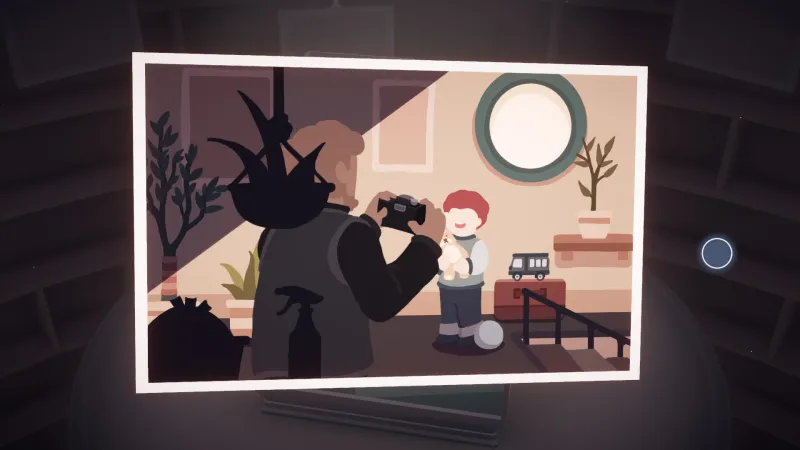
While I am playing the game I discover that I was actually tracing a much larger story. Typically, this kind of storytelling fascinates me, but Moncage’s narrative didn’t capture my attention. The story’s overall impact is not enough. It doesn’t help that much of the narrative is told through photographs carefully hidden throughout the game, meaning players can easily miss significant plot elements. There are undoubtedly evocative moments –Many pictures have been dedicated to the subject’s wartime experiences, both good and bad. One image, for example, captures a fun outing to the fair seemingly marred by the veteran’s traumatic reaction to fireworks. There are also some interesting moments when the pictures allow me to understand something new about a location I visited as part of an earlier puzzle, especially at the end. However, I walked away from the game wishing I knew a little more about the underlining story and didn’t have to piece together the ambiguous events myself.
Moncage, a puzzle-based game that challenges perspective-based thinking, is intelligent. Every scene flowed seamlessly into the next. The narrative could have hit harder, and it sometimes felt like I had to align things perfectly for the game to accept the correct answer, but Optillusion’s title is a challenge worth picking up.
#Moncage #Review #Box