Call of Duty: Modern Warfare II Review – Wide Of The Mark
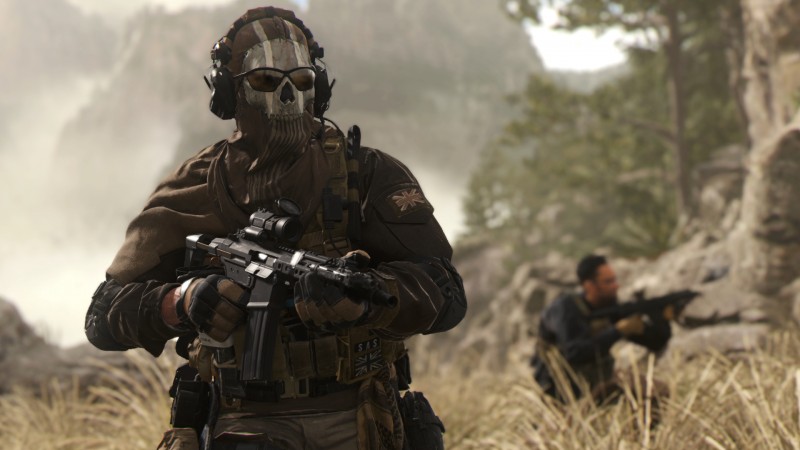
Call of Duty: Modern Warfare II can be very frustrating. Like every Call of Duty game, the majority of time spent playing involves either killing or being killed in horrendous ways, for one thing, and there’s a natural revulsion that comes from seeing so many gouts of blood shooting from bodies or the ragged slump of newly lifeless human corpses piled up in a doorway. And yet, the surface-level hideousness of its parade of death might not be so notably ugly if it wasn’t for Modern Warfare II’s cast of characters and the way they – drawn from international special forces, a private military company’s contractors, and a Mexican cartel – view the world.
Modern Warfare II starts with a fictionalized account of the assassination by Major General Qasem Solimani, Iranian Quds Force commander. As in the actual Soleimani’s killing, Call of Duty’s fictional Quds Force commander “Major Ghorbrani” is assassinated by American forces using a drone strike, here controlled by the player. In a departure from recent history, this affront to a sovereign nation is met with a byzantine terrorist retaliation plot concocted by the dead general’s successor, Major Hassan Zyani. Sketched in brief, this plot is a modern paranoiac’s dreams come to life, Zyani collaborating with Russian allies and a fictional Mexican cartel to plan a missile strike on the continental United States.
While Call of Duty has pulled from recent history to frame its stories in the past, basing Modern Warfare II’s set-up on such a contentious event – and naming Iran specifically rather than choosing to abstract the reference by setting the assassination in one of the series’ fictional nations – provides a promise for narrative ambition that the game fails to fulfill. What follows, instead of diving into the political murkiness which the Modern Warfare Subseries is well placed to study, is a disappointingly cynical & aimless exercise for storytelling.
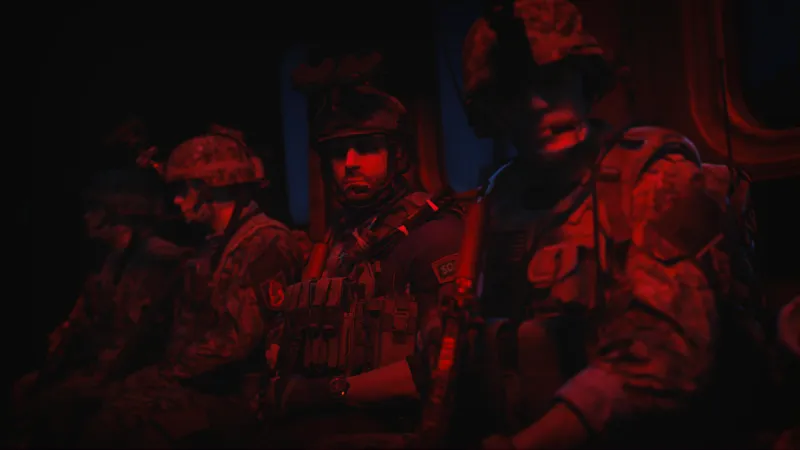
Players assume the viewpoints of characters attempting to thwart Zyani, embarking on a whirlwind globe tour that throws away the larger implications of the story’s conflict in favor of more immediate, less complicated matters.These characters include British members of the invented Task Force 141 and Alejandro Vargas, a colonel in the Mexican Special Forces, as well as occasional segments seen through the eyes (and lens of a gunship camera) of Modern Warfare II’s American-based private military organization, Shadow Company.
It is predictable that the plot will end in bloody fashion. The players turn enemies away into red puffs while infiltrating in stealthy missions. They also run, gun, shoot and destroy stuff in firefights. The urgency to survive drives them. It doesn’t matter what the Iranians, Russians, Mexicans, and the American government think about their countries secretly and openly tearing apart each other. Instead, they focus on the granular steps to advance or stop Zyani.
Modern Warfare II is determined not to bore the player by constantly tweaking Call of Duty’s fast-paced, first-person gunfights as it tells this story from mission to mission. Its flexible format makes it possible to mix genres and increase the drama. In one mission, for example, Task Force 141 operative John “Soap” MacTavish is stranded in a small Mexican city’s cobblestoned streets. Soap is forced to act as a horror film star while he hides from American PMCs who are executing civilians in an area of cobblestone streets and alleyways. As they begin their murderous rampage, the player will need to gather household supplies to make tools and weapons. Darkness and violence create a powerful, shocking image of the PMCs evil. The level’s design makes Soap, who is now stalking in the dark shadows of blood-stained shops and houses, another nightmare creature. It would be difficult to create the same fear if this was another Call of Duty mission. The willingness to experiment with form enhances the storytelling possibilities.
In other cases, though, numerous sequences that should be thrilling on premise alone – hanging upside down from a speeding helicopter while shooting enemies; fighting from hijacked truck to hijacked truck up to the front of a convoy, Fast & Furious-style; swimming through an Amsterdam port and dispatching patrols before sinking back into the dark waters once more – become tiring exercises in trial and error. The fragility of the enemy and player alike interrupt the action by making the margin for error so slim that what should be exciting sequences end up coming across more like someone repeatedly sitting on a remote control’s pause button during an intense scene by mistake.
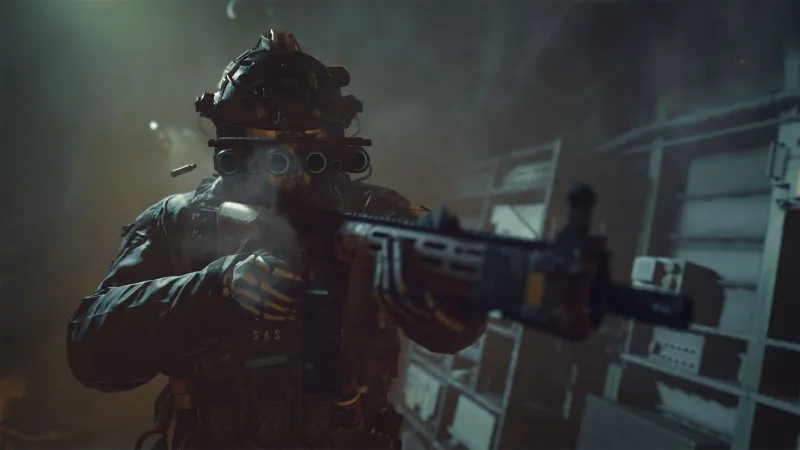
Aside from the few levels that validate Modern Warfare II’s emphasis on variety, the traditionally designed firefights make the campaign exciting. The first involves you participating in raids against a number of rural houses, and navigating through the darkened night with night-vision glasses. Even the ending has you protecting a wrecked plane inside while enemy forces advance on you across a firelit field. Modern Warfare II would be a dull game even if it had a couple more compelling missions. It is clear that none of the cast seem to be interested in anything.
The characters don’t have much time for discussion during cutscenes that break up the action. They are busy identifying next parts of the globe or enemies who need their brain pulped. All of them are blandly gruff and seem almost to be participating in a gravel-gargling contest, as they talk about extrajudicial murder or trade tensions during stressful moments. These are the kind of characters who, when handed a hunting knife with which to kill a cartel boss, grumble the single word “sweet” in response.
Characters are free to express any motivation, even if it is cynical or driven by greed. If any members of Task Force 141 have nuanced opinions about the countries whose militaries they’re fighting or the cartel forces abetting an international terror plot, they keep it to themselves. Zyani doesn’t speak of America with the greatest of hatreds. No one has a greater religious or political mission than Zyani, and likely to fear alienating any other players in the game. There are only reactions to circumstances – a kind of kneejerk fantasy of global politics that sidesteps historical context in favor of painting an Iranian major as an uncomplicatedly evil villain.
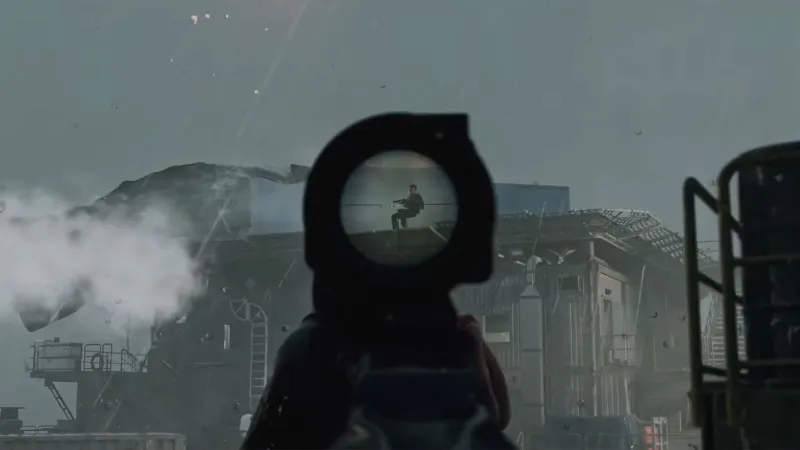
One exception to this nihilistic pattern is Colonel Vargas, who is forced to shoulder the massive weight of Modern Warfare II’s stunningly grim depiction of Mexico. As one of the few heroic viewpoint characters, Vargas is asked to embody the noble and incorruptible crime-fighter that, in Call of Duty’s viewpoint, is the only possible means of solving a nation’s complex internal and hegemonically enforced problems. Though Vargas is a welcome character in this sense – him narrowly avoiding death from the overeager trigger fingers of police and armed citizens of a Texan border town who can’t distinguish between him and cartel sicarios is striking – he’s also an overly simplistic one. Vargas, like the game’s depiction of Mexico as a whole, is drawn from a position of sanctimonious pity – one that sees the country populated not by criminals, as in the simple, racist viewpoint, but by perpetually doomed unfortunates whose misery can’t be understood beyond its inevitability.
Vargas is however only one of many characters. As with all Call of Duty entries, the question is still open as to what purpose Vargas’s dreadful appearance in the remainder of the game serves. That Modern Warfare II’s characters exist is not an endorsement of their actions. Their story frames their attitude toward the world. However, the fact they are starring in the movie must be interpreted as a way to make sense of all the shooting and dying.
Modern Warfare II does not have an answer to all of these questions. The campaign’s story is agile in side-stepping concrete ideological positions, slippery in establishing any political footing beyond a basic recognition that attacking civilian populations is morally wrong. Writings in the game seem to be confined to current political status. Modern Warfare II adds to this by claiming that the desire to pretend to be in the fevered war fantasies of the game’s writers is a testament to our fascination with the type of combat in the which special and regular military operatives are engaged around the globe.
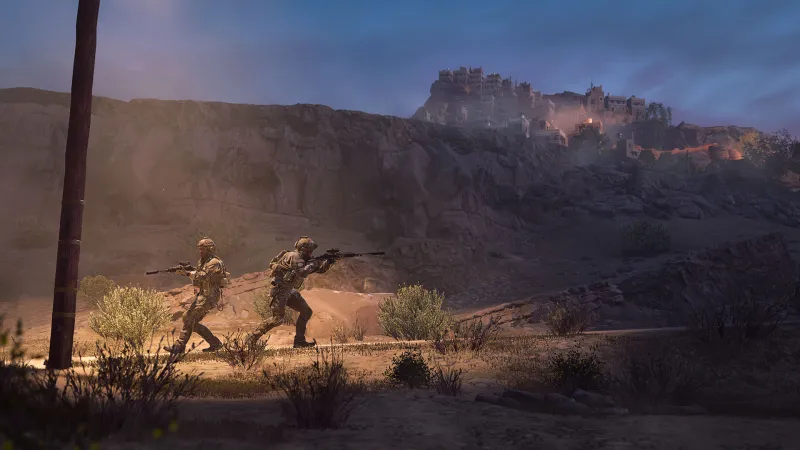
This assertion is best supported by the multiplayer. Compulsively thrilling in its best modes – Domination, Team Deathmatch, Hardpoint, and Kill Confirmed – Modern Warfare II’s gunplay finds better expression in the hamster wheel of endless online competition than it does in its single-player mode this time around.
Although multiplayer is not being changed in any significant way, there have been some tweaks made that allow for faster player movements, quicker competitors’ killing speeds, and loads of customization options. These changes make Modern Warfare II’s online play experience among the most enjoyable it has been in years. This is less of a radical overhaul of the Call of Duty online shooting style than it was for many years, but more of a series of improvements that enhance what works and reduce what doesn’t.
New modes, like Prisoner Rescue, playlists featuring a disorienting third-person camera, and a trio of co-op missions, are less exciting, but their inclusion doesn’t take away from the substantial volume of returning modes that take place in the new maps and provide a framework for exceptional shooting. Freed from the single-player’s trappings, appreciating the game’s feel is easier. The elastic response of pressing a controller trigger so an assault rifle’s sights spring up into view, the dull thud of rounds hitting home, and the spry weight of the player character: Modern Warfare II’s multiplayer is a tightly designed display of its makers’ talents.
But still, the game’s dismal narrative creeps in to curdle even its best features. These maps, which include a Mexico-U.S. crossing jam, bombed Ottoman forts in an imaginary Middle Eastern village and a Mexican city that has been turned into a battlefield, are excellent examples of how to conduct online shootouts. But they also serve as a reminder that the multiplayer is a reflection of the campaign’s plot. The disjointed images of countries in flames or ruins that are overrun by soldiers is hardly less evil than the rest.
It is not easy to break these bonds and focus on the pleasures of competition. Modern Warfare II, with some friends talking and an eye focused on the explosion of experience points coming from dead opponents, is perfectly entertaining. This kind of blindness can be difficult to keep, as the unhappiness that is so prevalent in the game overwhelms the enjoyment. It is much more difficult to see the good things Modern Warfare II has done than it should if you ignore it for too long.
Whether any of this is enough to put off an audience inured to Call of Duty’s detached depiction of brutal warfare is anyone’s guess. Plenty of people can put up with a bit of ugliness if there’s still a pretty good time to be had overall. Modern Warfare II’s multiplayer may provide enough entertainment.
#Call #Duty #Modern #Warfare #Review #Wide #Mark