What Microsoft’s Activision Blizzard deal means
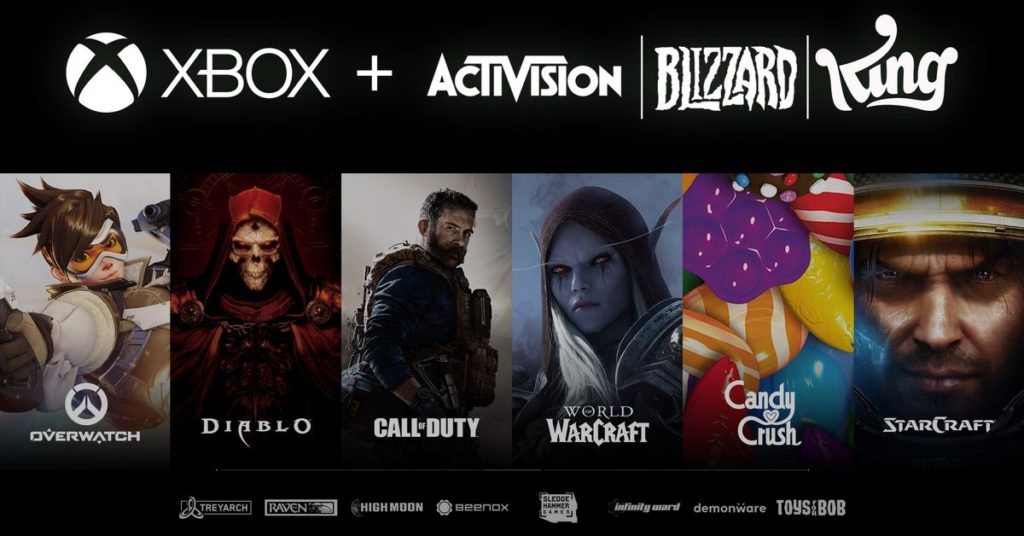
So, what does Microsoft buying Activision Blizzard really mean for regular game developers — and game platforms? Well, firstly — it’s fractally complex. No one deal like this is transformative, and no one deal can significantly hasten the path to “the future.”
But this acquisition — which used the equivalent of over half of Microsoft’s $130 billion “cash on hand,” by the way — feels significantly different to the ZeniMax/Bethesda deal, and not just in terms of sheer money paid.
The Bethesda deal, which was “just” $7.5 billion, felt a bit more like “we would like to own more great content and give Game Pass a large boost, and this is a great way to spend some money.” This $68.7 billion Activision Blizzard deal feels more like “we see what other big companies like Apple and Facebook are planning for the future of the Internet and games, and this is our response.”
So let’s drill down into the multiple angles on this deal. And we’ll end up at a place where we can decode ramifications for everyone else making games not, uhh, owned by Microsoft.
Is there a platform, or is it something else? Or, ugh, the metaverse.
Where it gets complicated is how the idea of a “game platform” is evolving. Sure, Xbox is a hardware platform — that’s the traditional use of the word. But Game Pass is a platform that spans multiple types of hardware — Xbox consoles, PCs, cloud-enabled mobile devices, and beyond.
And beyond that, games — MinecraftCall of Duty World of Warcraft, you get the idea — can be platforms. Perhaps, in Microsoft’s current parlance, “metaverse platforms.” Though I know a lot of us aren’t fans of the word metaverse being slung around too aggressively, given its mushy nature, and Facebook’s attempted commandeering of the conversation around it.
However, large corporations need to be clear about their views regarding what’s a hot stock phrase right now. Which is why Microsoft CEO Satya Nadella said as part of the Activision Blizzard announcement: “In gaming, we see the metaverse as a collection of communities and individual identities anchored in strong content franchises accessible on every device.”
This is an indication that Microsoft thinks a monolithic approach will fail. And Microsoft’s point appears to be that “cool video game stuff for everyone on all devices” is the way to go. You can combine many of the in-app microtransactions, subscription-based business models or microtransactions to:
- make profitable revenue on all other people’s hardware platforms with your game platforms (such as Minecraft), while also…
- creating growth and profit on game subscription platforms (Game Pass) that include games with multiple business models, including “pay to play once” games.
- generating revenue — but not necessarily pushing for lots of profit — on your actual game hardware platforms (the Xbox Series X).
Think I’m getting a bit hung up on the definition of a platform? This isn’t just semantics, and it has real ramifications for game developers. As an example, suppose that the only money you were able to earn as a game designer was to build your game in an interconnected world controlled by one company.
This is probably the ultimate ideal — implicitly, if not explicitly — for some of the largest platform companies out there. Facebook is a particular example of a closed platform approach. It seems that it envisions the next generation of mobile Internet as one company, with an omnipresence in the metaverse. Microsoft does not see this as the future.
Microsoft’s semi-forced pivot to “open”
Perhaps it’s a hangover from the antitrust lawsuits of the ’90s, and how they affected Microsoft culturally, but Windows by and large being an “open platform” for developers, and recent wars between Microsoft and Apple (in particular!) means that Microsoft has an allergy to restrictive hardware platforms and distribution “taxes.”
Another quote from Nadella during today’s announcement that includes clear Apple shade built into it: “Today we face strong global competition from companies that generate more revenue from game distribution than we do from our share of game sales and subscriptions. We need more innovation and investment in content creation and fewer constraints on distribution.”
It’s notable that Microsoft sees Apple as the “bridge troll,” sitting there waiting for its 30% tax on any goods and services that pass over it on the way to iOS platforms. Although there are fewer of them, Xbox platforms still impose the same tax to third parties.
In the end, Xbox was the weakest of the two consoles. However, having a large corporate parent and deep pockets enabled them to move away from their traditional model and create Game Pass.
(In particular, if your first-party games aren’t really firing on all cylinders, that gives you carte blanche to change your entire business model — you’re not really losing much money in doing so. This Xbox disadvantage became a positive.
And you can definitely argue that “we make or package together something and demand money for it” is better, perception-wise, than “we build a hardware platform and sit there to tax everything coming through it.” Xbox has been getting very good PR from fans and developers alike for this approach.
The deal’s real ramifications for devs?
There just won’t be major changes to how game developers see the market immediately: not today, tomorrow, nor the day the Activision Blizzard/Microsoft transaction closes.
But the deal does allow more of the industry’s biggest games to be shifted toward Microsoft’s business model. This will help the industry move towards this model over time.
If you asked me to predict the future model for gaming in the next 5-10 years I would say the following:
- If you’re making a “pay once, play once” PC/console video game of any significant budget, or if you want multimillion player distribution for it at launch, you may need to put it a subscription service to be successful. You can choose from Game Pass, PlayStation Plus or other subscription services such as Netflix. However, these types of games will still be available!
- If you’re making a “Games As A Service” game which is paid but also has microtransactions in it, such as Grand Theft Auto 5/GTA Online? While you have the more freedom to do it all on your own, some players may prefer to join a subscription to help them find other players. And you get the bonus that a) the Game Pass-like service has to pay you for inclusion, and b) you’ll get more money from its subscribers over time
- If you’re a smaller game dev, and you want to keep making games with whatever business model you’d like for open, non-subscription services like Steam? You should go ahead! I don’t believe Steam intends to change its business model at any time in the future. And there’s always going to be space for breakout hits created on these open services.
Traditional game developers may face some disadvantages in the short-term. Here’s some of the most obvious that I see, and most are Game Pass-centric:
- If Xbox is moving a lot more big games into Game Pass — first from Bethesda, and now from Activision Blizzard — it’s going to give even more choice and attention on the top end of titles. Microsoft will allow its users to continue scaling, so people can still access smaller games through Game Pass. But there’s definitely a “big get bigger” situation here, especially given microtransaction-centric Games As A Service are often so large, polished, and attention-grabbing.
- It continues a larger trend, which is that Microsoft is highlighting Game Pass on its hardware platforms at the expense of “regular pay once games” not in Game Pass. That’s not how Indie developers did on Xbox. They will still be affected by the inability to concentrate/discover going forward.
- Game Pass and related services have become increasingly important. This means that the games which make it onto these services will reach an enormous audience. But those that don’t may have issues. Game Pass-like entities are essentially disintermediation. You now have to pass another gatekeeper — a content gatekeeper, in this case — to make it to the “big stage.”
Ultimately, I think most game developers won’t really know what to think about this deal. It’s another “big get bigger” deal, and it’s another “large tech companies are eating the world” deal, which is at least mildly disconcerting.
But it’s definitely coming from an organization that seems to currently care about video games and preserving the creative independence of devs. Which is something that can’t always be said for a number of other massive tech companies in the “we want the metaverse” space.
Microsoft is a well-respected company, which is doing an excellent job in promoting its role as content provider for all. But it’s using the parent company’s cash hoard to do it, which is massively disadvantaging competitors like Sony and putting their perfectly reasonable business model on the back foot.
Are you sure that’s fair? That will be a decision that many global governments will need to make. And if they’re fine with that, then … that’s capitalism, folks, and we’re all just along for the ride.
Simon Carless, the founder and CEO of GameDiscoverCo is a game developer and publisher company. It is focused on one issue: How do gamers find and buy premium console or PC games? They also run The GameDiscoverCo Newsletter.
#Microsofts #Activision #Blizzard #deal #means