Unity has updated its controversial pricing policy again
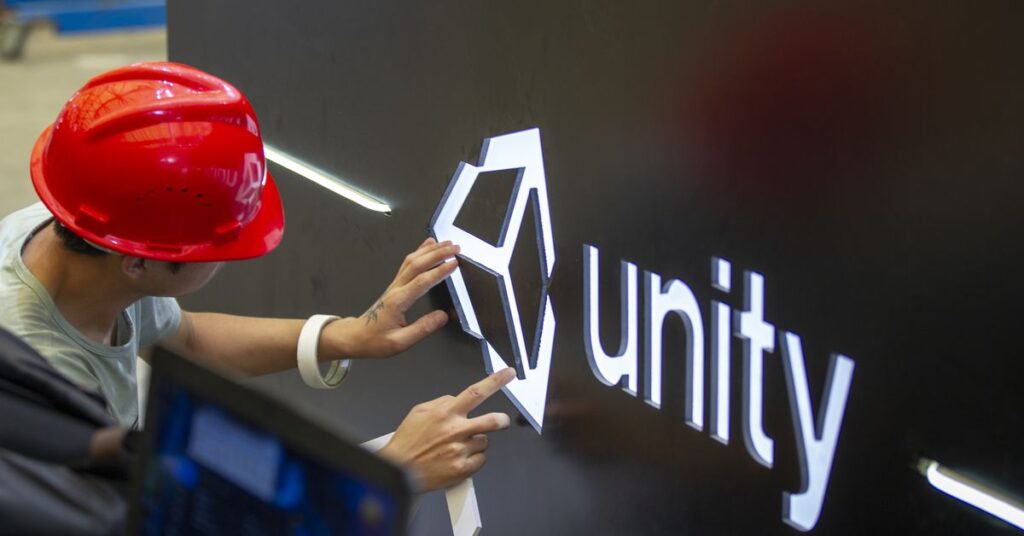
After two weeks of chaos, Unity Create president Marc Whitten has a message: “I’m sorry.”
Whitten’s apology, and a revised pricing policy, comes after a tumultuous period for the company, as game makers who rely on Unity panicked over the impact of its controversial “Runtime Fee.” Unity Technologies announced Friday that it will no longer force developers into that fee structure for the current version of its Unity software — but said that the fee will apply to future versions of the engine, should a developer choose to update. However, people using Unity Personal won’t have to pay at all. (Developers can use Unity Personal, the free version of the engine, as long as their project’s combined funding and revenue stays below $200,000 — an increase from the current $100,000 cap.)
Unity also said that for situations where the Runtime Fee does apply, it will kick in only when a project has met two thresholds: $1 million in gross revenue over the past 12 months, and 1 million initial engagements (which is the fancy, but more precise, term that Unity is using in place of “installs”).
The next version of Unity (called 2023 LTS) is due to be released in 2024. Early access to 2023.1 Tech stream is now available. They’ll be able to choose either the Runtime Fee as calculated by the installs You can also find out more about a 2.5% revenue share. Unity has also promised to charge the developer the lesser amount of the Revenue Share and Runtime Fee.
Unity expects developers to self-report this information from “data [they] already have available.” On a separate Q&A page, Unity said it’s working with its customers and partners to create “tools and processes” to assist in collecting and reporting this data. Developers are advised to estimate the initial engagements by looking at units sold and downloads for first time users. The company has also provided an estimator of Runtime Fees for developers who want to estimate the financial impact.
Unity has confirmed that subscription games, such as Xbox Game Pass, Netflix Games or Netflix, are subject to the Runtime fee. The company said that studios should talk to publishers “to work with Unity on a mutually-beneficial agreement” regarding the fees.
There’s a lot of nuance to the updated policies themselves, but the main takeaway is that only developers that make more than $1 million and have more than 1 million installs will have to pay up — either via the 2.5% revenue share or the calculated Runtime Fee. Whitten is hosting a Fireside Chat on Friday from 4 to 5 pm ET. ET to answer any questions about the new policy.
Unity is a game engine that’s widely used by game makers — from big AAA studios like Activision Blizzard on Hearthstone Mobile hits as massive Pokémon Go from Niantic, to indie games like Isometricorp Games’ Tunic and Studio Pixel Punk’s Unsighted. Unity, for some time, has been known as a tool that’s accessible and open to indie developers. The company has had issues, like a massive layoff and CEO John Riccitiello’s big PR oopsie last year, but nothing yet has come anywhere close to the widespread anger that the recently announced policy change invoked.
Unity Technologies’ big mess began on Sept. 12, when the company announced its new, install-based pricing model. Developers would be required to pay Unity for each game downloaded once revenue thresholds and download thresholds are met. Developers said this would have been disastrous to their business, but in addition to the financial concerns, they felt that Unity had also communicated poorly — key details, such as how Unity intended to track this data, appeared to be missing. Unity later changed its mind and said that developers would be responsible for tracking the data. Unity’s community felt betrayed because the policy was not transparent and the company changed the terms that studios and developers had originally agreed upon when they decided to use its game engine.
The response so far to Friday’s update has been much more mixed than the overwhelmingly negative response to the initial Runtime Fee announcement. Several developers were pleased that Unity retracted a number initial changes in favor of terms which they deemed more fair. Unity is viewed by some as having exhausted its goodwill.
“Sadly, Unity is also unwilling to openly communicate with its community in a true dialogue to find common ground and a workable solution,” Nikita Guk, representing a group of mobile developers protesting the Runtime Fee, told Polygon on Friday regarding Unity’s latest update. “Instead, it chose again to inform its community of its changes as a fact. The market rules are simple – everyone prefers to do business with partners whose changes in terms and conditions are transparent and consider developers’ interests.”
#Unity #updated #controversial #pricing #policy