Sonic didn’t lose to Mario in the Sega-Nintendo war the way people think
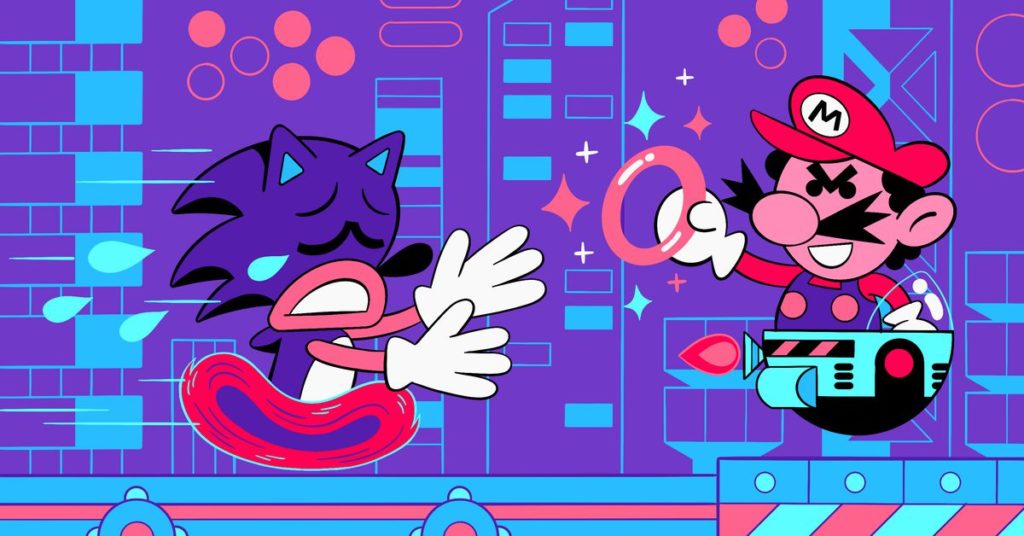
Al Nilsen is a Sega of America’s former marketing director. He says that Sonic the Hedgehog used to be more popular than Mickey Mouse in the United States in the 1990s. He’s based this on something called a “Q Score,” or “quotient score,” which ranks consumer appeal and familiarity of brands, assigned by a company called Marketing Evaluations.
Sega was sure to have Nintendo and Mario in mind. The rivalry and comparison between the characters and early consoles has been there for many decades. But Mickey Mouse was the “golden character” everyone was chasing, according to former Sega of America director of marketing services Ellen Beth Van Buskirk Knapp. Mario, she said, wasn’t so far behind the Disney mouse at the time — he was often the second most beloved and recognized character.
“The higher the Q score, the more highly regarded the item or person is,” Knapp said. “We worked very hard at enhancing that Q and initially, that meant we had to make believers out of traditionalists. Coca-Cola’s chief marketing officer wore sunglasses to a meeting where he gave us 10 minutes. This one we didn’t convert. But we did get Sonic on cereal boxes and in kids’ meal boxes. As a result, his fame grew.”
Sonic reached the number one spot at the peak of his popularity. Sonic was everywhere: His games were undeniable hits, he starred in cartoons, his toys were in McDonald’s Happy Meals, his face adorned cereal boxes, and his large blue body flew high above crowds at the Macy’s Thanksgiving Day Parade.
He didn’t hold onto that top spot for long, though. As time went on, Sega struggled to keep up Sonic’s quality and consistency, and it struggled to compete as a hardware manufacturer – which further hurt Sonic’s prestige. Nintendo enjoyed success with Mario.
Nintendo was clear in its vision of Mario and his story is etched in in stone. But Sega had a different approach to its character, throwing whatever it could think of at the wall to see what would stick – and a lot didn’t.
Yet the messiness of the franchise, and Sega’s willingness to try new approaches with Sonic — including multimedia collaborations, movies, and TV shows — has left the blue hedgehog with a unique reputation. Mario may have “won” the console wars, but Sonic’s earned something even more important: our hearts.
:format(webp):no_upscale()/cdn.vox-cdn.com/uploads/chorus_asset/file/19724234/Screen_Shot_2020_02_16_at_8.08.29_PM.png)
Image: DIC Entertainment/ABC
Sonic the Hedgehog was created by Naoto Oshima and Hirokazu Yasuhara as Sega and Nintendo were jockeying for market dominance in the early ’90s. It was looking for a mascot like Mario that could help sell consoles and games. The story of Sonic’s origins has been told overAnd over again: The original character had a “busty girlfriend,” fangs, and played in a rock band, as former Sega of America CEO Tom Kalinske told Polygon.
The marketing team convinced Sega Japan to drop the girlfriend, rock band, and fangs — creating a more friendly, but still cool, character. Gameplay prototypes, showcasing how fast Sonic could go to collect those golden rings, sealed the deal in that regard: “I believe this is when he was called Sonic, and basically we fell in love with him to be our lead character,” Kalinske said.
Sonic the Hedgehog and Sonic the Hedgehog IIThey dominated the market. Sega truly came to Nintendo’s rescue when it launched these games. The games themselves stood on their own merits as unique, colorful, and challenging, but the company used that “cool factor” to push against Nintendo — as if Mario was the dorky, inferior brother and Sonic was one of the cool kids. Sega’s marketing push played into this idea, directly referencing Nintendo as a less cool child’s toy in its advertising and its infamous mall tours, where Sega put Sonic the HedgehogSega Genesis Directly Against Super Mario WorldOn the SNES.
“Since Sonic showcased speed and colors never utilized in a video game before, and since Super Mario appeared to be more iterative, this side-by-side comparison was not really a fair fight,” Knapp said. “Sonic rocked it.”
Knapp said she got to dress in the Sonic costumes during these mall tours — little kids wanted to hug Sonic, and teenagers wanted a high five.
“I was a co-conspirator for them,” she said. “I actually got pushed around a little bit by the teenagers. The interaction was active, but full of respect. It was now possible to use this data to help Sega get its takeover. I had no idea how far up we could go, but I had a real hope.”
These games proved to be a hit and their marketing was a great help. Soon, Sonic was on everything — TV, McDonald’s Happy Meals, shirts, and shoes. Of course, he also became the first video game character to debut, infamously, as a massive balloon in the Macy’s Thanksgiving Day Parade in New York City.
“Sonic was cool with humor and an attitude … that resonated in the West,” Shuji Utsumi, Sega co-chief operations officer, told Reuters in February.
Over the next few years, the Sonic brand became muddied by bad games — alongside the Sega Saturn and beyond. The transition from Sonic’s beloved 2D platforming gameplay was challenging, to say the least. Not all of the games there were awful, but it’s where the dilution of the Sonic brand began. Everyone knew Sonic as the 2D character who could go really, really fast, and that didn’t translate perfectly into the next generation of video game consoles.
Sonic Xtreme, Sega’s first attempt at a 3D Sonic game that was later canceled, was supposed to be the game that bridged that gap between console generations.
“Sega’s goal was to bring Sonic into 3D for the first time and sell new hardware with it,” Sonic Xtreme Polygon was informed by Christian Senn, a developer. “At that time, the market was abuzz with Sonic 3And Sonic & Knuckles, both 2D games that had a huge following with great success.”
Sega and Nintendo both wanted to display their latest hardware. For Sonic, that didn’t work out as planned, and the game was ultimately canceled in 1996, after two years of development. Senn later contributed to the game. Sonic Boom: Rise of the LyricAccording to him, it was difficult making Sonic work 3D. Sonic’s success, he said, was that his 2D controls were solid — simple and tight in a way that felt good.
“This key ingredient served as the foundation for the 2D games and sequels,” Senn said. “Introducing the third dimension to the experience took that 2D control scheme and turned it on its head. It was no longer simple to move, especially if you were moving quickly. Seeing far enough into the distance, not getting stuck on obstacles, and trying to maintain that sense of free speed was very difficult.”
Sonic Adventure, of course, debuted in 1998 in 3D on the Sega Dreamcast, with comparisons to Nintendo’s Super Mario 64. The company also had similar levels of success. Mario 64, too: Sonic AdventureSega was thrilled with the game, as well as Sonic’s character. Still, it didn’t surpass Mario 64. Sonic was the official underdog.
:format(webp):no_upscale()/cdn.vox-cdn.com/uploads/chorus_asset/file/22536505/sonic_colors.jpg)
Image: Sega
Sega ended making consoles around 2001, and eventually merged its pachinko machine business with Sammy Corporation. Sega needed its tentpole symbol, the Sega mascot. However, it wasn’t trying to market consoles anymore. The company was still trying out new ideas with Sonic, such as Sonic Spinball Sonic 3D BlastSega’s mainline games started to drift from the Sonic brand and Sega encountered technical problems when designing for third party platforms. While Sega’s had its fair share of moderately successful Sonic games after 2001, the ones that stand out aren’t always for positive reasons: That time that Sonic rode a hoverboard in Sonic Free RidersFor Kinect or Sega’s swapping Sonic for Shadow, his more edgy counterpart in Shadow the Hedgehog. Then there’s the infamous Sonic the Hedgehog (2006). Sonic kisses Lacey Chabert’s girlfriend in the game “Sonic Kisses His Human Girlfriend” Sonic Boom: Rise of the Lyric, a Wii U exclusive that’s sometimes described as the worst Sonic game of all time. (A Sonic Boom: Rise of the Lyric developer, who asked to remain anonymous to speak freely on the game, joked that he wears that title — developer of Sonic’s worst game — as a badge of honor.)
To further dilute the character, it was Sonic Unleashed, wherein the hedgehog turned into a werewolf-like animal called a “werehog.” Sega and Sonic Team tried everything. And despite these games having problems, they weren’t all bad for Sega. That’s because there was always something to learn. “[Sonic the Hedgehog (2006)] was trying to push further into a more modern game,” Sonic the HedgehogPolygon interviewed Justin Lambros from Sega of America, producer. “Triple A studios were really delivering that [at that time]. It was an idea. There were lessons learned there, like from the strange reaction to the kiss that brought Sonic back to life.”
People didn’t want to see Sonic kiss a woman. People wanted him to move fast. They wanted to see him go fast. Sonic the Hedgehog (2006) is one of a few Sonic games that struggled with performance on top of a lack of focus: It’s not unplayable, but in 2006, Sonic the HedgehogHe was often criticized for his frustrating camera and the multitude of bugs. It’s a legacy that’s held up throughout the years, with Sonic the Hedgehog often referenced when talking about Sonic’s missteps. Lambros was also a witness to the same. He told Polygon that he was giving a presentation at his kid’s school when another student asked what the worst game he’d ever worked on was. Lambros didn’t have an answer, but another kid did: “Was it Sonic the Hedgehog?”
David Corless is vice president for publishing at nDreams. He was also the former Sega global brand manager with Sonic. Sonic Unleashed is one of them, for instance: While the game certainly wasn’t a critical hit, there were parts that stood out — like gorgeous graphics and enjoyable gameplay, at least in parts where Sonic was not a werehog. Even Sonic the Hedgehog has some redeeming qualities — the soundtrack is pretty dang good, and the dark storyline was interesting, at least.
When Corless joined the team in 2010, on the back of some of the worst games, he figured the problem was that Sega needed to be more intentional with how the character was used — but it wasn’t a scenario where one wrong move was going to kill Sonic.
Corless explained that the issue was with the character being used for selling new peripherals or consoles such as the Wii U’s exclusive or the Wii U. Sonic Free RidersKinect. “[Sonic] was doing well, but he’s just using IP to sell peripherals,” Corless said. “‘What kind of Sonic game can you make that fits that peripheral? We’ll give you a bit of money to do that.’ That’s the kind of position Sonic was in.”
Just as he’d come into the company, Corless said Sega had done a yearlong study on Sonic as a character — who his audience was, and what they thought of him. Sonic was still loved, but he had been involved in too many projects.
“It did impact the franchise a bit,” Lambros said. “I mean, there have been less well-liked Mario games, but not really technically inferior or that didn’t meet that Nintendo standard. And that’s the interesting difference of being a single-platform developer.”
Sega has acknowledged that Sonic’s had some troubles. In 2015, Sega Games CEO Haruki Satomi said there had been some titles that “partially betrayed” trust in players.
“We did our best to build a relationship of mutual trust with older fans of Sega,” Satomi said, “but looking back, there’ve been some titles that have partially betrayed that [trust] in the past 10 years.”
Sonic ManiaSonic’s classic Sonic design was well-received by fans. Sonic is much more than just a video-game mascot. He’s a movie star: Sonic the HedgehogIt was released in 2020 and starred Ben Schwartz. That movie was also the sixth most-grossed movie of 2020. It’s a fun movie that brings back the nostalgia of Sonic’s original games and shows. Sonic the Hedgehog IIThe movie is due to release April 2012. From this success, there’s already a third movie planned alongside a Knuckles TV spinoff starring Idris Elba.
Last year marked the 30th anniversary of the Sonic character and franchise, and the character’s certainly been riding that nostalgia. Mario, yes, has been celebrating his birthday, too, but Nintendo hasn’t captured the appeal in the same way: He’s still just Mario. Sonic is different. He’s back in the Macy’s Thanksgiving Day parade as an extra-large balloon, he’s trying out Vtubing, and he has a very sassy Twitter account.
“It’s [the] essence of Sonic — his speed, his attitude, his key qualities — that I want to keep in mind as we look forward, creating new expressions and creations for many years to come,” Sonic Team character designer Yuji Uekawa told Polygon in 2016.
Sonic’s struggles haven’t been all bad for his image. He’s securely an underdog now, beloved by many for that messy path he’s been down. His cultural impact — all of it, even the bad parts — are core to his story and how, precisely, he’s been able to weather all this bad press. People love Sonic even though there hasn’t been a standout game in quite some time: He’s got a new Lego set. Netflix’s new show. An exciting new game. Sonic’s doing better than ever. And what’s Mario got at this point? Chris Pratt
#Sonic #didnt #lose #Mario #SegaNintendo #war #people