
Salt And Sacrifice – Review In Progress
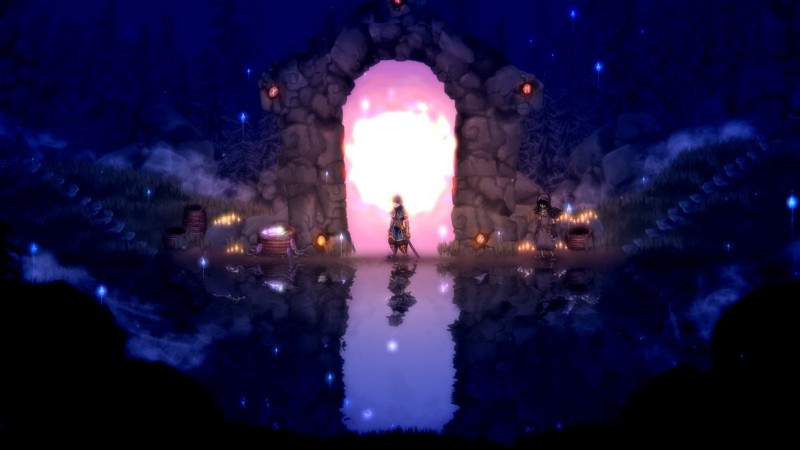
Ska Studios is on the cusp of launching a successor to its own 2016 platforming action game Salt and Sanctuary, this time called Salt and Sacrifice. While it officially releases tomorrow, I’ve only had the game for the past weekend and have plenty more to explore. Instead of writing a detailed review, here are my first impressions of Salt and Sacrifice after spending a few hours hunting Mages.
Following its predecessor’s footsteps, Salt and Sacrifice hits a similar 2D Soulslike feel. After perishing in the opening moments, your character becomes Spellmarked, an entity that treads the line between life and death by the power of magic. Your other title is that of an Inquisitor tasked with hunting and devouring the hearts of dangerous Mages, the giant monster bosses you’ll fight throughout the game. It’s all very boilerplate for the genre but does its job to get you into the world and track down Mages, though the plight of the Inquisitors hasn’t gripped me beyond the setup.
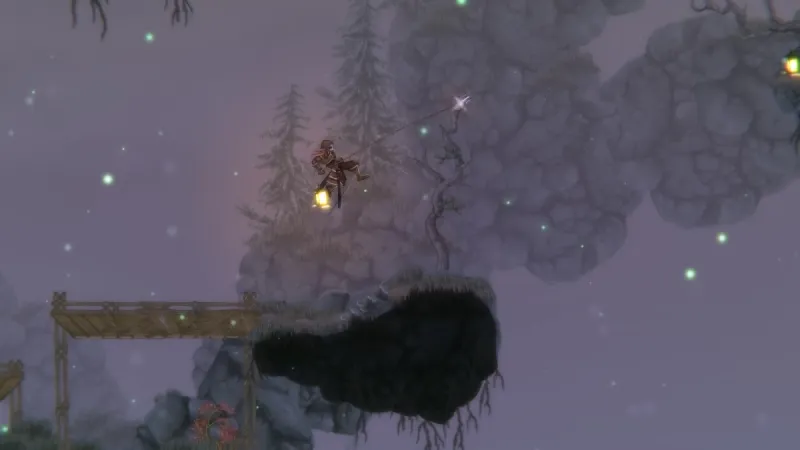
It was a pleasure to run through Ashbourne Village as well as Bol Gerahn. They were two of the locations that I had to visit on my first mission to defeat various Mages. I’ve enjoyed exploring the desert-drenched ruins and decimated settlements of the former. There are many fun platforms to explore and I enjoy the variety of settings. These levels are large and have all kinds of paths and shortcuts to find while fighting through the native enemies for each place. Hidden around the world are the key spots to progress in Salt and Sacrifice, hazy points of interest that start up the main trials in the game: hunting down a Named Mage.
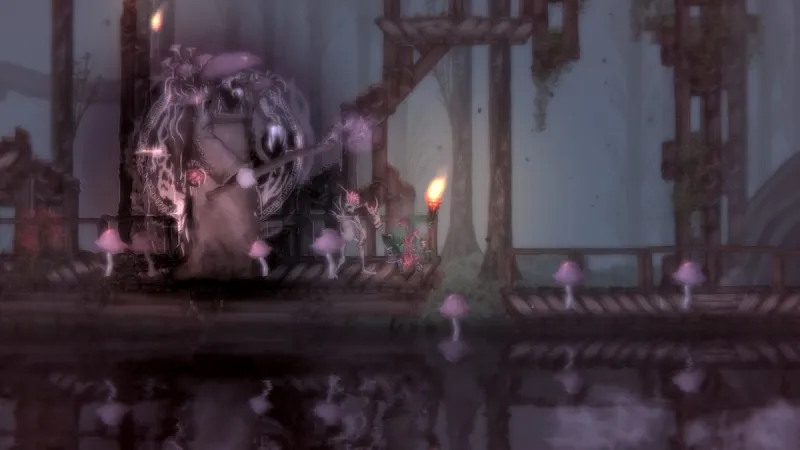
People who are able to take on monstrous forms that contain various elements like light, fire and water. Marked Inquisitors track Mages around a level and clash with them in shot encounters with summoned enemy minions. The boss will then find the Mages again and they’ll hide for a time. These bosses can be both entertaining and tedious. My favorite fights thus far have been those that rewarded recognition of the Mage’s attack patterns, resulting in a satisfying kill after a handful of tries. Their attacks are often one-hit, cheap shots, and the farther I go in the game the worse they get. I’ve only found success in recent fights if I got lucky rather than resulting from learning anything useful from the encounter.
Salt and Sacrifice reminds me of Monster Hunter in its crafting and gear system; however, I’m not sold on its implementation yet. The minions of defeated Mages will give crafting materials to make armor and weapons based on the creatures they have destroyed. I really like that Mage fights aren’t a one-and-done situation and can be found and defeated outside of their Named Mage hunts to grind for more materials. What holds the system back severely for me is the necessity to unlock certain armor and weapon tiers in the Tree of Skill.
The ability to craft almost every item can be locked behind skill points. This means that you have limited options for using different weapons or armor in order to fight against specific Mages. For example, I went deep into the Highblade (katana) Dexterity build in the skill tree early on, thinking the use of gear would be tied solely to stats. Due to this, my options for what I can wear in battle are limited because the skill nodes for light and heavy armor skills reside in other parts of the tree. The lack of opportunity to experiment with different weapons and preparing for battles that I don’t have the right gear for makes me feel restricted. It has been frustrating having to go back and figure out which skills to refund – with a limited number of reagents to do so – and reallocate these precious skill points elsewhere to unlock the ability to wear some different armor.
While my most recent hours in Salt and Sacrifice have been, for lack of a better term, salty, I think there’s a lot to like here for Souls fans and even Monster Hunter buffs. These two shows share lots of DNA. They both have prioritized attack animations, and they focus on learning boss patterns for victory. I found that playing one made me more comfortable in the other. Hence, combining the crafting and hunting aspects to create a Souls-like game is an excellent idea. Ska Studios didn’t take the best of each idea to create the perfect combination. Although I am optimistic about the future of Salt and Sacrifice, I feel it is flawed. I haven’t played the game yet, and hours spent fighting bosses feels pointless because there are no real rewards. I don’t think I have a grasp of everything Salt and Sacrifice has to offer yet, but I’ll share my final thoughts in a full review when I do.
#Salt #Sacrifice #Review #Progress