Illuminating Impressions Of Eyes In The Dark: The Curious Case Of One Victoria Bloom
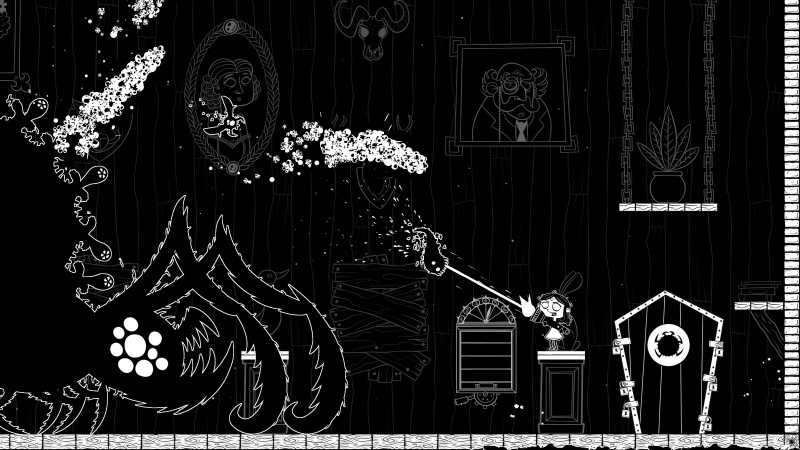
If you haven’t seen it yet, the platforming roguelite Eyes in the Dark – The Curious Case of One Victoria Bloom debuted last week. The game’s reveal caught my eye thanks to its striking art direction and unique gameplay. I’ve spent the last couple of days battling the darkness as the titular Victoria Bloom, a precocious young girl searching her ancestral home for her missing uncle after it’s been overtaken by shadow monsters. Armed with a powerful flashlight, you’ll battle a living darkness in an ever-changing mansion steeped in mystery and secrets.
I’m enjoying the game, but it took longer than I would’ve liked to get used to its strange control scheme. Eyes in the Dark works in a similar way to twin-stick shooters. The left stick is used to move and the right to aim the auto-destructive flashlight beam. With your thumbs occupied, jumping is on the right trigger. Hit the right bumper and you will execute a dodge.
It’s an unorthodox setup that feels like patting my head and rubbing my stomach, mainly because I’m conditioned to hitting a face button, namely A, to jump. It’s probably the best approach, though, given how aiming works, but expect to feel like you’re crab-clawing the controller as you awkwardly leap across stages for the first few runs. Even after settling into things, I still have moments of wanting to treat the jump button like I’m activating the flashlight, causing me to hop around all over the place like an idiot.
Eyes in the Dark’s navigation and progression remind me of the early years of the The roguelike revival, such as The Binding of Issac and, for something deeper, Our Darker Purpose. Players traverse portions of the house, such as the foyer, attic, or garden, which each contain a bite-sized labyrinths of shops, upgrade rooms, and a boss battle, which grants a key to unlock the next area. Sparks can be earned by defeating enemies. This currency is used to buy upgrade items such as the flashlight and slingshot. This improvement resets after every run. You can also purchase permanent upgrades by spending Knowledge. Knowledge is an asset that you accumulate after clearing a specific zone. It’s based upon your performance and accomplishments.
If you’ve played a roguelike in the last decade, Eyes in the Dark is pretty straightforward, making it easy to jump into but also more repetitive. Fighting the same bosses and re-running the small zones lose their luster after a couple of hours, and I’ve already seen repeated instances of the randomly arranged rooms. I’m still unlocking parts of the manor, though, so I haven’t seen every location the game has to offer. Thankfully, Eyes in the Dark is easy on the eyes with a lovely black and white art style that’s sharp despite its limited palette. Given the Victorian setting, the chiptune soundtrack feels very fitting.
The roguelite way of waving the flashlight at monsters to extinguish them and create fogs of dark seems solid, but it’s not very effective initially. Your business grows as you get more upgrades. You can change the output of the flashlight by changing the bulbs it is equipped with. So far, I’ve equipped bulbs that produced a blob-like ray that slows incoming projectiles, one that focuses the beam akin to a lightsaber, and, on a similar note, one that emits light on the opposite end to make it a Darth Maul-style double-bladed flashlight. My favorite bulb so far, in an imaginative game of flashlight use, is the one that quickly fires light orbs just like a machine guns. But I like the shooty-shooty bulb, and something about how it behaves vaguely reminds me of Cave Story’s primary weapon. That’s a compliment.
You can use your slingshot as a limited-use projectile weapons that fires projectiles. The projectiles will change depending on which equipment you are using. It’s a useful backup for crowd control, and my favorites include cherry bombs that daze targets and firecrackers that explode into smaller projectiles. You can also upgrade your movement with the ever-utilitable double jump, boots which let you slow down and direct your descent.
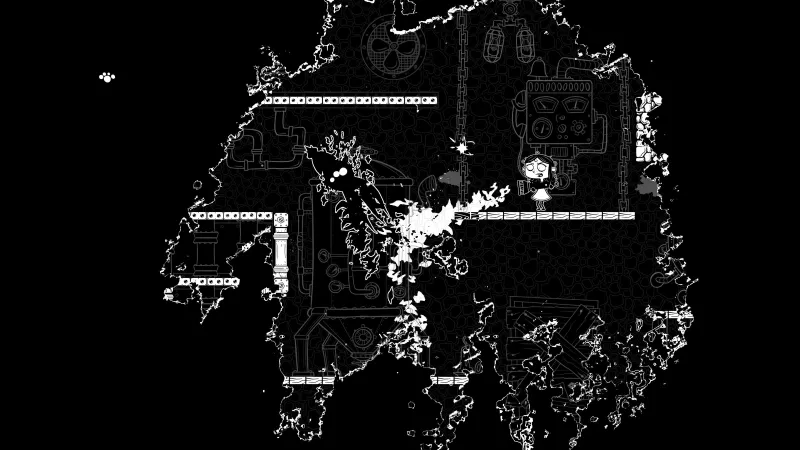
Unlocking additional upgrade slots to carry multiple upgrades can turn Victoria into a fun, shadow-extinguishing terminator, which is why I’m bummed that she still lost everything after finishing the first chapter of the game. I’m assuming this will be the case for each new chapter, making me dread having to repeatedly start from scratch after working so hard to assemble my ideal loadout of abilities.
Despite these shortcomings, I’m still having an increasingly harder time putting Eyes in the Dark down. It’s got an old-school arcade charm to its design, and I’ve felt the undeniable urge to start run after run, even if doing so means enduring the slow ability ramp up again. Although these are my primary focus, I also enjoy their creative combat approach. It may seem simple but artfully navigating shadow blobs while skillfully repelling monsters by my light is satisfying. There’s enough challenge to keep it interesting. I plan to stick with it and could see myself committing until I finally find Victoria’s shadow-napped uncle.
Give Eyes in the Dark a look if you’re in between big games and itching for a solid roguelite experience. The game is not available for PC on Steam or Epic Store. Eyes in the Dark would rock on Switch, in particular, so Steam Deck owners would do well to check if it’s playable on the device. I’ll keep trekking in the meantime and look forward to seeing if Victoria’s journey shines any brighter.
#Illuminating #Impressions #Eyes #Dark #Curious #Case #Victoria #Bloom