How to Balance Competitive Gaming With Demanding Studies

Dedication to competitive gaming requires focus, regular practice, and a commitment to improvement. When school brings essay deadlines, weekly readings, and high-stakes exams, the competition for your attention can feel overwhelming. Many players assume they must make an all-or-nothing choice between climbing the ranked ladder and staying on top of coursework. Giving up gaming can drain your motivation, while neglecting coursework leads to unnecessary stress and academic trouble. Finding a healthy rhythm between both worlds is entirely possible, making you a sharper thinker and a more resilient competitor.
The secret lies in treating gaming and academics with intentional planning. When you approach study sessions with the same strategic mindset you bring to an organized match, you stop wasting energy on frantic multitasking. You learn to recognize when to push for a major milestone and when to consolidate what you have learned. By establishing clear daily boundaries, you can pursue your favorite titles while maintaining steady academic progress.
Treating Your Academic Calendar Like a Tournament Season
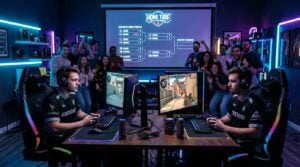
Competitive players understand the rhythm of seasons, playoffs, and tournament brackets. Every tournament run features preparation phases, intense performance windows, and scheduled rest periods. Applying that framework to your semester transforms a pile of assignments into a clear roadmap. Early in the term, review each syllabus to mark major milestones, such as midterms and projects. Placing these dates on a master calendar allows you to plan gaming commitments around academic peaks rather than colliding with them unexpectedly.
During weeks with lighter academic requirements, you can comfortably schedule team practices or explore new gameplay mechanics. When major deadlines approach, you temporarily adjust your gaming schedule to focus on coursework. It is equally helpful to recognize how the discipline developed through gaming can support your broader educational goals. As explored in our look at how creative gaming projects build academic skills, the patience, problem-solving, and systematic planning honed through gaming can enhance your approach to classroom assignments. Treating your schedule as a dynamic season keeps you proactive rather than reacting to emergencies.
Adopting Smarter Study Habits from Competitive Gaming
Many students spend hours passively highlighting textbooks or rereading notes without retaining key concepts. In gaming, passive observation rarely produces meaningful improvement. Serious competitors do not simply watch tournament broadcasts; they break down decision trees, analyze replay footage, and isolate specific mechanics through deliberate practice. Bringing that same active, diagnostic mindset to your academic coursework dramatically improves retention while saving valuable hours that can be reclaimed for gaming.
Instead of staring at lecture slides until your eyes feel heavy, test yourself using active recall techniques. Create flashcards for complex vocabulary, solve practice equations without looking at the answer key, or explain a difficult concept aloud as if coaching a teammate. Exploring helpful educational resources like snm-education.com can provide valuable strategies to study smarter rather than exhausting yourself with inefficient study habits. When you replace passive reading with focused, high-impact drills, you absorb challenging course material faster, leaving guilt-free time for gaming sessions later in the evening.
Structuring Focused Daily Blocks for Gaming and Coursework
One of the most common pitfalls for student gamers is allowing gaming and schoolwork to blur together. Attempting to draft an essay while waiting in a matchmaking queue guarantees subpar results in both activities. Fragmented attention causes simple assignments to drag on for hours, turning what should be an enjoyable gaming session into a stressful distraction. Separating your day into dedicated blocks of uninterrupted activity restores clarity, momentum, and peace of mind.
Establishing firm operating rules for your daily routine helps preserve the boundary between work and play:
- Complete your highest-priority academic assignment before launching any games.
- Close all gaming launchers, voice chat servers, and stream tabs during dedicated study periods.
- Set a clear stopping point for gaming sessions so late matches do not erode essential sleep.
- Use short physical breaks between tasks to reset your attention and prevent eye strain.
When you sit down to study during a scheduled block, treat that time with respect. Put your phone on silent, close unrelated browser tabs, and work through your materials with total focus. Knowing that a dedicated gaming session is waiting acts as a natural incentive to finish assignments efficiently. When that study block ends, you can transition into your matches knowing that your primary academic responsibilities are settled. This clean division eliminates lingering guilt and allows you to immerse yourself fully in competitive play.
Building Collaborative Squads for Academic Subjects
Cooperative multiplayer games teach us that individual talent can only carry a squad so far. Winning demanding matches requires clear communication, distributed responsibilities, and mutual accountability across the roster. Yet, when faced with challenging coursework, many students isolate themselves and struggle through confusing topics alone. Applying the collaborative dynamics of a coordinated gaming squad to your academic life transforms difficult subjects into a shared mission where everyone improves together.
A reliable study group allows classmates to divide heavy reading loads, exchange detailed outlines, and quiz one another before major examinations. Explaining a difficult concept to a peer forces you to clarify your own understanding, much like shot-calling during a match. Exploring supportive learning communities and advice hubs such as educity1713.com can help students find useful insights on collaborative learning and educational success. When you treat academic challenges as a team objective, the workload feels manageable and far more engaging.
Managing Mental Energy and Preventing Screen Fatigue
Both competitive gaming and rigorous academic study place intense demands on your cognitive stamina and vision. Staring at monitors for long stretches causes mental fatigue, sluggish reaction times, and difficulty absorbing complex ideas. If you jump straight from hours of reading digital textbooks into multiple competitive matches, your performance in both arenas will deteriorate. Recognizing the subtle signs of mental exhaustion—such as irritability, careless mistakes, or difficulty focusing—is essential for sustaining consistent performance over a demanding semester.
Incorporate genuine downtime into your daily routine that does not involve digital monitors or mobile devices. Step away from your desk to take a brisk walk outside, prepare a nutritious snack, stretch your shoulders and wrists, or listen to music. Giving your nervous system an opportunity to decompress helps restore mental sharpness and emotional balance. Protecting your sleep schedule is especially critical, as quality rest allows your brain to consolidate new knowledge and maintain sharp reflexes for your next competitive match.
Balancing a passion for competitive gaming with serious academic ambition does not require abandoning your favorite titles or sacrificing your grades. By structuring your calendar like a tournament season, adopting active study habits, and establishing firm daily boundaries, you can excel in both worlds. When approached with discipline, intentionality, and proper rest, gaming becomes a healthy outlet that sharpens your strategic thinking rather than a distraction from your educational journey.