Horizon Call of the Mountain, PlayStation VR2 Review – A Mountain Too High
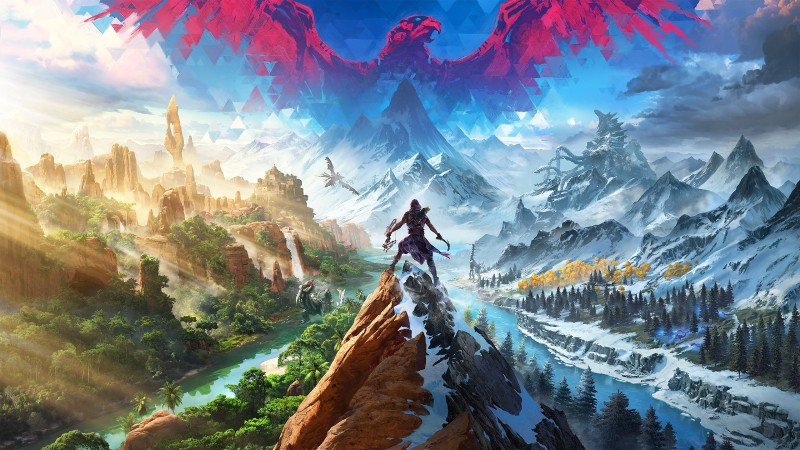
Call of the Mountain is meant to be PlayStation VR2’s showcase piece, and in some important ways, it functions as exactly that. The experience of firing an arrow and bow with VR is great. Horizon can even be seen from a completely new angle. Call of the Mountain’s main gameplay, though, isn’t very fun, and ultimately ruins the experience.
Call of the Mountain includes a short appearance by Aloy reminding you of your place in her world. However, this game features Ryas, an ex-Shadow Carja, who is offered the rare chance to get a pardon for some of his crimes as long as it doesn’t lead to a suicide mission. Call of the Mountain’s story focuses on a small cast of characters with familial and political histories, and watching those relationships bump against each other is the most interesting part of the narrative. There is a big bad, but they reveal themselves surprisingly late – too late to inspire any passion about confronting them.
To succeed in his mission, Ryas relies on two important skills: he’s great with a bow and arrow, and he’s a hell of a climber. The latter skill, which makes up most of the game, is something I struggled with. Moving Ryas’ arms to propel him up a cliff face or climb a rope rarely ended in failure, but it meant the vast majority of my time involved pantomiming the motion of a cat scratching a wall while my face was inches away from a cliff. It just isn’t fun to perform, even if it does work.
The game unlocks tools that can be used to make ziplines or throw a rope over your head. However, it doesn’t manage to change the basic nature of climbing.
Combat, on the other hand, can be thrilling, and it doesn’t take long to feel like an expert marksman. You can change your capabilities by participating in robot battles that take place within specific areas. Ryas can strafe his enemies in a circular fashion and then dodge quickly to avoid attacks. It all feels fluid and fast. As in the core Horizon games it is possible to knock off certain armor components which will reward you with higher damage. However, this acts more as a bonus than a core mechanic. It was especially enjoyable to fight against larger robots one on one. These battles required some more planning than just simply targeting the appropriate sections.
Call of the Mountain may help you aim better, which I believe is a good thing. It is always satisfying to shoot Stormbirds from the skies with a good shot, or hit that target optionally from a distance of a few miles away.
Ryas, who is a bit of an artisan and a skilled tinkerer, must also put together all his ammo. A small, but very enjoyable VR action is attaching explosive canisters and arrowheads to the arrows. Wrapping a rope around a new tool or a piece of string around it is another.
Call of the Mountain’s other big success comes from the simple act of looking around. Horizon is beautiful to view, with abandoned technology being replaced by natural aesthetics. There are plenty of opportunities to just stare at something cool in the distance, and I often took the opportunity to do it – unless I was climbing. Then I couldn’t get through the section fast enough and would speed to my destination.
Horizon Call of the Mountain can be used as a showcase for PlayStation VR2. This is the perfect game for showing off your latest technology to family members and friends. You can even unlock a mode that allows you to travel passively in a canoe through the robot-infested jungle. Call of the Mountain’s obsession with climbing holds the game back. Highlights of the game include fighting robots and making things. Pulling yourself up a mountain isn’t, and that’s where you spend most of the approximately six hour experience.
#Horizon #Call #Mountain #PlayStation #VR2 #Review #Mountain #High