Halo on Paramount Plus is the ultimate battle between story and lore
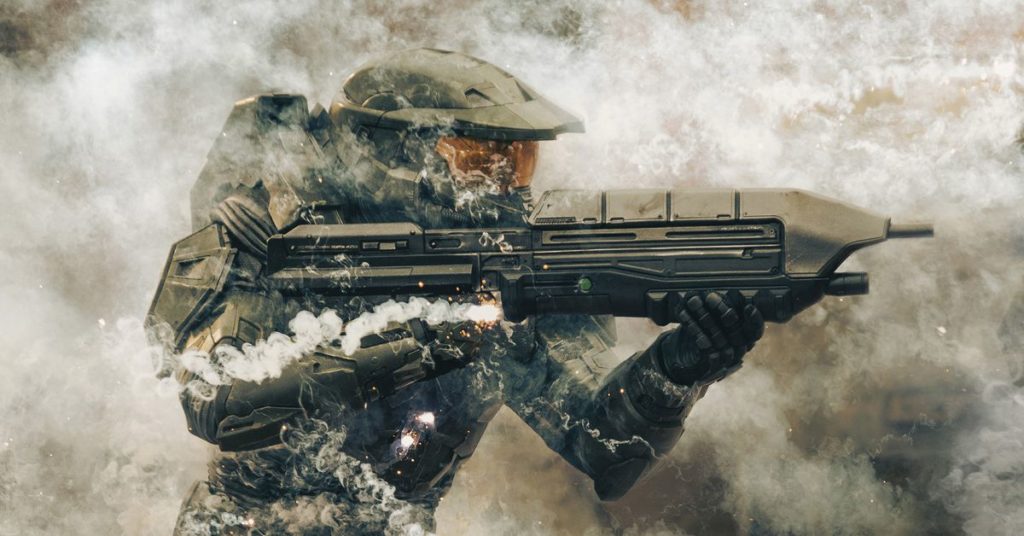
Here’s a surprisingly loaded question: What is Halo, Microsoft’s hit video game franchise now 21 years running, about? Play the games and you’ll experience a thin but serviceable science-fiction yarn about humanity’s struggle against an advanced alien collective of religious zealots dedicated to wiping them out, and the cyborg supersoldier Master Chief that is our best hope of stopping them. It’s got just enough moments of grandeur, horror, and scale to be memorable, and most games end long before you begin to question their intelligence. They’re pretty good, is what I’m saying, largely because they keep things moving through serene-yet-hostile spaces and hint at a wider conflict in the background.
This is how most people understand Halo: It’s the spine holding up each games’ story campaign, and the loose rationale for the aesthetics of the wildly popular competitive portion of the game — arguably where most Halo fans have long set up shop. There is a wealth of additional media available to Halo: books, short films, comics, and even comics. There are stories about the nature of artificial intelligence, war crimes committed for the so-called “greater good,” space operas about a precursor alien species that lived before the ones we meet in the games, and stories about the religious hierarchy of the series’ villains. It’s bonkers stuff, some of it surprisingly good, some of it less so.
Halo, the Paramount Plus TV series premiering today, is a continental rift in these two camps — the fans who know all the stuff happening in the greater Halo Universe, and the people who just play the games. It’s disconcerting because, for the first time in 20 years, it’s asking Halo fans to separate “story” from “lore.” Where previously, fans could engage with the books and the games interchangeably and (mostly) have neither contradict the other, the show’s creation of an independent “Silver” timeline for its events have effectively wiped the slate clean.
This can make the show’s first episodes feel very … Strange. I’d argue it has to be this way, though. HaloLike any other TV series, it must tell a story. And the Halo games’ corpus of fiction is not a story: it’s lore. A collection of stories and narrative ephemera that’s meant to add texture and context, subservient to the primary focus of the fiction: the games.
Games are a natural match for lore. It’s a way to reward the larger time investment most games require with ample whys and wherefores. We are all storytellers, which means that the space between the actions you take in a video game and the surrounding environment is rich in stories. Lore acts as fertilizer. It takes an existing relationship, and speeds it up.
TV shows don’t have that relationship to lean on. Unfortunately, they don’t have the luxury of telling a story. Halo, the source material doesn’t give it much to work with. There’s loads of in-universe history, and you can see a lot of it gestured at on-screen, but characters, individual motivations, rich antagonists — HaloThis whole cloth has to be made. And so it gives a face to a faceless man in actor Pablo Schrieber’s Master Chief, an act that to some, may be sacrilege in and of itself, despite the fact that it’s necessary for a show that cannot count on its audience’s familiarity with the lore. It’s not that way. MandalorianBecause Star Wars is more familiar, you can. Halo surrounds Chief with other faces and a familiar story, one where Chief rebels against the one order he can’t follow, trusting that viewers will want to know what other characters do: Why?
In this regard, it’s refreshing to see how Very littleThis lore is central to Halo — while it’s great fun to theorize with fans and collectively construct wikis about a show’s mythology, it should never be Requirements. The show will soon have its own lore, which should allow it to flesh out a new Halo story as the series enters its third decade.
#Halo #Paramount #ultimate #battle #story #lore