A Plague Tale: Requiem Review – A Bold Epic
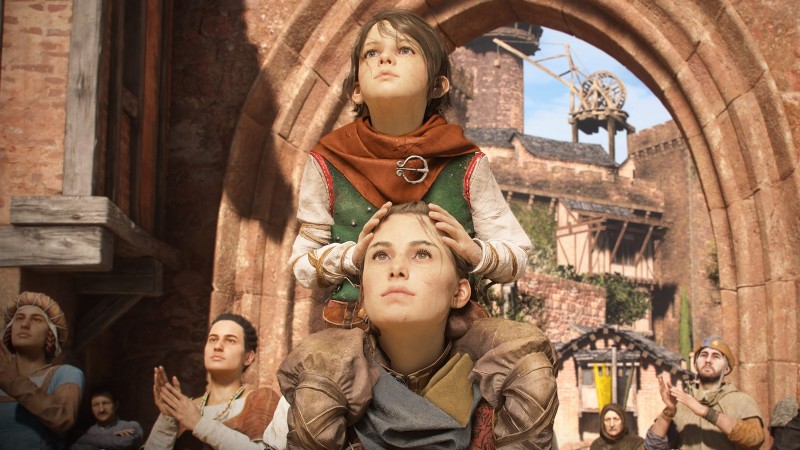
Going into A Plague Tale: Requiem, developer Asobo Studio’s follow-up to 2019’s A Plague Tale: Innocence, I was prepared for the usual jump in quality and scale that most sequels embrace. It was a huge leap that I didn’t realize would make. Requiem is not a typical sequel. Asobo has written a Plague Tale epic. In terms of its scope and storytelling ability, it feels Odyssean. Although I was able to piece together most of the story by the time it ended my twenty-plus hour trip through medieval France and beyond, some of the gameplay feels awkward due to its size, particularly in the first half. Still, I’m more impressed by Requiem’s boldness and near across-the-board improvements than not.
Requiem begins roughly six months after the events of Innocence, and while it is possible to piece together what’s happening if you’re new to the series, I’d really recommend playing Innocence or at least getting caught up on its story before Requiem. Siblings Amicia and Hugo de Rune are looking for a semblance of an ordinary life, despite Hugo’s rat-infested Macula condition. The game shows, for a while, what normality looks like for Hugo and Amicia de Rune. As you can guess, Amicia is forced back to protector mode when the Macula disease rears its ugly head. Amicia and Hugo travel south with returning alchemist Lucas to seek answers on a mysterious island.
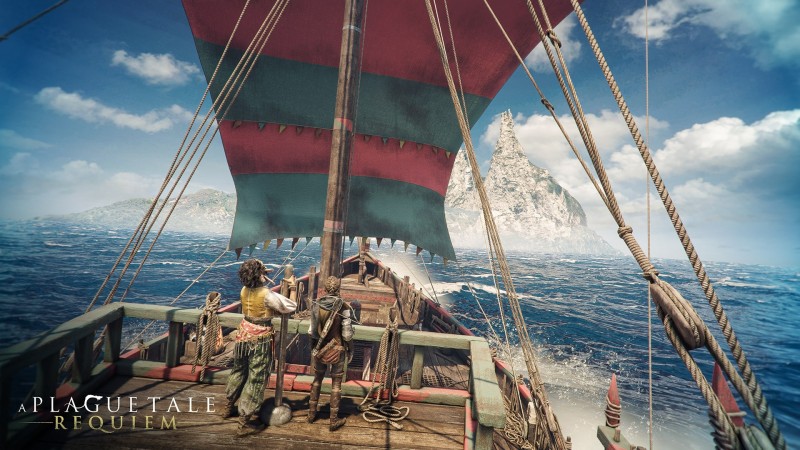
I was excited about this change in setting and all the “new” it brings to the series, but it takes far too long to reach it. The majority of the game involves escaping from your home and navigating to an island by boat. Don’t get me wrong, these 10 to 12 hours are good Plague Tale fun, but they resemble Innocence so much that, at times, it hardly felt like the fresh experience I expected from a sequel. It was slow and tedious, even when I met characters who would be my favorite in the game like Arnaud, a battle-hardened, but gentle-hearted, or Sophia, a pirate queen. It didn’t help that I experienced various technical issues like distracting (but not game-breaking) framerate drops, visual bugs, and one complete hard crash.
However, I was completely changed by the moment that I arrived on the island. This story is fast-paced and exciting. It introduces new characters and villains as well as intriguing lore and new mysteries. Even mechanically, the isle represents a miniature open world to explore that’s more sprawling than any other area in the series. The way the game’s narrative pulls you here and there on this island is good fun, whether you’re solving the mystery of ancient underground ruins or fighting off secretive slavers awaiting the Child of Embers. After playing the game, I was able to feel like I had a deep understanding of its layout.
The best part about the game was the last. Everything is working on every cylinder. Ingenious puzzles that let you manipulate the rats’ aversion to fire to make them stealthily take down enemies always satisfied me – using a special projectile to extinguish an enemy’s sole flame, allowing the rats to feast on their live body, never grew old. The story’s twists and turns kept me guessing, as did the island’s central mystery.
Requiem has an amazing visual look. Asobo created a unique, almost painting-like style for the game, with playful and whimsical color palettes, that perfectly complement the medieval setting. Requiem captured that feeling visually, with its unique palette of grayscale colors that increased the darkness surrounding the de Runes. Sometimes I was compelled to stop and play around with photo mode, in an effort to capture the beautiful blooming flowers off the shore of this picturesque island. Requiem is truly a delight for the eyes.
Elsewhere, Crash Bandicoot-like sequences that see Amicia fleeing from massive hordes of rats toward the screen, or sprinting in the opposite direction to safety, were especially welcomed breaks from the game’s otherwise quieter but stressful stealth moments. These segments speak to the more bombastic nature of Requiem, which at times goes to places I could outright spoil here, and I don’t think you’d believe me anyway. Again, I want to stress how epic Requiem’s scale and size are – it’s bigger than Innocence in every way. Even beyond the story, new additions to Amicia and Hugo’s arsenal, like a one-hit-kill crossbow (don’t rely on it too much, though, because arrows are tough to come by) or Hugo’s ability to control rats and feast on the enemies around you, up the ante of the moment-to-moment gameplay.
Still, despite what I enjoyed upon reaching the island, I can’t help but feel that Asobo could have cut a large portion of this game. That’s not to say the sections I want trimmed are bad – they’re good due to A Plague Tale’s quality gameplay and storytelling – but they feel more like unnecessary padding that hinders Requiem’s pacing.
I was relieved when Requiem’s second set of credits rolled. Not because I didn’t enjoy playing the game, but because the de Runes’ journey in this game is tense and stressful for much of it. Sometimes it can be too lengthy and strangely sadistic because of its emphasis on suffering, fakeouts and pain on de Runes. Other times, I admired Asobo’s command of this series, its rat-infested stealth mechanics, and its grandiose storytelling. The latter is more convincing than the former and Requiem feels much more than a continuation. With this journey behind me, I’m excited about where the series might go from here, but if Asobo plans a break for the franchise, rest assured that Requiem goes out with an impressive bang.
#Plague #Tale #Requiem #Review #Bold #Epic