The Outcast Comes Home – The Life And Career Of Edmund McMillen

Edmund McMillen, a pioneer in independent development and a hitmaker in the games industry for over 20 years has earned renown in the gaming world. Whether you’re talking about his early days churning out cult-classic games with Adobe Flash or his mainstream success with titles like Super Meat Boy and The Binding of Isaac, McMillen is one of the greatest success stories to come out of the millennium’s early indie boom. McMillen still feels like an outsider despite all his success.
McMillen was our guest for an extensive conversation. We wanted to know more about his unique journey as a designer and artist, which led him to be one of the best independent game developers in this time period.
New Paths to Newgrounds
McMillen has long felt like he doesn’t belong. McMillen, a Santa Cruz County native, grew up mostly with his grandmother. His mom’s side of the family, including his grandmother, consisted of devout Catholics, while members of his dad’s side were what he called “A.A. Christians,” or born-again Christians recovering from addiction.
“I didn’t fit in really anywhere in my family,” says McMillen. “I just felt like a giant weirdo. My grandma was the closest to me. My grandma was the only person who had an interest in art. My dad sang in a Journey cover band, but other than singers, there weren’t artists, illustrators, or creative types.”
McMillen continues to be a huge fan of music. He even calls it his greatest inspiration. McMillen, who wears a Nine Inch Nails shirt, rattles off the names of his favourite bands such as The Smashing Pumpkins or The Breeders. McMillen said that he was drawn to the independence artists have in creating their art, and how they express themselves.
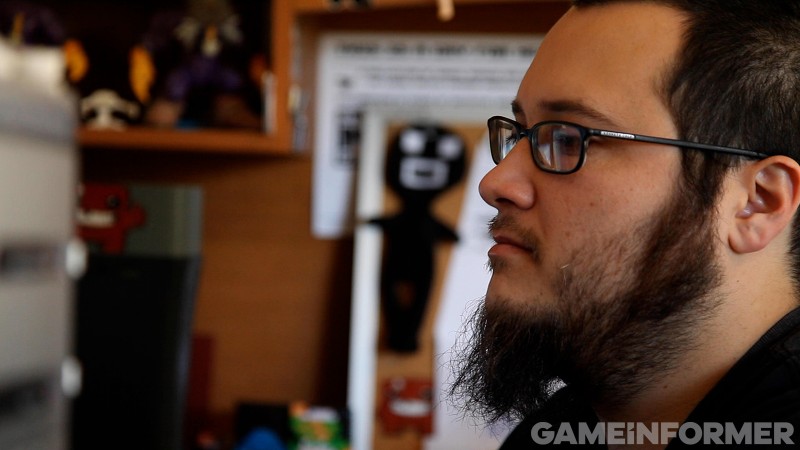
“That was the thing I always strived for as an artist: the idea that this small group of people could sit down and do and write whatever the f— they wanted, and then thousands of people would hear it and could enjoy it was just so cool to me,” he says. “That’s what I wanted primarily – the same thing for animation and anything that I was doing. I wanted my voice to be heard so desperately.”
McMillen felt like he wasn’t a good fit for high school and floated around through it. He loved to draw so he decided to self-publish comics. McMillen was able to light a fire under his feet after he received a letter of rejection from an independent comic publisher. “It was one of those failures that motivated me heavily,” he says. “Not only did I want to show them up, and show them what they missed, but also, I got real and was like, ‘Okay, if I want to continue doing this, I can’t just keep printing 50 comics at Kinko’s and selling them at Streetlight [Records in Santa Cruz].’”
To showcase his comics, he began taking web design classes at community colleges. Flash became his preferred web design tool due to its popularity at that time. McMillen soon discovered Newgrounds.com which hosted user-created movies and games.
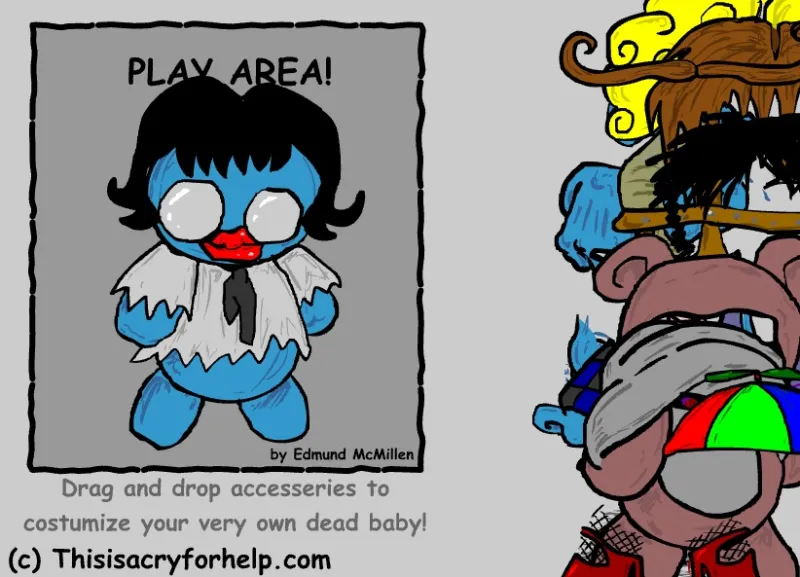
Dress up for your dead baby!
Dead Baby Dressup! is his first experience as a game designer. This Flash-based interactive Flash game was based upon his comics. This is a Cry for Help was his first comic book series. He purchased a domain and started to experiment with Flash, implementing interactive elements.
“I didn’t choose games; games chose me,” he says, laughing. “I wanted to make comics. The thing is, even on Newgrounds, my animations didn’t do that well; it was my games that did well.”
Tom Fulp (founder of Newgrounds), was attracted to McMillen’s work. “He promoted my work pretty heavily and showed me the way,” McMillen says. “I didn’t know I was making games, even when I was making Flash games back then. There wasn’t even a category for games yet. They were just considered Flash animations that have interactivity to them.”
Fulp and McMillen began to work on McMillen’s game, but Fulp was forced to give up on that game to concentrate on Alien Hominid. Fulp wanted Alien Hominid to be published on Newgrounds. McMillen could not grasp the idea of having a Flash-based game on consoles. Fulp was determined to do it.
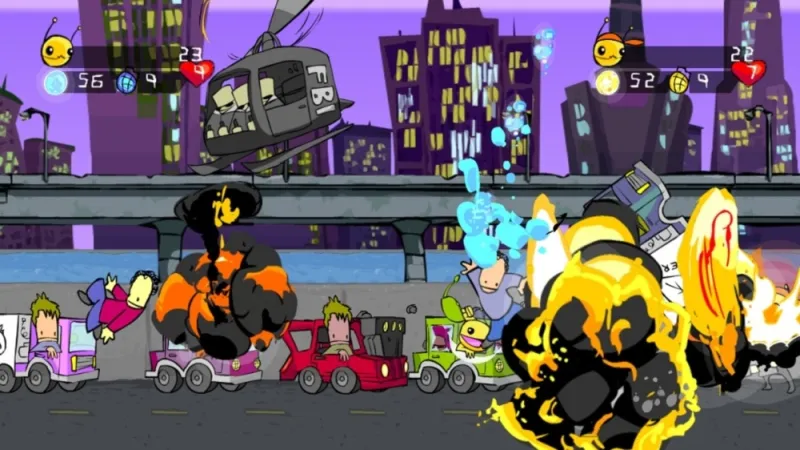
Fulp’s Alien Hominid HD on Xbox Live Arcade
Fulp created The Behemoth studio in order to achieve this. McMillen’s collaboration with Fulp on that project fell through, but the success Fulp and The Behemoth experienced with Alien Hominid and Castle Crashers served as early showcases for what indie games could accomplish in the home console market.
McMillen still didn’t feel like he entirely fit in despite the attention and audience he found online through sites like Newgrounds. McMillen felt a bit of competition with fellow creators, which motivated him to improve his craft. McMillen was a developer for almost 40 games during his first decade. Many of these were created in collaboration with fellow programmers. McMillen thought beyond Newgrounds, much like Fulp.
Carnivorous Console Conception
McMillen, along with his wife Danielle sold their home to create what McMillen called a “portfolio of sorts” in the 2000s. It contained all his comics and games. After seeing the successes of fellow developers via the Xbox Live Arcade, McMillen wanted to join the gold rush. “Suddenly, my peers were becoming millionaires, and they were having these options for their futures, and I would really like the same,” he says.
McMillen got an email one day from Cliff Bleszinski (then-Epic Games) telling him that he purchased the disc and loved what he was seeing. McMillen saw it as his opportunity to enter the console market. Bleszinski sent McMillen contacts at Microsoft, Nintendo, and other companies upon his request.
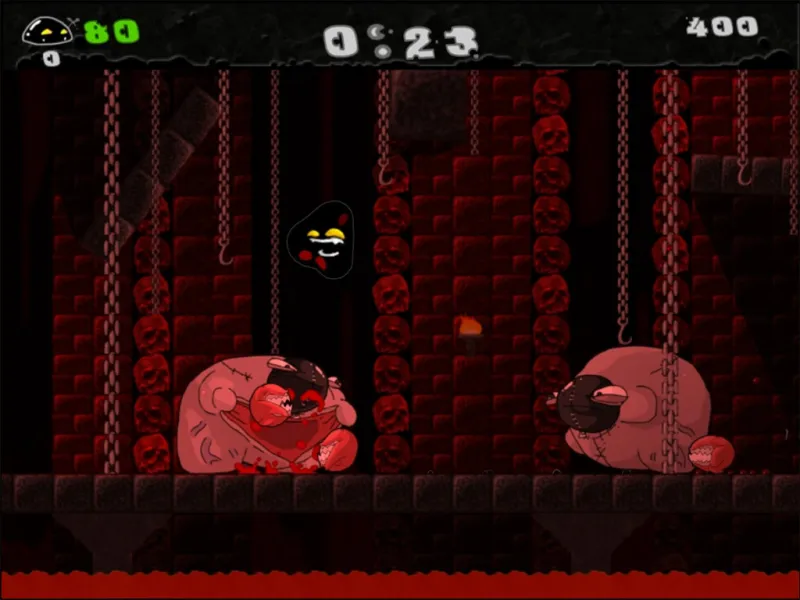
Gish
McMillen sent emails to both and received a positive response from the Xbox Live Arcade staff. McMillen first pitched them a remake version of Gish, which was one of his most beloved games. McMillen reached Alex Austin (his original Gish creator) and Tommy Refenes (another programmer he met via Newgrounds), to get them to work on the XBLA version.
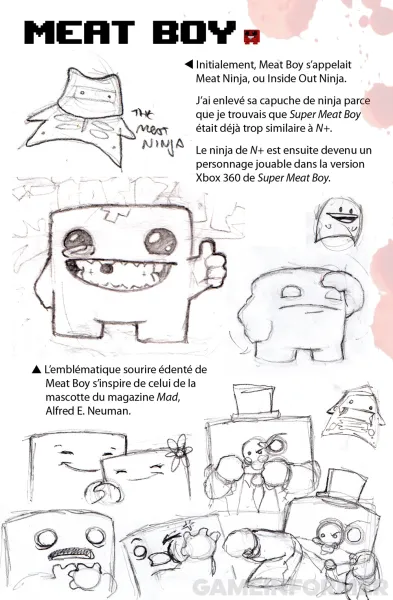
But, when the Gish Project began, everything quickly turned in the wrong direction. Development was halted and McMillen quit the team. Despite this, McMillen knew this was his big chance, and he couldn’t just walk away from the opportunity, so he began looking at what his most successful recent Flash games were. McMillen’s favorite was Meat Boy, a 2D platforming title.
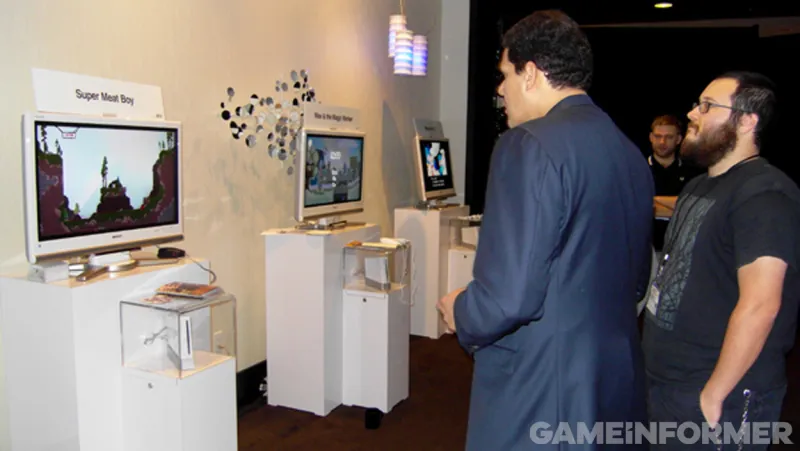
McMillen showing then-Nintendo of America president Reggie Fils-Aimé a demo of Super Meat Boy
“It had eclipsed all of my other games as far as views go, and it was the most mainstream-appealing game on the internet that I had done,” McMillen says. “It was the most simplistic as well; it was a platformer, so it didn’t even involve physics. It was just straightforward.”
McMillen presented a Meat Boy port on the Xbox Live Arcade team, and Refenes was asked to program it. Super Meat Boy was born after everyone agreed. As release neared in 2010, Microsoft informed McMillen and Refenes, or Team Meat as they’d become known, that the sales projections for Super Meat Boy were low thanks to it being a 2D game. Despite this notion, Super Meat Boy was bolstered by strong reviews and Team Meat’s grassroots promotional efforts.
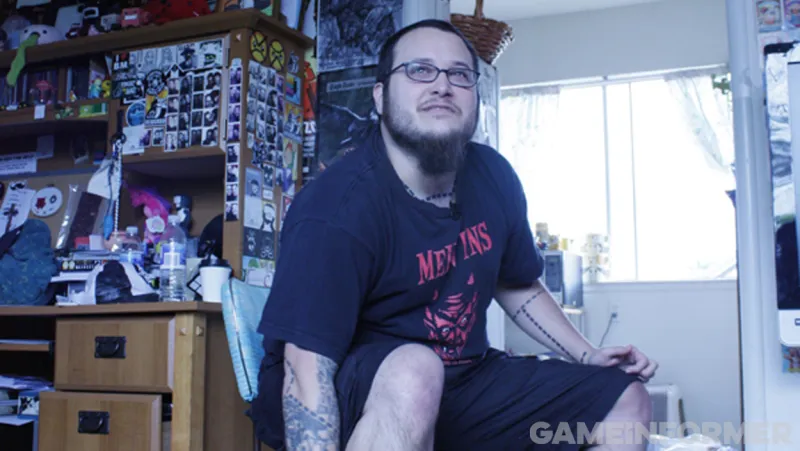
McMillen at the 2012 Indie Game: The Movie filming, in which McMillen chronicled the evolution of Super Meat Boy
McMillen’s highest hope for the game before release was that it would sell enough that he and his wife could afford a mobile home in Santa Cruz. McMillen said that his sales were able help him reach that goal in the first two weeks. Then, after the dust settled and the housing market crash, he was able afford to buy something much better than his initial target.
Super Meat Boy sold hundreds and thousands of copies, and McMillen was given mainstream attention and was certified a hit on the consoles.
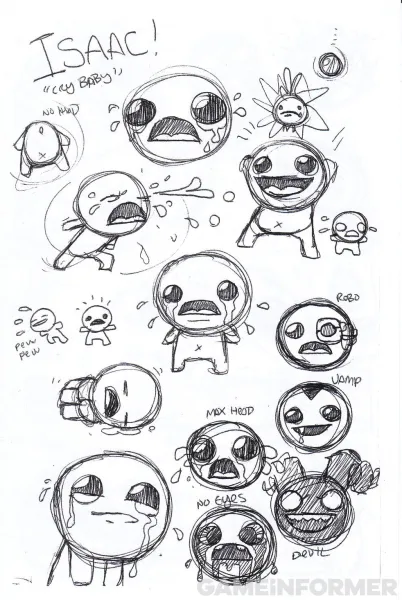
Edmund’s Unbinding Principle
Super Meat Boy remains a favorite McMillen title, although he didn’t want to create another sequel. He wanted to explore new avenues. “[The success] screwed with me a little bit because there was an expectation,” he says. “Everybody wants a sequel, and the first thing I said was I would never make one. I would never make a sequel to Super Meat Boy because how could I do it better than that?”
That’s exactly where McMillen and Refenes diverged. McMillen says that Refenes wanted it to become a franchise. (And he did eventually release Super Meat Boy Forever in 2020 under Team Meat). But McMillen said that he didn’t find the concept of a sequel compelling and this led to a split between the two. “I think we were just moving in very different directions, and we wanted very different things,” McMillen says. “The option was there to do The Binding of Isaac as a Team Meat game, but Tommy did not want to. It was clear that he wanted more Meat Boy material. I found out quickly that we were extremely different people.”
McMillen quit Team Meat shortly thereafter to start developing new games. McMillen’s instinctive reaction to the expectations for a sequel was to start work on something entirely different within nine months of Super Meat Boy. The Binding of Isaac was the result, which is a top-down, roguelike video game that draws inspiration from The Legend of Zelda.
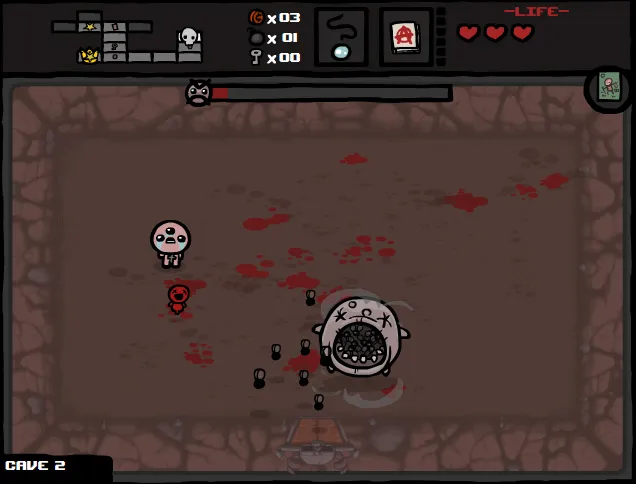
The Binding of Isaac
“I wanted to get back to the headspace of not caring about money, like in the Flash days, not caring about ESRB rating, not caring about who I may or may not be upsetting, not caring about impressing some faceless suit, or whatever else; just do whatever I want to do,” he says. “Even though I didn’t make huge compromises with Super Meat Boy, it was me playing it safe because I knew what was on the line, and I knew what I was risking.”
McMillen rekindled a collaboration with Florian Himsl to work on The Binding of Isaac. He was a Newgrounds programer who he had worked with for several Flash titles back in 2000s. McMillen draws extensively from his childhood experiences, exploring topics such as religious fanaticism and feeling outcast.
McMillen resorted to music as his inspiration for this project.
“There’s something about how music is written that speaks to me a little bit more than traditional game design,” he says. “Kind of in the way that the story and the theme of The Binding of Isaac is written more like the lyrics of a song with visuals than it is a traditional story in a book or movie. I pull more from that: more from abstract poetry and words to set the tone that gives you these little empty spaces that you can fill in, instead of this drawn-out explanation of everything in a story structure.”
Since its inception, The Binding of Isaac has had ten years of success. McMillen started the expansion of The Binding of Isaac because his wife enjoyed it so much that he wanted more content. He was inspired by the intimate nature of the game and decided to create more content. McMillen released a prequel deck-building card game called The Legend of Bumbo as well as a Kickstarter funded tabletop game called The Binding of Isaac.
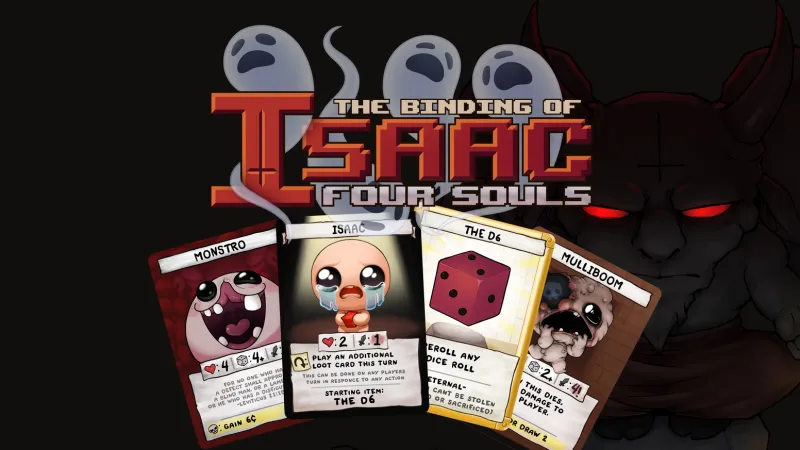
“[The Binding of Isaac is] the only game I think I’ve worked on that I’ve been so brutally honest, and I want so desperately to paint this picture of what it’s like to grow up as a poor, single-parent household’s kid, who’s a creative weirdo and doesn’t fit in anywhere,” he says. “Writing from that perspective and being able to tell that story in an abstract sense felt very important.”
McMillen, who was still focusing on The Binding of Isaac at the time, continued to work on new games and reconnected once more with an old Newgrounds friend. McMillen made contact with Tyler Glaiel again, who he worked with on several Newgrounds titles in the past. Together, they released The Basement Collection, a 2012 compilation of McMillen’s old Flash titles for PC, Mac, and Linux.
McMillen and Glaiel teamed up five years later to make The End Is Nigh. Many compared it to Super Meat Boy because of its challenging gameplay. McMillen believes that The End is Nigh is a superior title to the rest of his collection.
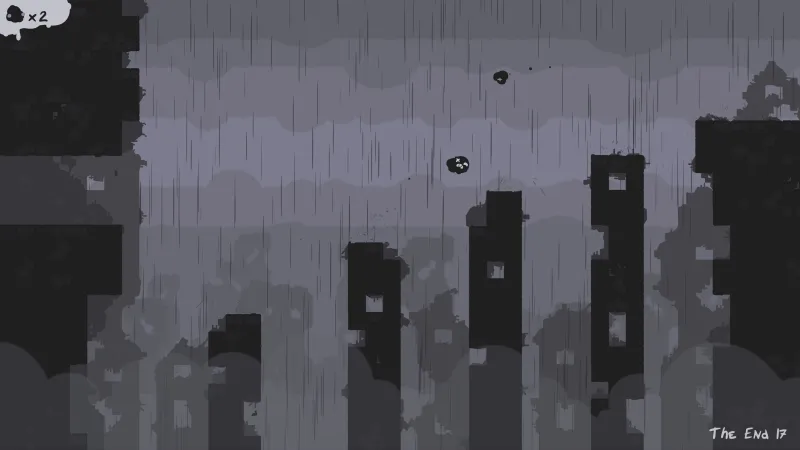
The End is Near
“It’s the most beautifully elegant game that I’ve ever made,” he says. “In a lot of ways, The End is Nigh was my version of Super Meat Boy that was more true to who I am and more brutally honest about where I was in the world at that time.”
McMillen, just like with The Binding of Isaac wrote an autobiographical piece, dealing this time with his mental health struggles. “I wanted it to feel like you’re riddled with anxiety at all times, and it felt like this looming, horrible darkness over you and that you’re always waiting for the next shoe to drop, and it never does,” he says. “I wanted you to feel panic. It was my goal to make you feel anxious. I was not feeling mentally well at the time, and I wanted to simulate that in a game form.”
Oddly enough, McMillen thought that The Binding of Isaac, with its abstract ideas and more difficult-to-describe premises, would be his cult hit, but it turned out The End is Nigh was, as he describes it, his “arthouse midnight movie.”
The platformer launched in 2017, and the designer’s work again received positive reviews, but it did not receive the same mainstream attention as games like The Binding of Isaac. However, McMillen returned one last time to his biggest hit to release Repentance, the final planned expansion in Isaac’s journey. The 2021 expansion serves as a fitting bookend to the previous decade of McMillen’s career and the last foray into that world – at least for now.
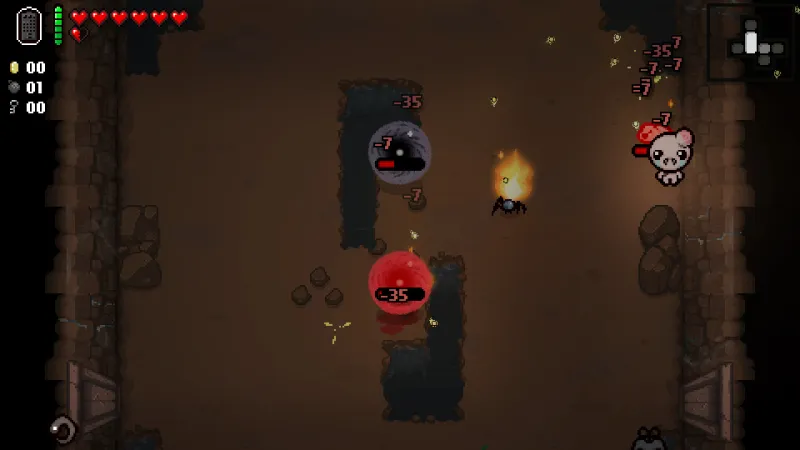
Afterbirth and the Binding of Isaac
“I’m done … until I decide to make a sequel in like 10 years,” he says with a smirk. “I need to become a better designer. I need to grow more because I’ve had like five years of stagnation and kind of playing it safe with my projects that I’ve been doing.”
McMillen has found a new lease on design through Mew-Genics, a revitalized project from his Team Meat days that he describes as a combination of Pokémon, Animal Crossing, Final Fantasy Tactics, and Dungeons & Dragons. After shelving it for nearly 10 years, he’s again making good progress on it, once again joining forces with Glaiel. He estimates Mew-Genics is still about two years from release, but he’s happy with where he is on the project and how he’s once again growing as a designer.
There is no end in sight
McMillen hopes that McMillen will continue to share the worlds and characters he has created with the same degree of freedom as the musicians and artists he idolized growing up. McMillen plans to create smaller games every couple of months after the release Mew-Genics.
During his two decades making video games, McMillen has focused on creating the kinds of experiences he’s wanted to make – with minimal compromise – rather than what would appeal to a mainstream audience. He has created unforgettable experiences and his fame is only a result of this strategy.
McMillen may still feel like somewhat of an outcast, but perhaps that’s precisely why his work resonates with so many people. When you combine that notion with brutally honest writing, striking visuals, rock-solid gameplay, and inspiration drawn from some of the greatest games of all time, it’s a recipe for why critics and fans alike continue to eagerly anticipate his work and welcome his creations into their lives time and time again.
#Outcast #Home #Life #Career #Edmund #McMillen