Hell is Us Preview – Unguided Into Darkness

Hell is Us represents a big step for Montréal-based studio Rogue Factor and creative director Jonathan Jacques-Belletête. It’s the developer’s first original IP after releasing Mordheim: City of the Damned and Necromunda: Underhive Wars, stepping out from the massive Warhammer license, creating something the team can call its own. Jacques-Belletête departed Eidos Montréal after spending just short of 12 years with the company, where he found success as the art director on Deus Ex: Human Revolution and Mankind Divided and had just completed the art direction design for Marvel’s Guardians of the Galaxy before leaving. He is now directing the development of Hell is Us and is taking on a larger role.
I recently spoke with Jacques-Belletête about the new project, an action/RPG with a realistic conflict setting the stage for a calamity with paranormal ramifications. We discussed the narrative’s dark underlying themes, the main character and his connection to the world, and how the team wants to make experiences players can explore without the game handing you all of the answers.
Looking for a Home?
Finding Home Again
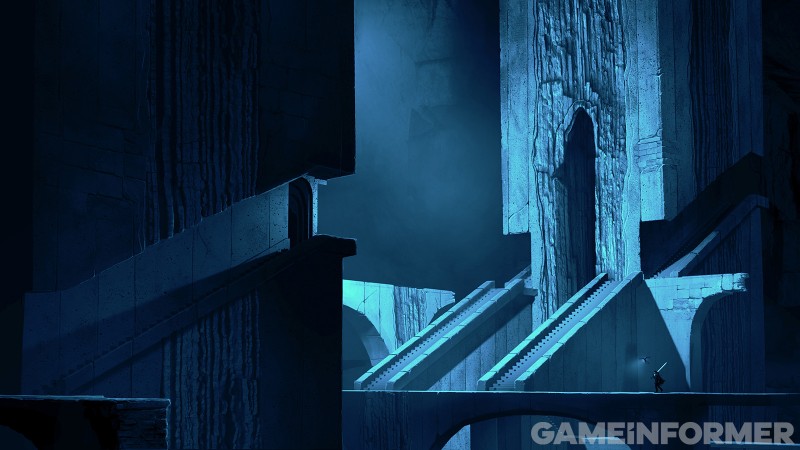
The main character of Hell is Us, who Rogue Factor hasn’t officially named yet, was born in the unnamed country at the center of the story. Jacques-Belletête says this nation, surrounded by mountains, has largely been isolated from the rest of the world for close to 2,000 years. The United Nations created it as a refugee state after World War II. Fast forward to the 1990s when Hell is Us takes place, and the country is ruled by the “iron fist” of a dictator.
The ‘90s was chosen because it was a time of turmoil in several nations around the world such as Kosovo, Bosnia, and Rwanda, whose people faced armed conflicts, wars for independence, and genocide. “The main theme of the game is that human violence and barbarity is basically a perpetual cycle that’s largely fueled by human emotions and human passions,” Jacques-Belletête says. “Like, the cause of our worst atrocities and our worst miseries, right? It’s all based on human passions and human emotions.”
According to Jacques-Belletête, it’s a subject the team doesn’t take lightly. But while war and its terrible results are central to the overall tapestry of Hell is Us, it’s more a foundation for the battle against supernatural beings, which surface as the game’s main aggressor.
Jacques-Belletête brings up stories of other territories and nations that have faced similar hardships and went underreported. The topic of discussion briefly changed to the Russian invasion of Ukraine and the strife and pain it’s causing an entire nation and beyond at the time of writing.
“What is happening in Ukraine right now happens every day, in tons of other places. It’s the truth. It’s sad. It’s absolute terror, madness, and violence. These are the things we do at each other,” he says. “What we don’t realize is that this is a reality for so much of that of the population of the Earth. This is where we are so protected. It’s hard to understand. […] The library of horrors is long.”
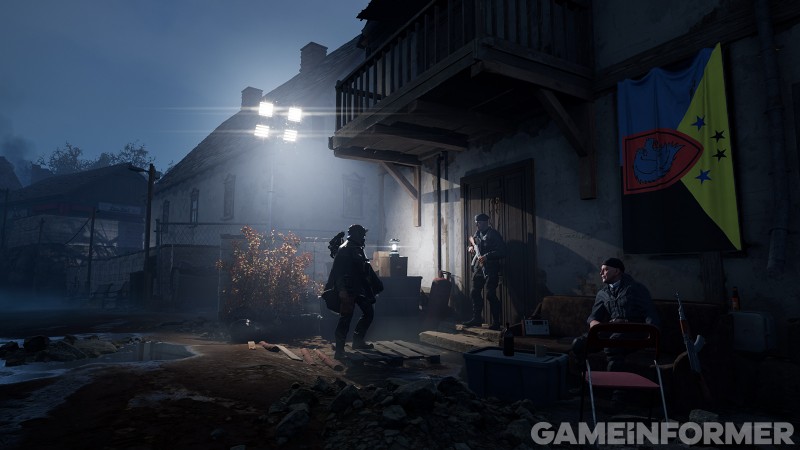
The main character won’t be taking a side in the game’s ongoing civil war, nor will you be solving the crisis. “One thing’s for sure, the game is not about saving the country from the civil war,” Jacques-Belletête says. “There’s no such thing as, you know, one dude who walks into a civil war situation, and that the ending is, ‘I’ve saved it. I’ve stopped it myself.’ It wouldn’t make any sense.”
As a child, the boy is constantly moving around, infiltrating through Canadian foster families as a child, never finding a home or family that he feels at home. After joining the military, he finds the stability he had been missing in a family that was stable. While enlisted, he’s sent on various peacekeeping missions around the world, often looking for a way back to the hermit state.
In his years away from his homeland, he tries many times to find a way back, futile attempts to meet the parents who gave him away and settle his soul that’s burning for answers. Questions such as who his parents were, what happened to him after they left him and how they took him away from the country. The civil war forms an opportunity, a tiny crack in the country’s impenetrable shell. He is excited to finally find his family and answer all of the burning questions that he has been asking.
A large contingent of peacekeepers was sent to another country due to conflict. The man joins but doesn’t help and then slips back in the safe land where he was raised. “So, he’s not part of the units that are allowed to get inside,” Jacques-Belletête says. “However, the man plans for this. His scheme is to go AWOL on a moonless night and sneak across the border.”
Finding Adventure In A Forbidden Land
Finding Adventure In A Forbidden Land
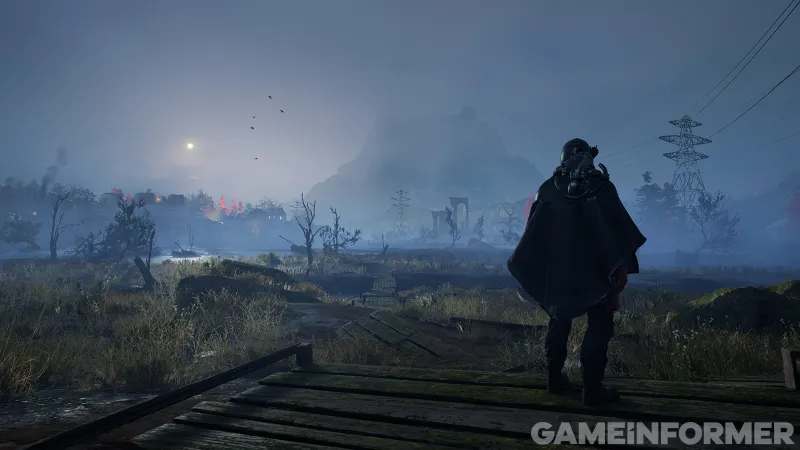
He changes into a more adventurous outfit and steps in his homeland for the first-time in decades. That’s where Hell is Us starts. He doesn’t even know where to find his parents or any other person who could be related. He doesn’t know what he is facing.
Jacques-Belletête wants to leave behind what he calls “silver-plattering.” He doesn’t want Hell is Us to explicitly offer where to go, who to talk to, or what to see. “We’re putting back in the hands of the players the responsibility to figure out not just what they need to do, but also how to do it, how to find it,” he says.
This loosening of direction is likened to a sequence of discovery in The Legend of Zelda, A Link to The Past. The story begins with Link telling Link the tale of his lost son, who once played his flute in the woods. You can trace the pieces to different locations around the globe and find the place where the boy used to play his flute for animals. Later, after acquiring the flute, you can play it to call on a bird, whisking Link away to different points on the map as the game’s clever version of fast travel. Nothing ever tells you to specifically do that but talking to the man, listening to and learning his son’s story, and piecing those factors together makes connecting some simple dots into a revelatory moment.
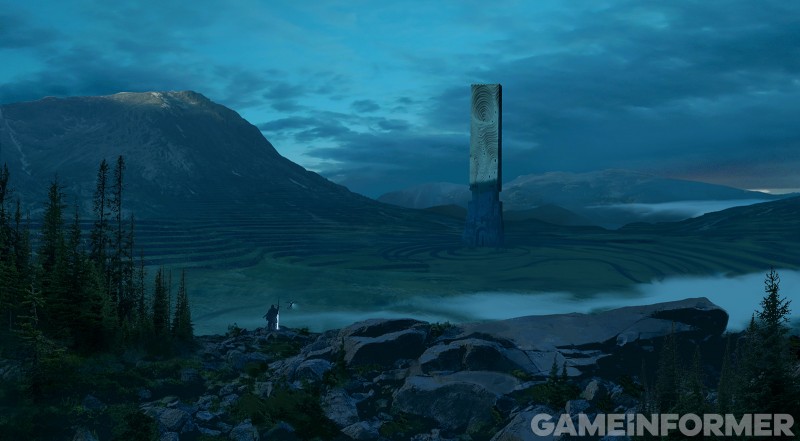
Rogue Factor is a blend of the environment and information collected from other characters to give players a feeling of exploration. Jacques-Belletête sees it as a way of propping up the importance of art and level design again, which in his eyes lack purpose in an age of mechanisms that guide players exactly where to go.
“You start realizing that the work of the level designers and the artists, as beautiful as environments can be, they serve no other purpose really than just being pretty,” Jacques-Belletête says.
Rogue Factor is trying to change the perception of characters who give quests to other games.
He’s hopeful that taking this route will be successful after similar design philosophies have been popular in games like Elden Ring. “People are getting back into this idea of, ‘Wait a minute. If the world speaks to me properly, I don’t need all these artificial superpowers that RPGs have,’” he says.
Surviving the Unknown
Surviving The Unknown
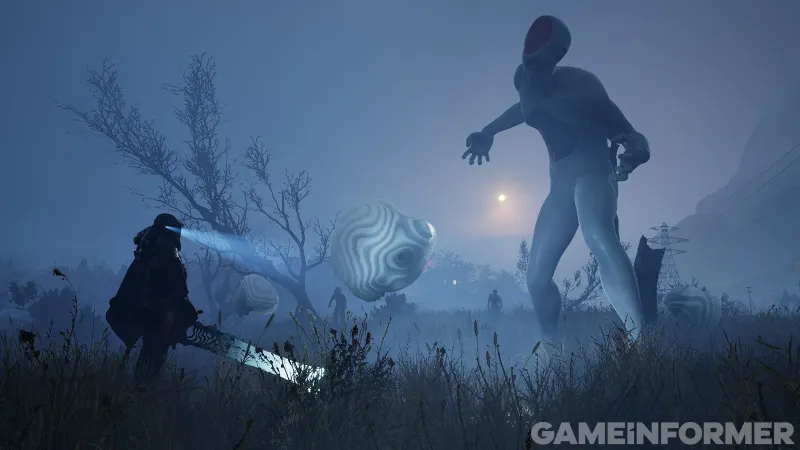
The main character must use weapons that are different from the current time to take on the surreal, occult terrors of Hell is Us. The monsters roaming the land are mysterious and important to the story, though Jacques-Belletête wouldn’t reveal much about them other than a brief description of the beings he simply calls “entities.” He describes them stylistically as being “almost painterly,” and chaotic in the way they move. Hulking monsters that appear to be made from ooze are some of the examples. The substance covers their bodies in an alternating pattern of red and black, making them look like they’re floating. These entities roam the land tethered by what looks like an umbilical cord attached to another creature that’s pale and humanoid in shape with empty spaces where parts of their face and abdomen should be.
Modern weaponry like guns or other artillery don’t affect these beings, forcing the player to rely on special melee weapons, decidedly ancient armaments, like swords and axes, to deal any kind of damage. Although these objects of war emit a haunting glow, it is possible that they can cause harm to the entities. It is therefore most common to fight in Hell is Us up-close and personal. How and why these weapons are effective will be revealed in due time, but just because most modern weaponry won’t kill the entities, that doesn’t mean some forms of technology don’t have a place in the fight against this paranormal threat.
Rogue Factor is adding some high-tech tech to Hell is Us. They have included a drone which will aid the main character. Jacques-Belletête compares it to tech in games like Metal Gear Solid 3, a game set firmly in the 1960s, yet its director, Hideo Kojima, chose to incorporate various gadgets and weaponry that were way more advanced than what was possible at the time. Jacques-Belletête sees the drone the same way. While it may feel ahead of its time, he clarifies that the drones in Hell is Us don’t look or act like the quadcopter design that’s popular today. The players’ first encounter with the drone is when it’s found on an enemy, opening even more questions about the world. The mystery surrounding these devices is not limited to who these people are or where their tech comes from.
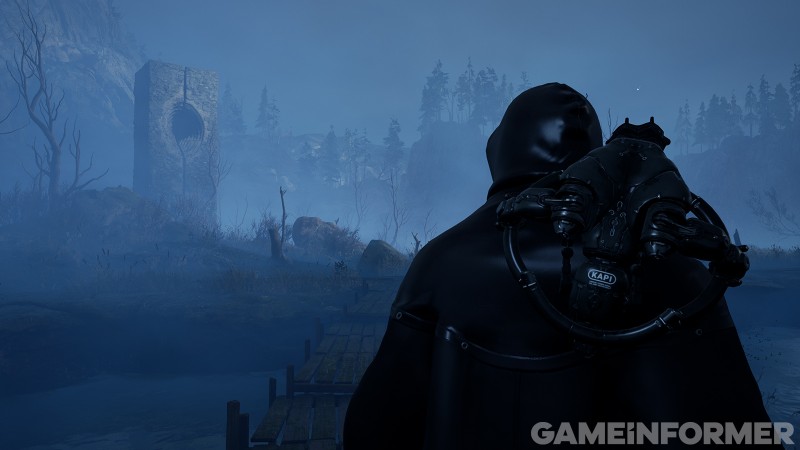
A drone can help to equalize the odds against mysterious entities. A drone friend can make it easier to fight the evil entities. “Your drone can do all sorts of things to distract one half of the entity while you take care of the other one,” Jacques-Belletête says. He says that drones can be upgraded to include new maneuvers, which will aid in battle.
Players can take control of an armored personnel car to travel the state. The APC is a central hub and home that allows players to travel between different areas. Hell is Us doesn’t have a traditional open world, and many of the places you’ll be able to travel must be learned of beforehand. Whether that’s information gleaned from a map or gathered through conversation with the locals, a seed of knowledge has to be planted before exploring a new area. It’s all about the player’s interactions with the world and the choices to explore further in specific directions.
Some areas are more compact than others. Others have large open areas. There are reasons for the character to explore a new area because you’ve learned as much yourself from people, places, or items. Whether it’s a specific person to meet, landmarks to seek out or side stories to discover, every new part of the country you travel to is designed to have led you there somehow and, in turn, point you towards more faces and locations to continue the journey whichever way you want.
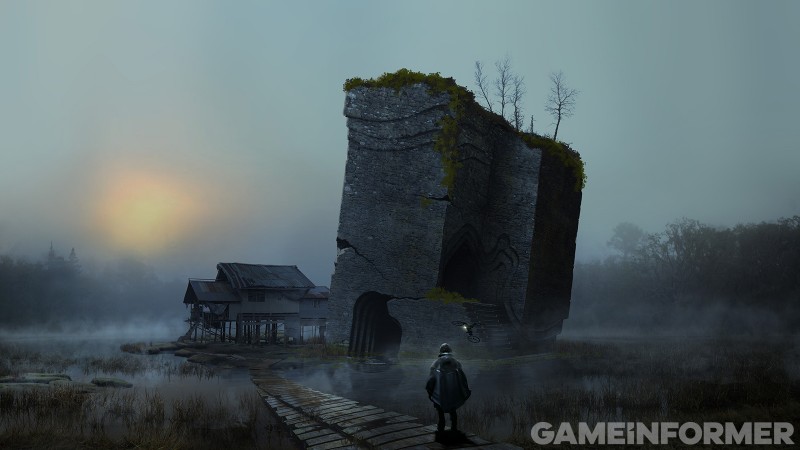
Hell is Us is still a way off from release, and Jacques-Belletête isn’t ready to estimate when it’ll be ready to play; he says it might be several years before the game makes it into our hands. Though, after talking with him, I’m willing to endure the wait to see how this ambitious title comes together, when I can eventually explore the many dark mysteries in such a harrowing and unforgiving land.
This article originally appeared in Issue 345 of Game Informer.
#Hell #Preview #Unguided #Darkness