D&D’s stricter licensing rules might impact some beloved RPGs
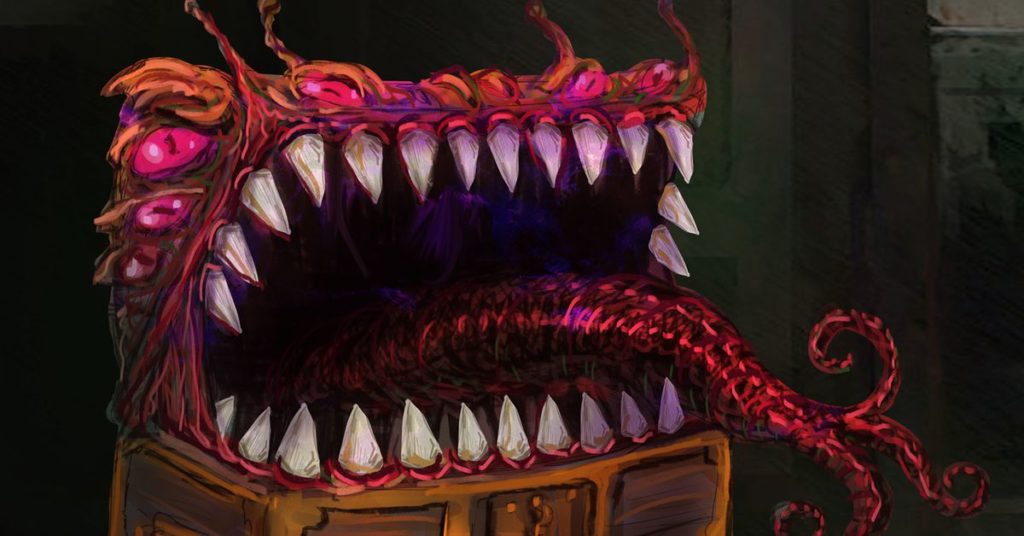
Best-selling games built on the ruleset of Dungeons & Dragons could be either dazed or petrified if a leaked document outlining changes to the Open Gaming License is accurate.
On Thursday, a report from io9, based on a supposedly leaked internal document from Dungeons & Dragons publisher Hasbro’s Wizards of the Coast, says that portions of the document pull the rug out from under creators currently making content using Wizards’ intellectual property. According to io9, the document could threaten revenue streams of companies such as Pathfinder maker Paizo and Kobold Press.
io9’s analysis of the document says that it invalidates the previous Open Gaming License — the framework that lets other companies and creators use a version of D&D’s widely played rules, if not its IP — and deems that previous agreement invalid.
Last month, Wizards said that the OGL “needs an update to ensure that it keeps doing what it was intended to do,” which is “allow the D&D community’s independent creators to build and play and grow the game we all love — without allowing things like third-parties to mint D&D NFTs and large businesses to exploit our intellectual property.”
The OGL 1.0 was developed and refined in the leadup to D&D’s 5th edition. It is part of the legal framework by which creators have been allowed to profit from work derived from Wizards’ intellectual property. In December, Wizards said it would be updating the OGL with increased specificity — that it would only apply to written content and static digital files (like PDFs), and that creators would be required to report related earnings back to Wizards on an annual basis. Wizards will eventually require royalty payments from creators earning more than $750,000 annually through these projects.
The leaked draft of the OGL 1.1, which io9 says it has seen in full, reiterates these claims in additional detail — 9,000 words of detail, the outlet says. But there’s a catch:
One of the biggest changes to the document is that it updates the previously available OGL 1.0 to state it is “no longer an authorized license agreement.” By ending the original OGL, many licensed publishers will have to completely overhaul their products and distribution in order to comply with the updated rules. Paizo, Kobold Press and Green Ronin are large publishers that focus on OGL products. They will have to quickly update their business models.
Fans-created material that is freely distributed does not fall under the OGL. Wizards uses the company’s more restrictive Fan Content Policy to do this.
Chris Pramas, founder of Green Ronin, spoke to Polygon when Chris was available for comment.
Our home system is now actually my Adventure Game Engine, (AGE). The Expanse, Blue Rose, Modern Age, Cthulhu Awakens, Fantasy AGEAnd The Fifth SeasonCrowdfunding will be available later in the month. Some 5E support has been done like this Book of Fiends Book of the Righteous, and the future Twilight Accord setting. This is the OGL’s greatest application. Mutants & MastermindsThe long-running RPG about superheroes, ‘The X-Men,’ is now in the third edition. It remains one of our most popular games, and it also has its own third-party publishing agreement called M&M Superlink that lets other companies release compatible material. This new OGL is obviously aimed at folks making big money from D&D but the OGL does much more than that. Many other games have been published under the OGL, so an attempt to revoke it will have consequences that WotC leadership doesn’t seem to have thought through.
Russ Morrissey, EN Publishing CEO, also contributed via email
For now, we will just wait and watch to see where it goes. We haven’t seen the final document, but we are strong advocates of open gaming and hope that it will continue. Open gaming can only benefit the games that we enjoy and give them strong support from third parties. We’ve been publishing under the OGL for 20 years, and hope to do so for 20 more years, along with the rest of the amazing open gaming community.
Paizo refused to comment.
According to io9 there is another feature to the OGL 1.1 that may encourage creators using the Kickstarter crowdfunding platform.
Since the creation of the OGL, online crowdfunding has been a growing phenomenon. The new license allows for the establishment and management of these campaigns. The OGL 1.1 states that if creators are members of the Expert Tier, “if Your Licensed Work is crowdfunded or sold via any platform other than Kickstarter, You will pay a 25% royalty on Qualifying Revenue,” and “if Your Licensed Work is crowdfunded on Kickstarter, Our preferred crowdfunding platform, You will only pay a 20% royalty on Qualifying Revenue.”
In recent years, Kickstarter has seen increased competition from alternative crowdfunding channels like Gamefound and Backerkit. A partnership such as this, formally enshrined into the OGL 1.1, would encourage the largest D&D crowdfunding campaigns to use Kickstarter’s services.
Recently, big-ticket 5th edition D&D-compatible crowdfunding projects have brought in significant revenues on Kickstarter. Among them are Chris Metzen’s Auroboros setting, which earned more than $1.2 million in 2022; EN Publishing’s Level Up: Advanced 5th Edition, which earned in the neighborhood of $830,000; and Tracy and Laura Hickman’s (Dragonlance) Skyraiders of Abarax setting, which raised more than $500,000.
Kickstarter stated to Polygon it discussed a strategy with Wizards of the Coast, but denied any direct involvement in OGL 1.1. In a statement, Kickstarter said Wizards of the Coast approached it recently about these royalties — and it pushed back.
“We are not part of the licensing agreement,” said Kickstarter senior communications director Kate Bernyk in an email to Polygon. “When we were contacted by Wizards after they decided to change the OGL, we advocated for Kickstarter creators to have a lower percentage, because we know what they go through during the creative process. We are also actively pushing for other initiatives that will give back to Kickstarter. We’re encouraging Wizards to take fees funded out of royalties, and put them back into a fund for small creators.”
After WoTC made OGL changes, Kickstarter was contacted. We felt it was the right move to support creators and advocated for them. Managed to lower the %, with more currently being considered. No financial kickbacks and no hidden benefits for KS. It is their licence, and not ours. https://t.co/jHwX1JQKXM
— Jon Ritter (@jonritter) January 5, 2023
Jon Ritter-Roderick (director of games at Kickstarter) also sent a tweet mirroring that statement.
“Managed to get lower % plus more being discussed,” Ritter-Roderick said in the tweet. “No hidden benefits / no financial kickbacks for KS. This is their license, not ours, obviously.”
A representative from Gamefound refused to respond when Polygon reached him. Polygon reached out to Backerkit as well and will keep this story updated when it responds.
#DDs #stricter #licensing #rules #impact #beloved #RPGs