Atomic Heart Review – A Red Rapture
Atomic Heart is the debut title of developer Mundfish after more than five years in development. This BioShock-inspired shooter is an impressive debut in many ways, and it wears its influences on its sleeve – for better and worse. The game’s dazzling world design, extraordinary production values, and fast-paced fights make for a solid campaign, but the derivative plot and often painful writing insist on dragging it down.
Atomic Heart’s premise is one of its most intriguing elements. The game takes place in an alternate-history Soviet Union that has become the world’s foremost superpower after World War II, thanks to the scientific innovations of Facility 3826. As Agent P-3 (a Soviet genius under Dr. Dmitry Sechenov’s command), the player plays the part of the player. When Sechenov’s latest social experiment goes wrong, P-3 is ordered to fight through the Facility’s rampaging robots and murderous mutants to reach the truth.
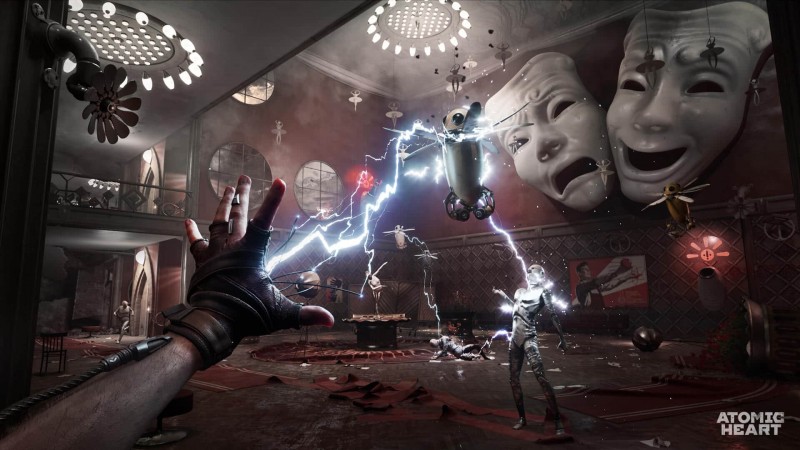
P-3 is able to access unique, upgradable weaponry and elements. However, combat may not be as close to BioShock as it seems. Instead of stealth, hacking, and environmental traps, Atomic Heart demands faster and more reactive shooting to curb the attackers’ superior numbers. There are particular vulnerabilities that enemies have, which can be exploited only with creative combinations. For example, you could cover a mutant made of plants with accelerant gel and then set it ablaze with incendiary bullets. Combat is both exciting and dangerous, with a variety of enemies keeping it interesting.
The world of Facility 3826 is also gorgeously realized with Atomic Heart’s sublime art direction. You will be amazed by the exceptional production quality of the game from the beginning. Meticulous attention to detail is seen in everything from the communist architecture to the internal components of robots, and it really makes the game’s what-if scenario seem plausible. You can feel the vastness of the Kazakh Mountains’ overworld, even though it is not completely empty. There are many surprising and varied secrets that add to the intimacy of fighting in close quarters or the spatial reasoning puzzles found underground.
Atomic Heart’s biggest problem, however, is its writing. The dialogue is irritating to almost unbearable. P-3 is an angry soldier man. He is known for his vitriol, cursing, and use of witless sarcasm. He talks a lot – and it’s usually to complain about something. His interactions with the sexually frustrated crafting machine are especially painful, and the rest of the cast isn’t much better. The script is not provocative; it’s just covering up a lack of substantial character development.
Unfortunately, the plot is also disappointing. The majority of the story is presented through info-dumps which quickly reduce any sense of mystery, and all of the events become incredibly predictable. The story spends much of its time clumsily rehashing many of BioShock’s themes with a Soviet spin. Unfortunately, most of the great writing lies in the different terminals found throughout the game. They contain much of the worldbuilding, and also connect characters with one another.
Atomic Heart can be enjoyed on its own merits. It is worth the time for its frantic gunplay and stunning visual design. It could be so much more. The story and characters simply don’t do justice to the game’s thought-provoking premise, and some better writing would have done wonders. Atomic Heart, despite this fact is still a memorable and exciting first game from Mundfish.
#Atomic #Heart #Review #Red #Rapture