Aftermath Of Success: Stardew Valley, Darkest Dungeon, And Valheim

Imagine you wake up and find that your little-known passion project has become wildly popular. That’s what developers strive for, but few ever achieve. It doesn’t matter if the game is unique, has an amazing story and clever mechanics. The competition is fierce, with tons of games releasing every day, and it’s a struggle to catch people’s attention. And yet, there are success stories of developers who managed to overcome all these hurdles and make unexpected sensations, like Darkest Dungeon, Stardew Valley, and Valheim. The creators of these games are grateful for their fans’ support and acknowledge the freedom that their successes have given them. But they spoke out about the hard work involved in maintaining the biggest hits, and their struggle with doubting themselves, and the need to find purpose as they move on to other projects.
The First Steps
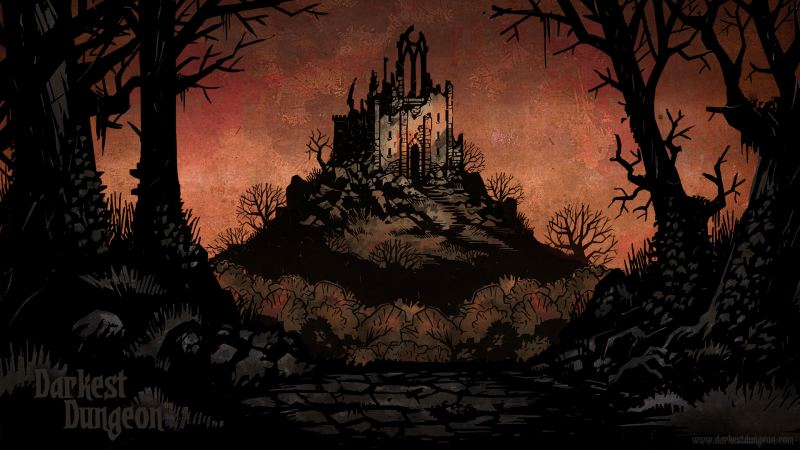
When asked about how they envisioned the future when they started their Vancouver-based company in 2013, Red Hook Studios co-founders Chris Bourassa and Tyler Sigman answered almost in unison: “We didn’t.” The duo left their previous employers behind to launch the Lovecraft-inspired studio, but, as Sigman explains, “it was always about the game, it was never about the company.” The game he’s referring to is Darkest Dungeon, a gothic, dungeon-crawling RPG where your party’s mental status is just as vital as their physical one. And, though the project has now surpassed 5 million copies sold, and its hotly anticipated sequel recently entered Early Access on Epic, the first step to getting there wasn’t what anyone would call glamorous.
“It was three of us in a room, in another studio that they were letting us borrow,” recalls Bourassa. “There were rats in that building and human poop on the doorstep the first day we went to take possession as it were – and I use that term in the broadest possible sense. We would listen to the other studio argue, sometimes explosively, about games, and we just kind of put our heads down and were trying to work away.”
Similarly, Eric Barone, creator of Stardew Valley, didn’t begin by thinking about a development studio. In fact, he didn’t even begin by thinking about a game.
“It started out as kind of a practice to get better at programming,” Barone says, talking about the earliest inception of his mega indie hit. He was unable to find a job after college so he made a little title in C# programming. Barone says that his initial goal was to create something that he could use to impress potential employers.
The developer no longer worries about employment. Stardew Valley recently crossed the 15 million units sold milestone, with sales showing no sign of slowing down even years after the Harvest Moon-like farming simulator first launched in 2016. In the beginning, the name of the simulator was not known.
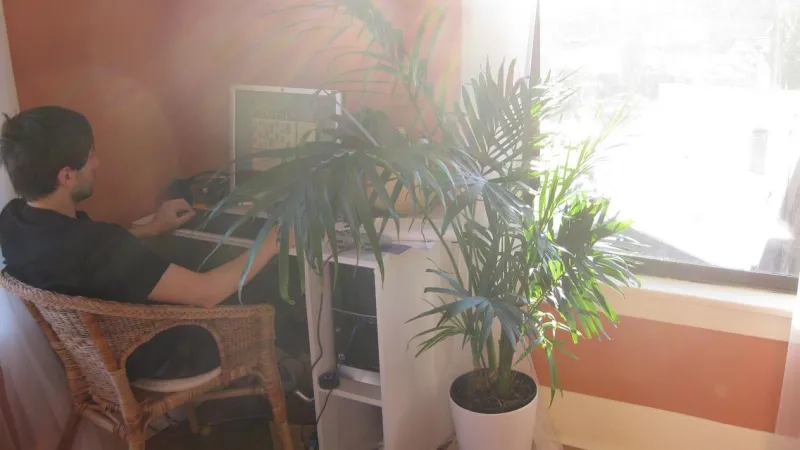
This is the oldest photo known to have been taken in Stardew Valley during its development.
“It was very scrappy,” says Barone. “It was just me in the corner of our studio apartment on a cheap IKEA desk and my budget computer, just working on it. It never crossed my mind to get an actual studio or anything like that – especially because I was a completely solo developer … It’s kind of a miracle that the whole thing came together because I really had no idea what I was doing.”
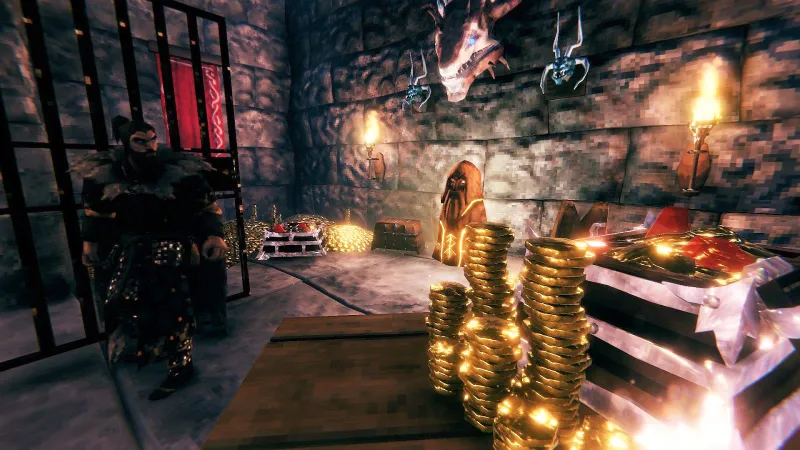
Henrik Törnqvist, co-founder of Iron Gate Studio – which is making Valheim, a Viking-influenced, open-world game that stitches together base-building, resource collecting, life simulation, survival, exploration, and boss-battling action – vividly recalls having a tough time coming up with the studio’s name and navigating the paperwork required to get the company set up in 2019. But, the price for this blockbuster was worth it. It took a lot of paperwork and frustrated brainstorming sessions.
Although Valheim has yet to be released technically due to being an Early Access title the sensation of 2021 was selling over 8 million copies in the summer. Its development began in 2018 when Richard Svensson, Iron Gate’s other co-founder, started playing around with the Norse-inspired world. Impressed with the game and ready to move on from his previous employer, Törnqvist joined Svensson a year after development began. Despite being confident in the game’s potential and having the backing of publisher Coffee Stain Publishing, Törnqvist says, “Honestly, we were just developing the game we wanted to make, and we were hopeful, but realistic, about the prospects of a lo-fi Early Access survival game made by mostly one person [Svensson]. We thought it would appeal and resonate strongly with a very niche audience, but we had no idea it would resonate with millions of people.”
Unbelievable Accomplishment
Darkest Dungeon’s Kickstarter campaign launched in 2014, and the developers watched in disbelief as the project flew past its goal in the first 24 hours. “Is this not the best of things?” Bourassa asks when thinking about that time in the title’s history. “The game that you care about has an audience.”
The studio’s co-founder and he explain how they kept a positive perspective, despite all the promises. “We didn’t start losing our heads with fantasies of a massive, sprawling game and a huge audience,” he says. However, Bourassa did succumb to the immediate surge of joy at Darkest Dungeon’s later successful Early Access release, at least for a moment.
“It was the first time I kissed a man,” Bourassa says. In response, his fellow founder, Sigman, raises his hand, declaring, “I received it.” The euphoria faded fast, however. Sigman says, “[The success] changed it immediately from, ‘Okay, I think this game will have been worth doing, and we’ll be able to pay ourselves something,’ to ‘Oh, s—, we have a tiger by the tail.’”
Stardew valley and Valheim developer were also unable to absorb the initial fruits of an overwhelming success. “It was a bit of a blur!” exclaims Törnqvist when asked about his reaction to Valheim selling one million copies in its first week of Early Access. “At Iron Gate, we were so focused on development and scale-proofing the game that it didn’t really register; I still don’t think it really has.”
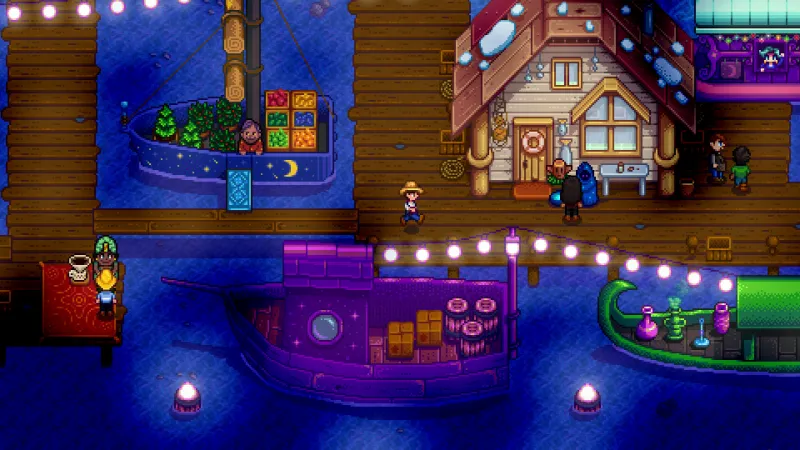
On the other hand, Barone remembers Stardew Valley’s “surging popularity” and the feeling that “everyone’s talking about” his game. Barone’s most memorable memory of that period is his meeting Yasuhiro WADA, the inspiration for his Harvest Moon series. The story evolved into Story of Seasons. “Mr. Wada, the creator of Harvest Moon, or his people, reached out to me, and he wanted to meet me,” Barone says. “I mean, that was one of many moments where my mind was blown. This was a huge accomplishment. That I had just achieved way beyond anything I had ever dreamed of and just being seen in the same kind of arena as Harvest Moon – the game that inspired me to do all this – was kind of mind-blowing. And I’m still kind of shocked and amazed by that, in many ways.”
Then what?
Party poppers litter the floor, and empty champagne glasses clutter tables, but the teams don’t rest after their triumphs. In fact, they work harder. According to Barone, the time after launch “was probably the busiest time of the entire four-and-a-half years that it took to make the game.” Echoing this sentiment, Törnqvist says, “We had so many incredible opportunities coming in, and suddenly such a big community, and trying to respond to everyone, let alone move these opportunities along, is a full-time job!”
The Darkest Dungeon team took some time to see the changes, but Early Access was a place where one can build a title without the approval of everyone. “I think expectations, and managing those expectations, became much more of a clear and present danger during Early Access,” explains Bourassa. After players spent hours on Darkest Dungeon, they began to form their opinions about the game’s future. “And we’re much more conscious of having this really big player base, and we want to do well by them,” says Sigman. “But we also know that the way we got there was by being really true to our own sense of the vision. So, there’s a little more weight now because you can anger 5 million people overnight.”
For Barone, he remembers the public attention becoming conspicuous earlier on in Stardew Valley’s development, right after the project was greenlit on Steam. “That was when the amount of attention increased a lot,” he recalls. “Which, of course, can be kind of a shock and can be challenging when that happens, especially for someone who has no prior experience. And I’m a very solitary person in many ways. I’m used to being, kind of, just in my own private bubble working. But it was also exciting because I was thinking this game could actually be a successful game.”
Barone was unable to move forward after his smash hit game had been released. “I feel like my next game has to be better than Stardew Valley,” he explains. “Because, you know, I want to be seen as someone who’s getting better. I’m improving. The trajectory of my career is going up, not stagnating, or going down – God forbid.”
For Sigman at Red Hook, Darkest Dungeon’s accomplishment also brought on an unexpected result. “It sounds funny to say,” Sigman states, “But I think no matter how much you succeed, it’s always easy to benchmark yourself against someone who’s literally twice or three or five or ten times as successful. It’s funny that your mind can create gnawing doubt, no matter how fortunate you are.”
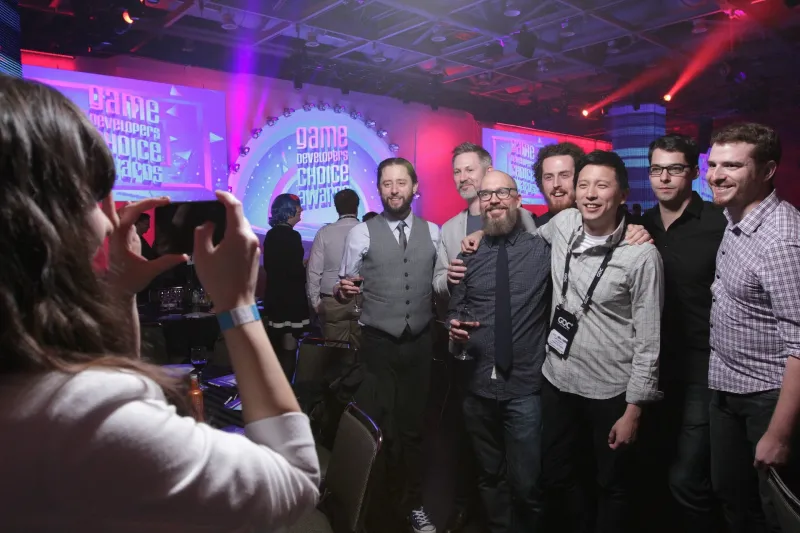
Red Hook Studios at the 2016 Independent Games Festival Awards
Growing Pains
Each project was staggeringly fortunate, so much so that the Valheim, Stardew Valley, and Darkest Dungeon teams could all afford to scale up their operations immediately after launch, but they didn’t. Törnqvist believes subtle adjustments and refinements have helped Valheim continue to thrive. “We’ve grown with a couple of new additions, but we took our time making sure the team is growing in the right direction and with the right people,” he says.
Iron Gate recently passed a huge milestone by releasing Valheim’s Hearth & Home update. The game’s fans had been waiting on the new content almost since the original Early Access release, but the team found itself unable to work on it. Iron Gate, overwhelmed by all the demands placed on its core experience by millions of players, delayed expanding. They spent several months maintaining the stability of the base game. “There’s always pressure to introduce big changes,” says Törnqvist, “and add a bulk of new content – and we will – but we want to make sure that there’s a good foundation there first.”
Even as Red Hook’s Sigman and Bourassa discuss changes in the company’s structure, it’s clear the core of the studio – the relationship between its co-founders – has remained unaltered. During our chat, the two often finished each other’s sentences, went off on good-natured, teasing tangents, and even began chatting amongst themselves for long periods. Similarly unchanged from the company’s early days, the duo is still putting their project first. “We grew to make the game – to make Darkest Dungeon II – the way we wanted to make it,” Bourassa says. “We weren’t growing to fulfill an org chart. So, Red Hook as an entity continues to be second fiddle to the project itself.”
“That’s when the company became of value,” says Sigman, “and we realized that to do this game, we should hire more employees directly.” While the two needed to increase the team to tackle their next project, the allure of the early days lingers. “It’s been a massive, massive shift,” Bourassa says. “It’s only something you can really perceive in hindsight, I think. Because you add, like, one or two people, and it still feels like a ragtag crew, and then you turn around and realize you’ve added like 15.”
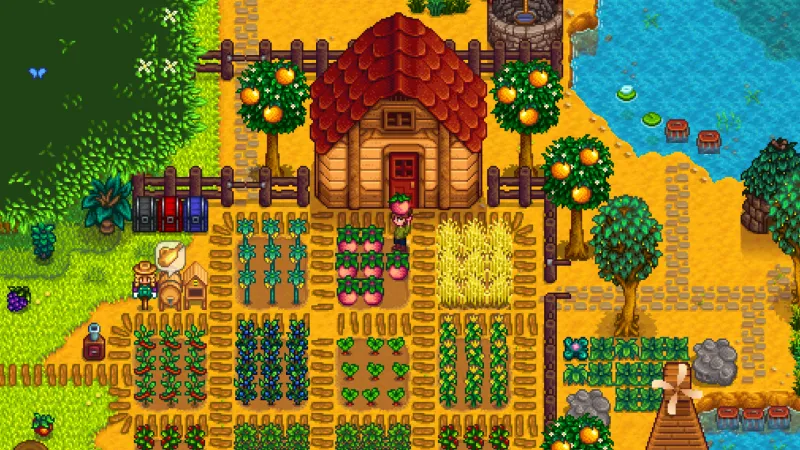
“I’m just thinking of the Stardew Valley developer,” says Sigman, who didn’t realize Eric Barone was talking with us for this article, “He could grow to a team size of 200 if he wants, probably, with the cash flow he’s generated, but it’s a conscious choice of what you want to be. And so, we were like, ‘Okay, we’re gonna grow, but we’re gonna still do one project right now.’”
Incidentally, Sigman isn’t far off the mark regarding Barone’s thoughts on expansion. “My original idea, actually, was that I would get a team and hand off Stardew Valley to them, and then I would work on my next game. But that didn’t really pan out because I just realized really quickly that I was not going to be okay with just handing off the game to other people. I’m very particular about Stardew Valley, you know? It’s my baby.”
Barone was first to work with a Stardew Valley team on an update in 2019. “It was definitely a big change for me,” Barone says. “We got an office, so I was going into a different place every day. I was spending business hours with the other team members, discussing with other people what we were going to do in the update … it took a while to get used to it and then have a flow that worked. The 1.4 update I think was a success was positive. And it was kind of a good training for how to work with the team … but, I definitely think there’s a part of me that loves working alone, and having that 100-percent responsibility for every aspect of the game.”
Move Forward
“It is kind of difficult when you have achieved all of the goals that you’d ever dreamed about,” Barone says. “You’re in this position of, ‘What do I do now? What’s the point of making yet another game? Why am I doing this?’”
This appears to be the greatest challenge for the well-known developer, who started this journey to get a job.
“I don’t want to just retire,” Barone says. “I want to work; it gives my life meaning. But many of the factors that drove me to work so hard on Stardew Valley are now – you can kind of check them all off. It is my passion to continue creating games and share my thoughts with the rest of the world. I want to create a legacy for myself.”
And that’s exactly what he is doing. Barone is currently working on two titles. One is ConcernedApe’s Haunted Chocolatier, which recently caused a flurry of excitement when Barone dropped an unexpected, early gameplay video on social media. “[Haunted Chocolatier] is another completely solo game, kind of like Stardew Valley, where I’m doing literally everything,” he says. “That one will probably come out first.” His second game is a collaborative work, which will give Barone the ability to flex his muscles developing as part of a team. Working simultaneously as a lone developer on one project and with another developer on a second one has given him “the best of both worlds.”
Barone is able to choose his projects with complete freedom, but he knows that his first hit will be his guiding light throughout his entire career. “I’m not trying to make the next big indie hit,” Barone says. “I realize and appreciate that, when my next game comes out, I’m going to have a lot of people who play the game, just because it’s from the guy who made Stardew Valley … I was almost considering – it might be interesting to release the game under an alias. And people don’t even know it’s me, and then to see if it could actually just be successful on its own merits. But I feel like that’s a bit disingenuous; I’m not going to do that.”
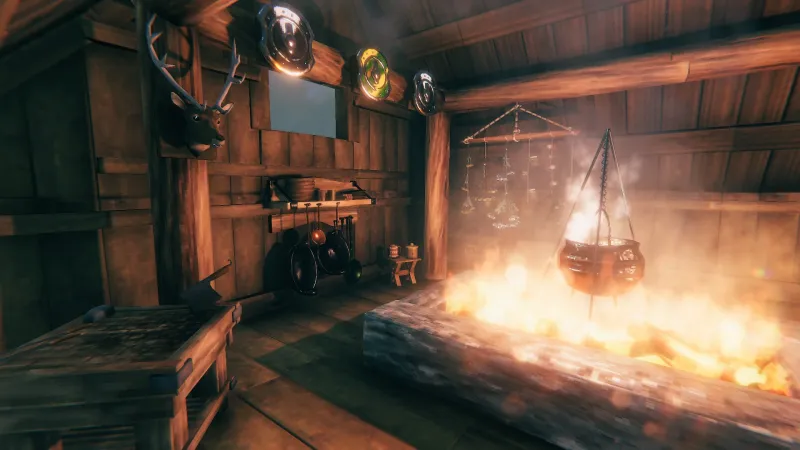
For the Valheim crew, the focus is still on their Early Access title, and there is still plenty in the works for the game, according to Törnqvist. “[The Hearth & Home] update was always meant to be the foundation we can build on with subsequent content updates – with the Mistlands update our next major one – but the process has taught us that big updates can snowball,” he says. To combat that effect, Törnqvist and his team want to focus on gradual changes, and less dramatic content drops that hit in between large expansions.
Red Hook’s co-founders have made more progress with their follow-up project than either Barone or Törnqvist. Darkest Dungeon II became Epic Games Store Early Access in October 26. However, the final release is likely to be delayed. While the sequel has mixed up the game’s art style and gameplay features, Sigman insists, “it’s also a Darkest Dungeon game. I’m really excited about what we are doing in [Darkest Dungeon II]Do you think so? It’s like fleshing out the characters and digging deeper into them. We’ve had a chance to honestly improve in various ways.” Like Barone as he moves on to his next project, Bourassa also notes how important it was for Red Hook not to simply chase success.
“We could have just added Metroidvania elements to the dungeons,” says Bourassa recalling the earliest brainstorms for the sequel, “and called it Darkest Dungeon II, but it didn’t feel like we could get as excited about that. What’s most important, and the way we found success the first time, was to channel our passion and excitement and our fear into this product. So, by taking the risks, we’re actually delivering something closer to the feeling of the first game, without delivering the exact same game.”
While the success of the studio’s first game certainly casts a long shadow, Sigman takes some comfort from it as well. Even if players don’t take to the sequel in the same way, he says, “At the end of the day, nobody can take away Darkest Dungeon now.”
#Aftermath #Success #Stardew #Valley #Darkest #Dungeon #Valheim