20 Years Of Liberty City

In October 2001, Rockstar Games released Grand Theft Auto III – and the entire pop-culture paradigm shifted. It’s hard to say anything about GTA III that hasn’t been said a million times over the last 20 years, but suffice it to say, it laid a blueprint for open-world games so complete that the game industry still largely follows it today.
To celebrate the game’s 20th anniversary, we recently talked to Rockstar North art director Aaron Garbut over email about his time working on GTA III, what it meant for Rockstar as a company, and its overall legacy in 2021.
Game Informer: What was the secret to DMA/Rockstar’s technology allowing GTA III?
Aaron Garbut, Technology-wise there was no advancement. Grand Theft Auto III had a brand-new team and a new studio. We were all excited by new consoles and pushed to create a 3D immersive world. This was not a project that we built on pre-existing technology. We created it entirely from scratch over the course of the project’s life.
Our goal was to create a world as open and alive as possible and to give the players all they needed to play and explore that world. Although we built game flow and narrative structures that would guide players on their path, the real attraction was player autonomy and freedom. The challenge we were trying to solve – and are still working on – is fundamentally, how do we build a place that’s interesting to exist in and give the player enough toys and systems to interact with and mess about? There are clear technical challenges with that – building a diverse, large urban world, and ensuring that it would stream in so that we could build in the variation and scale we wanted. The fact that we wanted it to feel alive and to feel as much as possible like the player existed in it – rather than at the center of it – meant we needed to have the world active even when the player was on a mission or causing chaos. It was essential that systems were solid and could scale to any level of complexity. The basic idea is that we created what we believed we wanted, and then we worked out the best way to get it done.
GI: Can you recall the first iterations and prototypes of GTA III you saw?
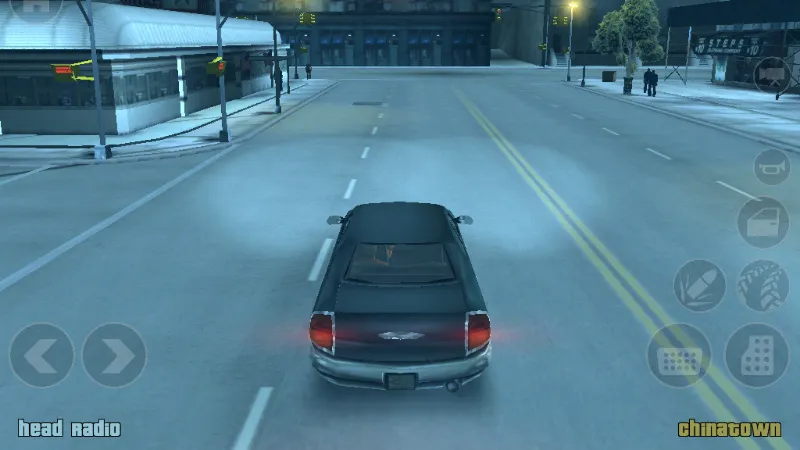
AG: We had time to experiment and create ideas after we’d finished the first DMA Design-developed game. Also, we were able to access a few Dreamcast devkits. We created a series of blocks that included docks and retail spaces. This took us several weeks to complete. While we were actually playing, our characters added character to walk the streets or drive cars around.
We had some interesting conversations about GTA 3D with the GTA code team, but were dismissed for being too complicated. The old GTA engine had some experimental camera movements that moved the camera forward a little, but this was far from what we wanted. We were enjoying ourselves; we were young and arrogant and made a conscious decision to redirect the project to be GTA – we knew we could do it, and it had a lot more appeal to us.
We would often meet Sam in those first days after moving to Edinburgh. [Houser, co-founder of Rockstar Games]The man who wanted to see GTA 3D since a very long time. Although we knew each other from our previous projects, we became closer during GTA III’s early years. From the beginning, we were in complete sync. We are still moving in the exact same direction as we were back then.
GI: How do you see GTA III’s legacy 20 years on?
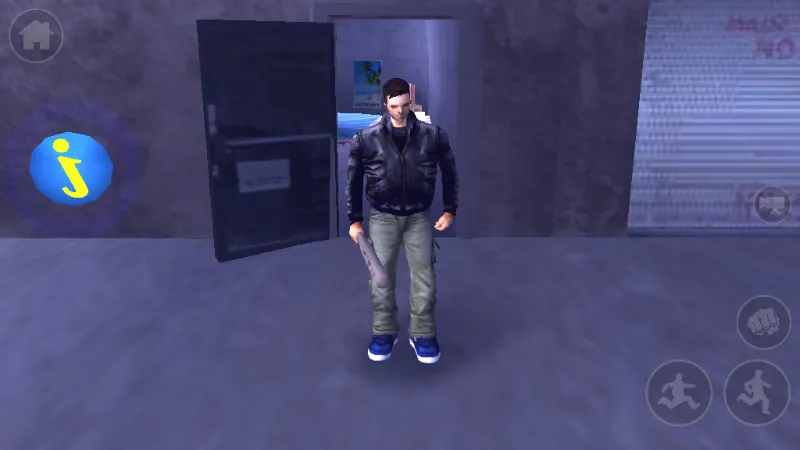
AG: GTA III provided a glimpse of what is possible with open-world games. It showed that games could be more about the player than the designer – that we could build worlds of ever-increasing diversity, granularity, and complexity, and create complex systems that players could interact with. It was clear that we can stop thinking only about levels. Instead, think more about whole worlds and how they are connected with the characters who live within them. We could create worlds that are rich in interest, and let the player explore and interact with them. We could create toys, tools, worlds, and systems that the player can play with. But also, that more than all of those things – more than the toys, the living, breathing world, the systems and the like – that we could create a sense of place and the players could be happy just to be. They could just sit and enjoy the sun setting, while listening to music. This was the belief that the world can be complex enough to allow for variety. It doesn’t just mean what players can do, it also allows them to choose what they would like. It is possible to draw players in to a world that has enough complexity to allow them to explore the many possibilities and options available. This is a far cry from the games of GTA III but we have been there all along.
GI: Rockstar North as an development studio: What does GTA III translate to Rockstar North?
GTA III: AG set the standard for games. We [learned]It taught us so much, but mostly, it made it more difficult. It is difficult to create worlds full of the detail and contents we desire that can be navigated easily at high speed. Having the content exist in that world alongside open-world systems – the ambient world, cops, gangs, and the like, creates even more complications. It was clear that we didn’t mind taking a difficult path, if the rewards were worthwhile. We continue to develop our understanding of the interconnectedness of systems to create complexity.
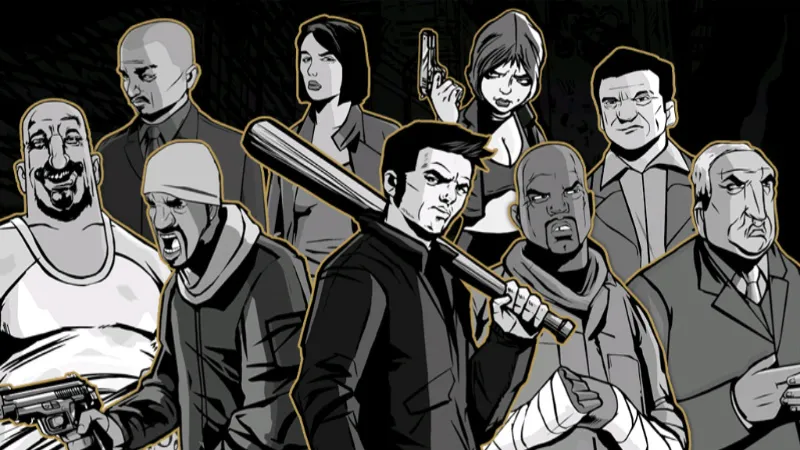
GI: It’s one of those strange questions that there is no way to answer, but very few people have the opportunity to change pop culture. Is that something you think about? How can you think about that?
AG: That’s an unusual, abstract idea. Prior to GTA III and afterwards, everything I did was focused on creating the most diverse and immersive games that we could make. As a guide, we always look back at the previous game to determine how much we should push ourselves to create something even better. The perception of these games is not what they are culturally, criticalally, and commercially. It’s all about our own love for the previous game we made, and how we can improve on it.
Each of these games, from Grand Theft Auto III through Red Dead Redemption II has felt like a continuation of the previous journey. And each one is approached with an entirely new level of ambition. You can see the references and it’s funny how your work is reprinted in popular culture. It is always amazing to see player statistics and visualize the total time that our players have spent in these worlds. Beyond that, it’s just amazing to be able to create things that we like and have so many people agree to spend time with us.
Original publication: Issue 341 Game Informer.
#Years #Liberty #City