Creating The Look Of Final Fantasy 16
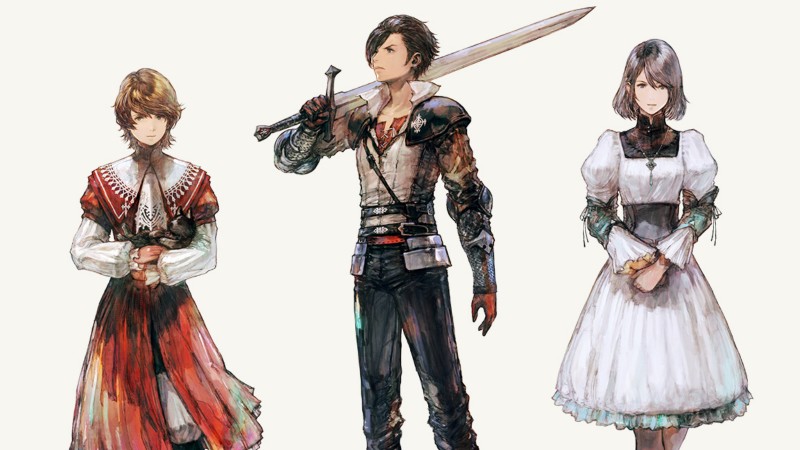
Final Fantasy’s art is among my favorites in games. The series’ visuals fall somewhere between realism and fantasy, and it’s always fun to see how Square Enix studios leverage more powerful hardware to bring worlds to life. The art is a big reason why these settings, characters and monsters will be remembered. It’s striking and unique – you know it’s Final Fantasy when you see it.
With each new Final Fantasy, Square Enix has a chance to solidify characters and worlds into the zeitgeist of gaming, like the company has done in the past with Final Fantasy VII’s Cloud Strife, Final Fantasy X’s Zanarkand, and more. During my cover story trip to Square Enix’s Tokyo, Japan, offices, I spoke to Final Fantasy XVI art director Hiroshi Minagawa about how developer Creative Business Unit III went about creating the game’s visual style.
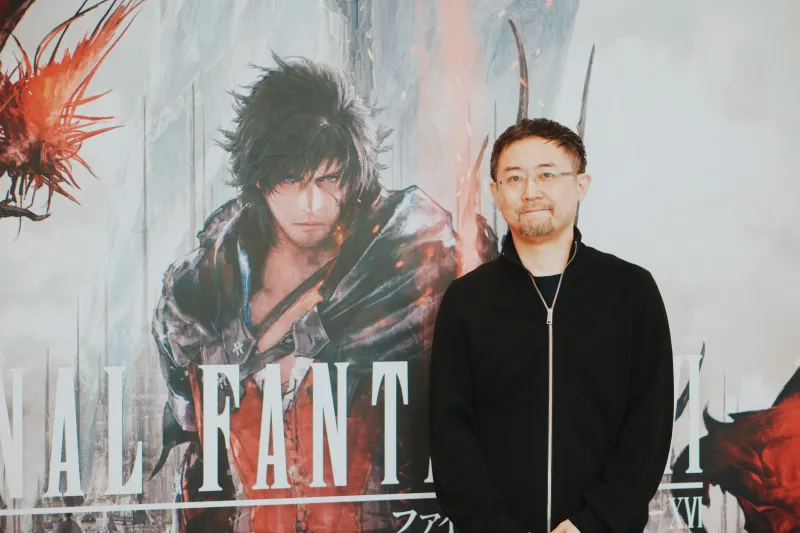
Final Fantasy XVI Art Director Hiroshi Minagawa
“Like other members on the Final Fantasy XVI team, I was also working on [Final Fantasy XIV] when I was asked to come over to Final Fantasy XVI,” Minagawa tells me. “I got that call very, very early in the development process. Early on in the process I had a chance to talk with a number of people. [FFXVI director Hiroshi Takai] about what type of world it was going to be, what type of flavor the world is going to be, and be a part of that creative process there.”
He said he took a different approach to art direction than FFXIV, because FFXIV is an MMO and the team focuses on graphical quality by displaying a lot of things on screen. With FFXVI being an offline single-player experience, “the graphics have to be at a higher level, and they have to be deeper and richer in that sense.”
Minagawa collaborated with CBUIII to highlight the differences in the focus of the visuals for the two games. From there, it was about bringing FFXVI’s art to life based on what Takai envisioned.
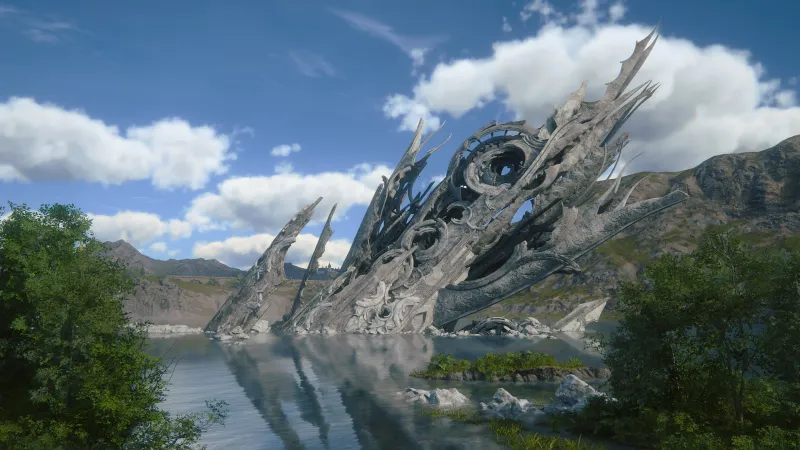
“We had that broad stroke where Takai said, ‘We want to have something that’s going to have that feel of Game of Thrones,’ that kind of pure standard high fantasy that you’d see in that type of program and visual medium.”
You can also read about our Beyond Game of ThronesMinagawa says that they looked at Kazuya’s Takahashi character design. He had not only drawn characters but also some art for the environments.
“His art has this bright and transparent type of feel, so taking that with the idea of, ‘Okay, we want to make it dark and gritty like Game of Thrones‘ and trying to figure out a way to combine that and make it work, and then figure out a way to implement that in the game was my biggest task when I joined,” Minigawa says.
Takahashi’s bright and transparent art is still present in some parts of the game, but CBUIII pared it back in some places to fit the game’s tone. Environments also had to be created so they can be gorgeous one minute and on fire the next.
“When you look back at the Final Fantasy series, you see that the art style is different for each game,” Minagawa adds. “And while the series is kind of moving towards that photo-real aspect, we wanted something that wasn’t necessarily photo-real. The original artwork that we created was something that we wanted to emphasize. [Takahashi].”
Valisthea is a visual concept that was inspired by actual locations, but remains very Final Fantasy. Minigawa says that northern England’s unique rock formations are what defines dark fantasy to him. He also cites Iceland’s barren rocky landscapes, Slovenia, the Middle East and Africa, especially in relation to Valisthea’s Dhalmekian Republic, and even other parts of Final Fantasy, like Final Fantasy XII’s Dalmasca.
To create protagonist Clive Rosfield, Minagawa says it was the combination of work from the art team’s staff as well as “the IMS group,” which is the group that works on a lot of the animated CGI movies for Square Enix. CBUIII invited CG artists for feedback, as it wanted a character who was true to the original illustrations. He jokes that before landing on the final version of Clive, the team arrived at some looks for Clive that looked great, only to discover that when he did something like smile, “it just looked disgusting” and “didn’t look right.” It was only after bringing in CG artists and having discussions with them about this issue that CBUIII created the face Clive has today.
As for the visual design of FFXVI’s Eikons, I was curious about how CBUIII approached the style of monsters that most Final Fantasy fans are already familiar with. Minigawa said that the summons’ physicality and their fighting style informed Minigawa’s design.
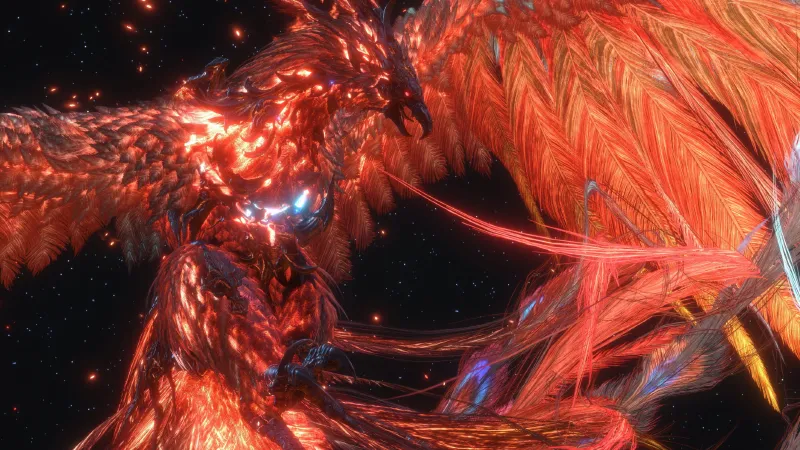
“When I joined the project, I remember Takai-san said its concept was ‘summon pro wrestling,’ that’s how he described what they were trying to do,” he says. “Instead of having these Eikons shoot magic at each other and fight, it’s more like they’re going to get in and grapple. It’s going to be close quarters; they’re going to be using their bodies as opposed to ranged attacks. And so I really think that type of concept affected the design; you’re going to have a design that’s more suited to these close-up encounters.”
The team also returned to what many might describe as the image of Final Fantasy XVI: the Ifrit Eikon clashing with the Phoenix Eikon, present in the game’s official logo created by famed Final Fantasy illustrator and artist Yoshitaka Amano.
Minigawa’s thoughts on Final Fantasy Art remained in my mind as I ended our time together. When designing characters and universes, does the team take this into consideration? It varies, he says.
“My job is to take art that has been created by my staff and figure out a way to get that in the game as best as possible without taking away from that art,” Minigawa says. “So, in that sense, it’s about trying as hard as you can. For me, it’s just like basically trying to do the best I can and hopefully, it will resonate with the players. But again, that’s going to be different for each of the artists.”
For more, be sure to check out Game Informer’s exclusive FFXVI coverage hub by clicking the banner below.
#Creating #Final #Fantasy