Ms. Marvel lets the hero (and the viewer) actually explore the concept of djinn
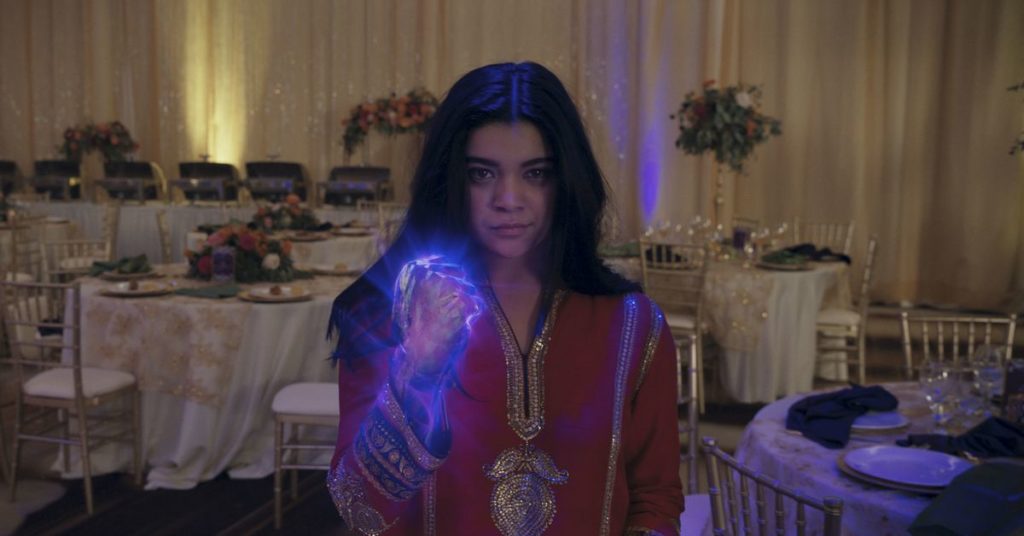
Ms. Marvel’s debut in the MCU had many people questioning what the new source of her powers might be, especially considering her apparent lack of her trademark polymorphism. But in the third episode of the MCU’s Ms. MarvelKamala Khan (Iman Vallani), and her audience learn about the mysterious bangle which activates her abilities. Through Najma’s (Nimra Bucha) exposition, she learns that Najma and Kamala’s ancestors (and their descendants, like her and Kamran) are the Clandestine beings who come from another dimension entirely.
They have gone by many names, Najma says, including “djinn” — which perked up the ears of Kamala and countless Muslim viewers watching. It’s a frightening thought to her, which might surprise those whose familiarity with djinn comes exclusively through a Western lens. These beings are based on Islamic teaching.
Djinns of SWANASA Folklore, Islamic Teachings, and Western Media
Djinn, or jinn, have been mentioned in myths and legends in Southwest Asian, North African and South Asian regions. They predate Islam by centuries. The root of their name is taken from the Arabic “janna,” which means “hidden.” In various tales, they are spiritlike or demonlike beings that shapeshift and trick unsuspecting humans into getting what they want from them. People learn to be cautious of these creatures through the stories. In some tales — namely in One Thousand and One Nights which compiled stories from all across the SWANASA region — they have more magical abilities, including the ability to grant wishes in “Aladdin and the Wonderful Lamp” and “The Fisherman and the Jinni.”
In Islam, djinn, per the Quran, are a people made by God (Allah) and are said to be beings of “smokeless fire” that have the same range of morality as humans and live on a separate plane of existence from humans. In the same manner that he gave humans free will, Allah also granted them free will. Both they and the humans are different from angels in Islam. They do not have free choice, so their sole purpose is to serve God. Djinn can be either good or evil, since they are subject to the same morality tests as human beings under Allah. The devil in Islam (Iblis) is a powerful djinn, not a fallen angel as he is in Christianity, (since an angel can never commit wrongdoing in Islam); he’s able to employ other wicked djinn, collectively called “Shayāṭīn,” to influence humans into wickedness as well.
Djinn, while a relatively minor topic in Muslim communities may be seen as haram for Al-Shaytan. Western stories tend to be the most popular way of understanding djinn. The trope of the wish-granting, genie, is a common use for them. It’s an overdone Orientalist depiction that’s often been used to “exoticize” the SWANASA regions and Muslim people.
:format(webp):no_upscale()/cdn.vox-cdn.com/uploads/chorus_asset/file/23129843/aladdin_ep_disney.jpg)
Image: Walt Disney Pictures
You can find things such as Jeannie, I Dream Of You The animated Disney Disney classic AladdinTo further exoticize the culture, Western portrayions place a heavy emphasis on the most amazing aspects of Djinn. Even though it is still something I enjoy, Aladdin — especially for the scrap of representation it gave me as a brown West Asian child — and the character of Genie, it’s inherently Orientalist. Particularly as it presents all djinn as having “phenomenal cosmic power” to grant wishes, when what most Muslims believe is actually far more nuanced and complicated regarding djinn.
Although the Orientalist trope of the djinn has fallen to be a common one, SWANASA and Muslim people have begun to take over the storytelling reins when it comes fantasy djinn. American Kuwaiti author Chelsea Abdullah just published her debut novel Stardust ThiefThe beginning of her fantasy Sandsea Trilogy. Abdullah draws her fantasy from stories about djinn that she heard as a child in Kuwait. She also includes aspects of Arab culture.
In comics and beyond, Ms. Marvel (and djinn)
Marvel Comics have also had djinn in their comics, especially the Clandestine. Ms. MarvelThey are comically different from their origins, however. As you can see, they also play into Western Orientalism.
Comics depict the ClanDestine as superpowered children of Adam Destine, an Englishman, and Elalyth his djinn bride, Elalyth. They grant him immortality (and invulnerability) and a lot more. They would have many children through the centuries with various powers, most of whom would come together as the “Clan Destine.”
They’re a relatively small and obscure team from the comics — Kamala Khan in the comics and other media has never encountered the ClanDestine, or even the djinn in general. They are a strange choice for the comics to feature the Pakistani and Muslim Marvel heroes. However, the fact that they are from Pakistan is a surprise. Ms. Marvel The show features South Asian and Muslim creators. These people reportedly tried to subvert or undo the Orientalism in the comics ClanDestine by creating this version under Najma.
:format(webp):no_upscale()/cdn.vox-cdn.com/uploads/chorus_asset/file/23663140/fkf2000_106_comp_v116_b52a093b.jpeg)
Image: Marvel Studios
And the djinn’s invocation in Ms. MarvelThe event was almost over as fast as it began. When Kamala speaks to her grandmother, Sana (Samina Ahmad), about what Najma told her about the djinn, she’s very casual about it, calling it only “genetics.” We hear from the head of the Red Daggers, Waleed (Farhan Akhtar), that the Clandestine are not like the djinn that any of us have heard about in stories or religious texts, and that if Thor landed in the Himalayan mountains, he too would have been called a djinn. We also learn about the “Noor Dimension” and how it’s the origin of the Clandestine.
All this being said, it seems that Kamala was uncomfortable at the revelation of her djinn identity. Couple that with the stray clues that point back toward some version of Kamala’s comic book origin (a severed blue arm in the opening flashback of episode 3 looks like an alien Kree arm; in the comics, Kamala is an Inhuman, whom the Kree genetically gave powers to via the Terrigen Mist) and we might be out of djinn folklore territory completely. But even if I’m still betting my money on some Kree involvement — and maybe, hopefully, some Inhumans — the djinn diversion wasn’t a wasted one. Maybe Kamala was scared in episode 3. Episode 4 shows her beginning to feel more confident as someone connected to a greater legacy.
#Marvel #lets #hero #viewer #explore #concept #djinn